September 2004 — SunFest 2004
Publisher's Message
People and Ideas The key to creating a sustainable world hinges on building awareness about how easy it really is and how much sense it makes. On the other hand, I've recently been thinking that much more is at play than pure logic. It seems to me that the complexities of the change process we're undertaking revolve, first and foremost, around people and ideas. The actual challenges posed by people problems far outweigh any technical issues.
The beauty of people, especially the large numbers of us in the world, is in the diversity of our views, ideas and direction. Unfortunately this also poses some of the greatest barriers. As some of our most effective leaders work in one direction, others work against them in one way or another. People have a hard time working together, especially leaders. Leaders don't like to be lead so much as to lead. Strong leaders also have become this way by resisting forces that would overthrow them. In simple terms diversity breeds competition, conflict and problems.
Maintaining a leadership position puts these people in a constant state of conflict. My own recent experience has shown that we find conflict as leaders something difficult to deal with. Failure to maintain a leadership position or to relent to other leaders creates a sense of failure for the one who relents. However, we'll maintain a strong position if we fortify our rationalizations of our position as leaders. This creates a need to justify our positions. All too often, situations arise that put people into a disagreement.
Both within ourselves and in our relations with others, our most difficult hurdles will prove, I believe, to be ourselves. Despite the broad focus on the difficulties around understanding the problems and their solutions, the more difficult and complex problems are those within the human psyche. It is here, within ourselves that the choices are made. As a group working together or against each other, we can make the biggest impact. This is what gives us the most difficulty.
Our ego, our vanity, our disconnection, our inability to see ourselves within the greater context of being a part of the whole of nature, may prove our greatest difficulty. We see ourselves, and are taught from a very young age to see ourselves as an individual with desires, needs and feelings. We have failed to teach each other the ancient ideas of our connection to nature all around us. This failure has created a world that leaves us unable to see ourselves for what we really are. We are blind to the problems we have created. We're no longer able to see things from the perspectives that were so obvious to our ancient ancestors. This understanding will return as our greatest survival instinct. It occurs every day, all over the world. Take the Blackout last year. When tragedy struck we dropped our ego, our vanity and our individualistic view. We instinctively reached out a hand to help others; we forgot about ourselves and did what is best for our other self - the rest of humanity and the rest of nature that sustains us. We can learn to do this with every action of our lives but it does take effort and practice. It is time to help each other every day.
John Wilson, Founder of the Natural Life Network E-Mail: john.wilson@naturallifenetwork.com
Natural Living Journal John D. Wilson - Editor Natural Living Journal Published by World Peace Communications Copyright ã 2004 John D. Wilson Our Web Site: www.NaturalLivingNetwork.comE-Mail: john.wilson@naturallifenetwork.comPhone: (519) 942-3266 ADVERTISING SALES: Leigh Geraghty, Advertising Representative, (519) 942-3266, leigh.geraghty@sympatico.caCONTRIBUTE: We are always looking for new, interesting and inspiring stories, pictures, and poetry, about people who are achieving a natural lifestyle. If you would like to contribute an article or story then please send us a note with your idea. Contact John Wilson by email at john.wilson@naturallifenetwork.comAll contents of this issue of Natural Living Journal are copyrighted by John Wilson, World Peace Communications, 2004. All rights reserved. Printed in Canada.
Join us!
NAME
ADDRESS
CITY/STATE/PROVINCE ZIP/ POSTAL CODE COUNTRY
PHONE
YES! Sign me up for Natural Living Journal. Orders must be prepaid. Here is my check/money order in U.S funds (Canadian orders in Canadian funds). Subscriptions/ membership includes shipping, handling and applicable taxes. $29 - Individual - 1-year subscription and membership, paperless Internet delivery, requires email (12 issues) $59 - Business - 1-year subscription and membership, paperless Internet delivery, requires email, and business directory listing with logo (12 issues) Membership includes answers to three questions (no more than one per month) through email for a year. To order online by credit card go to www.NaturalLifeNetwork.com. Send all subscriptions and renewals to payable to World Peace Communications. Mail to:
World Peace Communications
248108 5th Side Rd., RR# 5 Orangeville, ON L9W 2Z2, Canada
SunFest2004
The opportunity to tour a natural home can be a turning point for people who are serious about renovating or building. Each summer John Wilson and Leigh Geraghty open their home to friends, neighbors and the public for tours. This gives people a chance to see what solar power, wind turbines, straw bale and green roofs are all about, and how they work. It takes experience to grow comfortable with new ideas. The opportunities to see these ideas at work and ask questions of someone who has done it goes a long way towards improving comfort levels.
Using site orientation, passive solar design, high levels of insulation, superior windows, and proper proportions it is possible to eliminate a furnace and air conditioner while maintaining comfort levels.
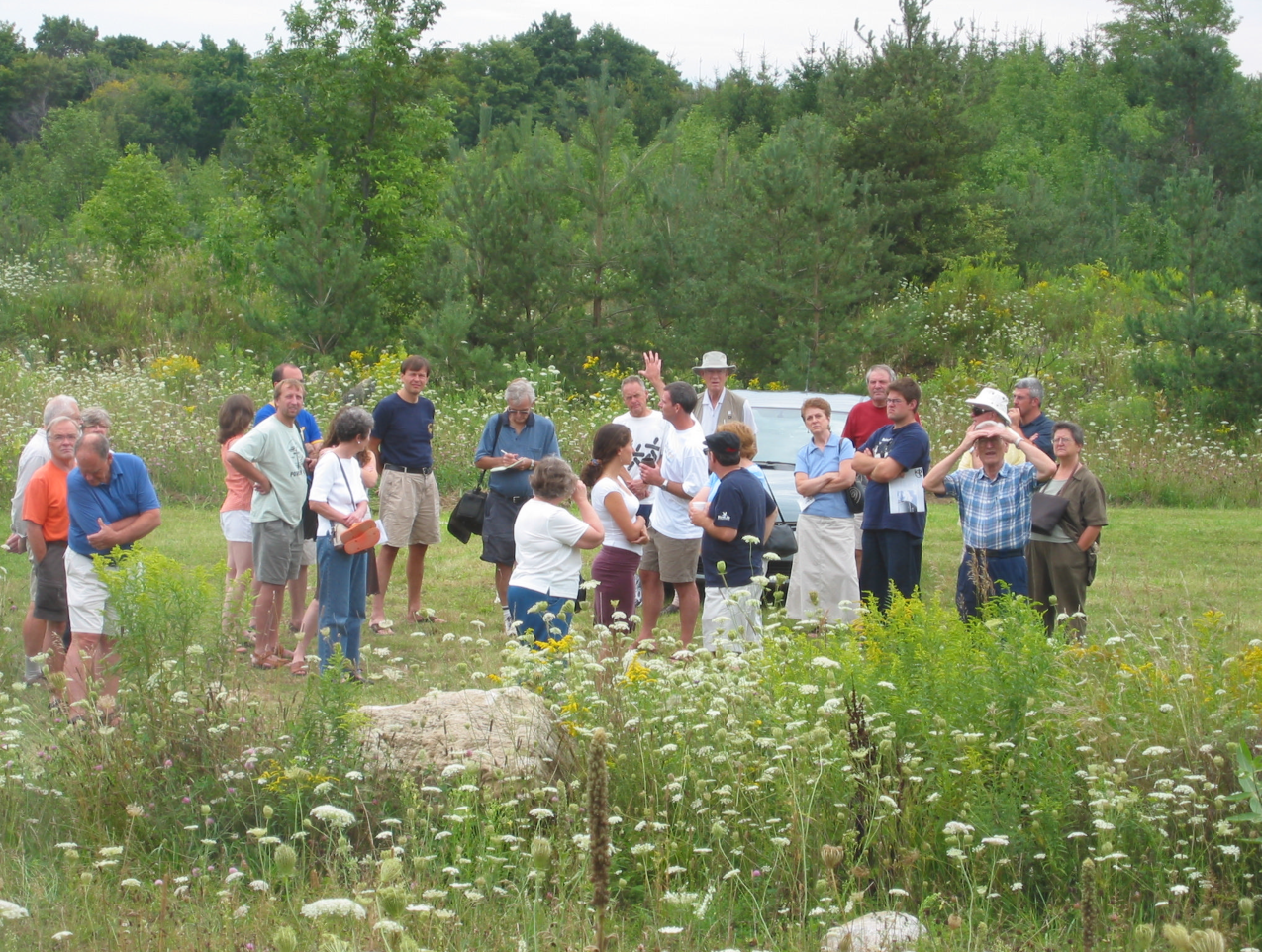
The Wilson natural home tour started with a review of the site. Many people are surprised to learn that a large part of the design is determined by the particular conditions of the site. Unlike large-scale developments the orientation of the sun at different times of the year, location of trees for protection from cold north winds, the slope of land, and access to sunshine from the south are where the design starts. The Wilson natural home is oriented to true north/south. This was accomplished during site visits long before construction began. A GPS was used to determine this location information as precisely as possible. Once the solar orientation was determined the house was staked out facing due south.
To retain the benefits of the trees to the north of the house that block the cold north winds, the laneway through these trees follows a long curve to prevent the wind (and dust) from blowing directly through to the house. The house was then tucked in to the trees on the north while leaving the south exposed. The site also slopes gently to the south leaving plenty of solar exposure on the south side. The east and west sides are buffered with more trees, since the winds from the northwest can be fierce during the winter months. These simple orientation concepts provide significant long-term savings on heating and cooling. In the summer the cool breeze is pulled in through the trees on the north maintaining a cool pleasant temperature in the home. In the winter the trees block the coldest winds from hitting the home directly. The temperature difference is optimized for cooling in the summer and warmth in the winter. In fact, the temperature south of the trees where the home is located can be more than several degrees warmer in the winter and can seem much warmer as the wind is so much milder in this area compared to the north side of the trees.
The next layer of protection for the home is the straw bale wall on the north side. This wall provides excellent insulation (R50-R60). Straw bale is a renewable building material that comes from local farmers. The bales are used like bricks to build the walls. Then a chicken wire mesh is stapled to both sides and sewn together compressing the bales. The final treatment is several layers of stucco on each side of the wall. Straw bale walls have the added benefit of being breathing walls. This means that some level of air transmission occurs, while maintaining the high level of insulation. There is no vapor barrier, unlike almost all modern Canadian homes. This ability to breathe eliminates the need for a mechanical heat recovery ventilator and vapor barrier, while providing better indoor air quality without any additional energy costs.
The tour continued at the south side of the home. Here the concepts of passive solar design were explained. Essentially this passive solar concept is the primary heating system for the Wilson home. Windows on the south side of the home allow light into the home especially in the winter when the sun is low in the sky. Inside the house, thick concrete floors absorb the heat so that it can slowly dissipate over night when it is needed during the winter. The fiberglass windows, filled with krypton gas, provide exceptionally good insulation levels for windows thus keeping the sun's heat from escaping. Throughout the home, hydronic tubing is embedded in the floors to capture and circulate the heat (or coolness in the summer). This system eliminates the need for any furnace.
Think about the thousands of dollars that are saved in reduced oil, gas, or electricity bills each year. All these cost savings without producing any pollution. People who came to the open house said they were paying anywhere from $1,500 to more than $5,000 each year in heating costs. Over twenty years that adds up to $100,000 assuming the cost of these energy sources stay the same. There is no doubt that gas, oil, and electricity prices will continue to rise. It is possible that the cost of energy required to heat conventional homes may reach numbers far greater than the cost of actually building the home in the next thirty to fifty years, especially as fossil fuel reserves become exhausted. Most scientists agree that we are reaching the peak. Since the cost to extract the rest will only increase - as supplies diminish and become harder to reach - it is quite possible that prices may skyrocket. When this happens the investment in passive solar will look simply brilliant.
As the tour continued, groups were told how the two levels of windows on the south side double the potential for passive solar heat collection. This design is optimized for the specific climatic conditions of the site. There is a great need for solar heating in the
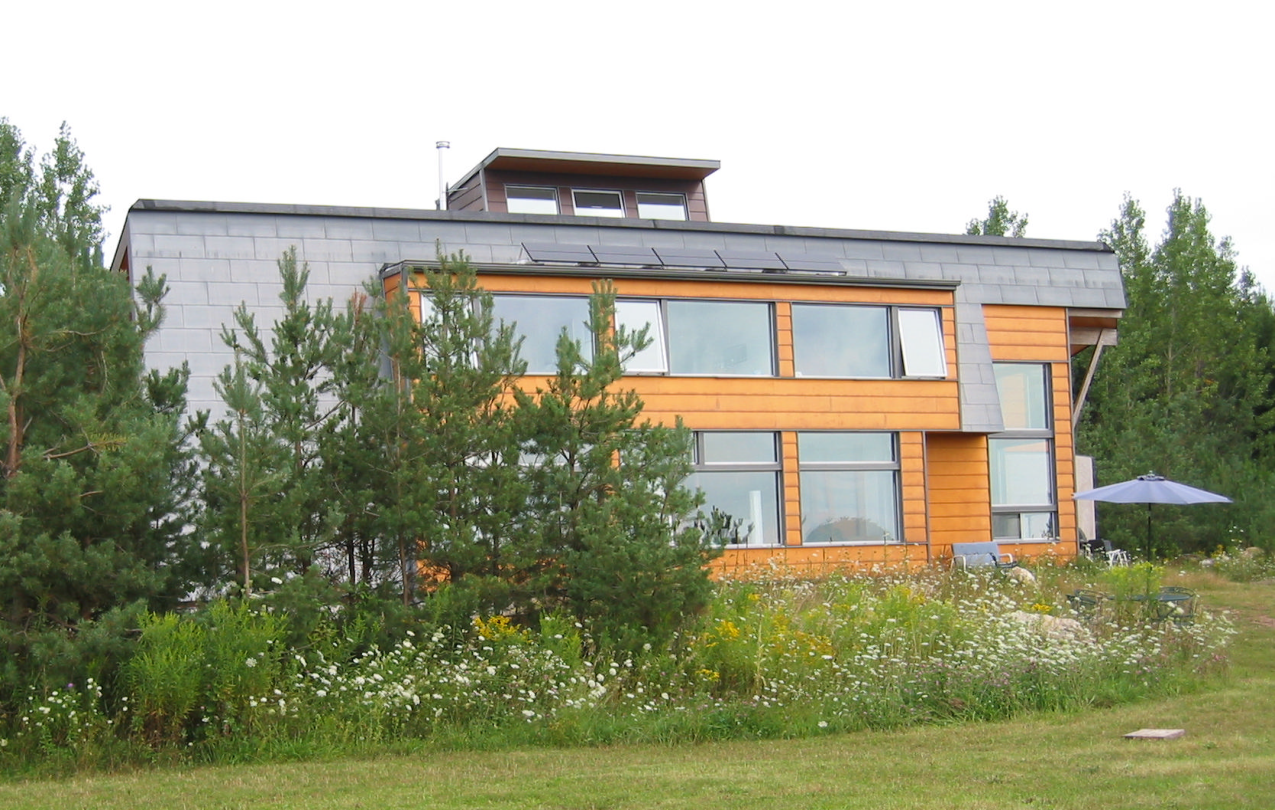
winter. Two levels of windows to collect this heat doubles the storage capability. In the summer the planned shading system and green roof will ensure the passive solar system does not overheat the home. A green roof will reducing heating in the summer by 30-40% while providing additional insulation in the winter when it is so critical. People are surprised to learn that more that 20% of houses in Germany have a green roof. The shading system (not yet installed) will also help to prevent overheating in the summer. A vine-covered pergola will also improve the cooling properties of the passive design in the summer.
The solar photovoltaic (PV) panels are located above the upstairs windows. The solar PV panels turn sunlight into electricity. The DC electricity generated by the PV panels is
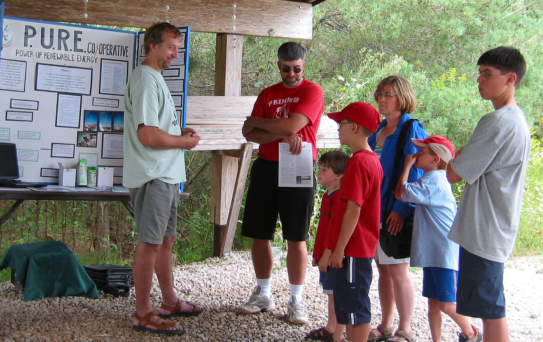
> PURE Co-operative, renewable energy for the community.
transformed into AC by an inverter in the basement, for use by home appliances. The wind turbine also produces DC electricity. Again, the inverter turns DC to AC. When more solar/wind power is being generated than used in the home, the inverter feeds the excess AC power into the public electricity grid, turning the meter backwards. The ten Siemens solar PV panels produce up to 400 watts an hour when the sun is shining directly above them, without any cloud cover. The Bergey XL wind turbine can generate up to 1,000 watts an hour when there is a relatively strong wind. Many people were surprised that the entire system, which could be retrofitted for most homes in this area, cost only $20,000 fully installed and CSA certified. Many people believe that the minimal level of investment is in the $100,000 range.
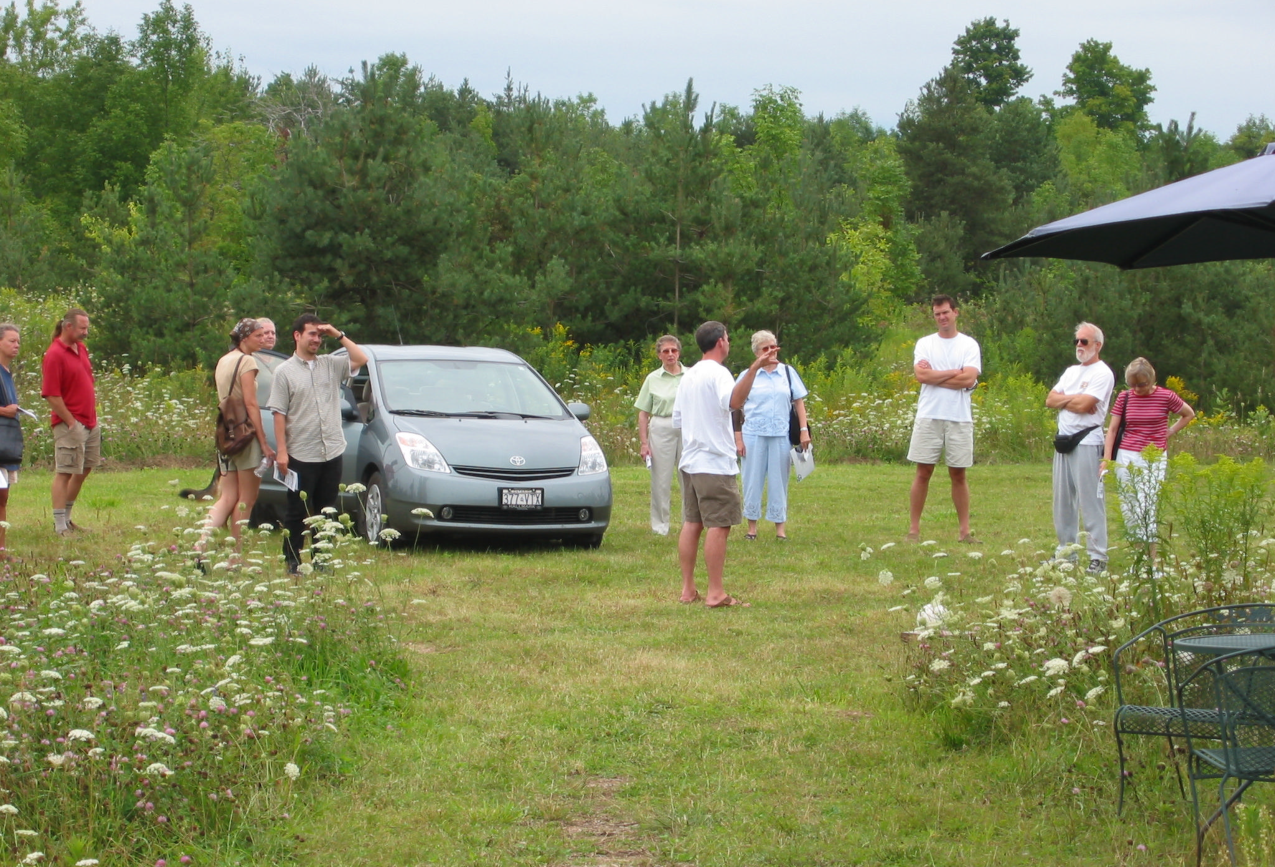
A highlight at this year's event was the new Toyota Prius Hybrid car. This car won the prestigious Motor Trend Car of the Year Award for 2004. Despite the many "green" features like a half gas and half electric motor system, the reviewers at Motor Trend found the car better than conventional cars overall. In fact the new computer system that manages the regenerative breaking, automates the hybrid engine design and integrates all the electronics is a look into the future of all cars. This car is so smart it knows that you are the owner and unlocks the doors for you when you approach. It costs about $30,000 Canadian, which is comparable to other cars in its class. Where the real value shines is in the gas savings. Each tank of gas costs about half as much as a conventional car. In fact the mileage for both city and highway driving is about twice that of other conventional cars. Perhaps most important, the car reduces pollution emissions by 90% compared to conventional cars. Toyota plans to make the Synergy Hybrid engine system and computer controls available on other models including the Highlander SUV and Sienna mini van. Other manufacturers are starting to follow suit with hybrid offerings coming from Ford and GM. Now the trick will be to make them available on busses and trucks. Just imagine the pollution reduction this would create.
Inside the house the tour reflected on the benefits of a natural air-cooling system provided through the skylight tower in the middle of the house. This idea, thousands of years old, is still used in the Sahara to provide a natural air conditioning system during hot weather. The cool air is naturally drawn up from the basement and through the house, eventually venting out of the skylight at the top using convection. The window in the skylight is opened during the summer in order to drive this effect. At all times of the year the light coming in through the large central skylight means electric lights don't need to be turned on nearly as often. The use of opaque materials like Plexiglas and fiberglass allows light into places like bathrooms and hallways.
Some of the materials used in the Wilson natural home include bamboo for wood flooring. Bamboo is a grass. After it is harvested for use in the floors the bamboo grows back. Bamboo is also a very hard wood so that it withstands the beating that many hardwoods might not. Other materials included parallam posts and beams for the framework of the house, birch for the paneling and kitchen cabinetry, as well as MDF cardboard for much of the shelving. Other natural materials used include slate, local pinewood, and gravel.
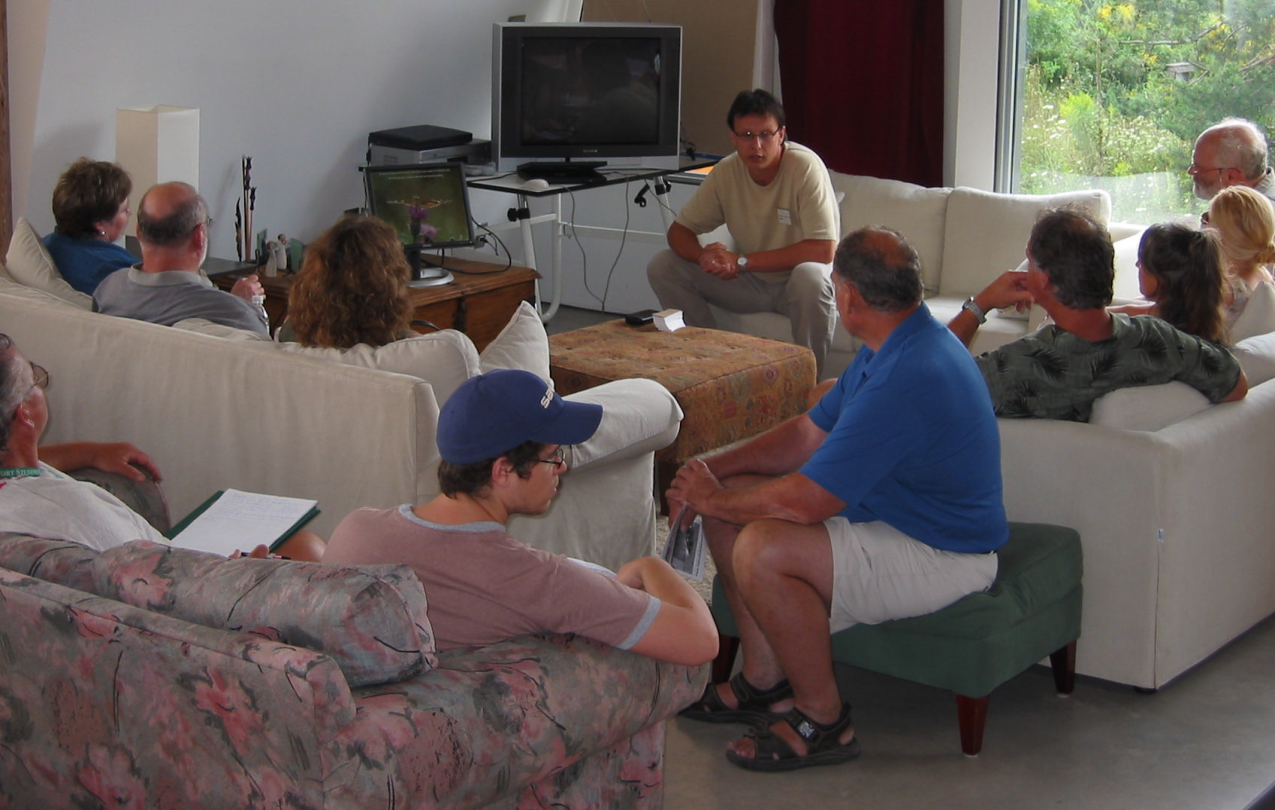
This year was made a success by the many family volunteers who helped out with the food and drinks (thanks Mom), welcome committee, and booths by Everdale and PURE. Presenters this year included Martin Liefhebber from Breathe Architects. Jillian Hovey discussed Sustainable Living and provided sustainable living
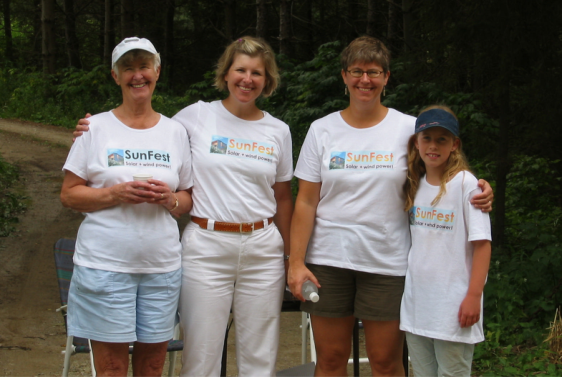
> The welcome committee Betty Geraghty, Kathleen Champagne, Leigh Geraghty and Claire Wilson.
books through her Sustainable Living Network. Dan Wilson, Caroline French and Hal Geraghty also helped out in many ways, including setup, selling books and videos and much more. Some of Carolynn's photos are included in this issue, and many more can be seen on the NaturalLifeNetwork.com web site. Thanks to everyone for all their support and patience with this year's event. All of the attendees this year were very impressed with the quality of information and thankful for such a unique opportunity. -
SunFest Resources
Breathe Architects / Martin LiefhebberThe firm is the award winning architect for the Wilson House. Breathe Architects is an unique design firm with leading edge expertise in ecological and renewable energy systems. The firm combines a variety of interrelated disciplines to develop affordable and environmentally adept housing. Web: www.breathebyassociation.comEMail: info@breathebyassociation.comPhone: 416-469-0018
Phantom Electron Corporation / Leonard AllenWe are innovators, committed to a leadership role in the development and utilization of solar electric technologies in mainstream applications. Our team is building a unique company that is powered by vision... a vision that sees our products providing an avenue for transparent integration of renewable energy into everyday markets. Web: www.phantomelectron.comEMail: sales@phantomelectron.comPhone: 905-430-6512
Sustainable Living Network / Jillian HoveyJillian is a seasoned international permaculture teacher who is dedicated to inspiration and education about healthy and sustainable living. Jillian founded and acts as Director of the
Sustainable Living Network, whose Sustainable Living Books project offers over 3,000 titles. Web: www.sustainablelivingbooks.com or www.sustainablelivingnetwork.orgEmail: jillian@permaculture.netPhone: 416-410-7581
Kolapore Construction Inc. (formerly C & R Construction) / Colin RichardsKolapore Construction is in the custom home construction business with a distinct view to the integration of natural, ecologically friendly, and renewable energy resources. Email: gregory.richards@sympatico.caPhone: 905-880-2732
Cameron's COFFEE / Ian Cameron Cameron's coffee imports Canada's only supply of truly sustainable coffee. Web: www.cameronscoffee.caEMail: ian@cameronscoffee.caPhone: 416-738-8896
Hallmark Toyota / Chris Lee Toyota Prius is the winner of the Motor Trend Car of the Year for 2004. Web: hallmark.toyota.caEMail: sales@hallmark.toyota.caPhone: 519-941-9291 -
Reading
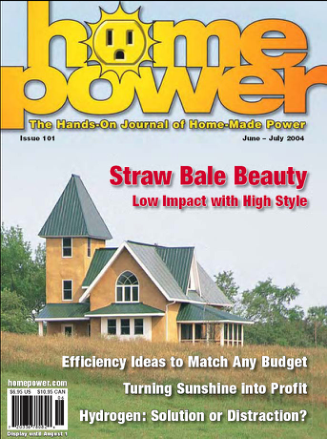
Home Power
For anyone who wants to get into the details of living with renewable energy this is the magazine for you. Each month this hands-on journal has off-the-grid and on-the-grid home owners tell their story in an easy to understand format. If you are interested in the technical details and comparing systems then this is the ultimate source of information. You can download a free copy off their web site each month in PDF format.
Web Site: www.homepower.com
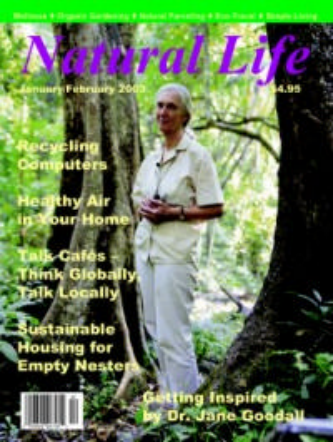
Natural Life
This simple magazine covers a wide range of sustainable living topics. For ideas that we can all start using today this is the place to start. Each issue reaches far and wide for interesting stories with lots of ideas for living a more natural life style.
Web Site: http://www.naturallifemagazine.com/
Private Power
As the cost of electricity goes up, this new magazine has been of great interest to the people in rural areas of Ontario. Capitalizing on the recent high profile initiatives announced by the government, this magazine shows many different ways that Canadians can start to generate their own clean green renewable energy today.
If you can get your hands on back issues, look for the wonderful article by Peter Forint on our SunFest 2003. In it Peter describes the event in some detail for those who want to know what it's all about.
This magazine has provided plenty of food for thought for those living in rural areas. The need for energy on farms can be quite high. With recent increases in the cost of this resource, farmers have been seeking a publication like this that explains in simple terms how they can start to reduce their demand and even generate their own "Private Power" today. Beyond the magazine, the people behind Private Power have offered conferences on topics such as Wind and Solar Power. Their recent trade show and conference attracted more than 3000 people. The complete set of videos from the conference teaching sessions is available from Private Power. In addition, the Canadian RE Handbook, by Bill Kemp is being offered with special pricing on combination orders.
Web Site: www.privatepower.ca-

Workshops
Everdale Hands-on Learning
The best way to learn about sustainable living, straw bale home construction, organic gardening and much more is to try it hands-on during a workshop. Nothing beats the learning experience of actually doing the work. Visit Everdale's web site for information about the many workshops they offer. The new Home Alive! straw bale home provides a great opportunity throughout the year to see and tour a working sustainable home. You'll meet some like-minded people with whom you can exchange ideas and thoughts. There are also many excellent examples of sustainable living ideas, from straw bale cottages, to solar panels, organic farming and much more - always on display. Get inspired by getting involved. You'll be amazed what you can do yourself with a little bit of knowledge and practice.
Safe and Simple Canning Techniques FEE: $50 August 28: with Cathy Hansen and Ginny Pearce These prize winning canners will walk you through some safe and simple techniques to preserve the summers harvest for winter enjoyment. Tomatoes, pickles, pesto and more Home Alive! In Depth Tour FEE: $50 September 5 Learn in detail how this house "Thinks, Drinks and Breathes" while seeing how energy and heat are produced and trying the alternative wastewater, solid waste and drinking water systems for yourself. Elements of the permaculture ecological landscape, house design, construction materials, energy production, appliance selection and more will be discussed with a descriptive tour, active demonstrations and lots of opportunity for your questions. Autumn Harvest Picnic September 11: 1pm-6pm. Take a tour of the organic farm, try your luck at the harvest games, and check out the solar and wind power systems. Fun for the whole family. Bring a picnic dinner we'll supply the corn roast. No need to register in advance. Just come out and enjoy the day. Organic Gardening: Seed Saving FEE: $50 September 25: with Bob Wildfong president of Seeds of Diversity Canada. Learn how to collect and save your own veggie seeds to plant next year. Grey Water Systems FEE: $85 October 2: with Doug Joy is a professor of water resource engineering at the University of Guelph and the general manager of the Ontario Rural Wastewater Centre. Details on the various types in use; what works, what doesn't and the laws governing these systems. Building Design-getting your ideas on paper FEE $85 October 23: with Larry Benville, 25 year design professional with a background in sustainable construction. Working through design sketches, we will get real about budgets, design realities, and most aspects of the construction process. For more information on Everdale workshops, tours and events: Web Site: www.everdale.orgPhone: 519-855-4859 E-Mail: info@everdale.org-
Join Us
Become a part of a community of people around the world dedicated to living in harmony with nature. We've created this network so that we can all share our ideas, experiences and knowledge. The changes we envision are revolutionary; however our goals are to make them the norm. The organization is about the practical, inspiring and real application of living gently on the earth so that our children may enjoy a clean, healthy and productive environment.
The simple point is that we all can "do" much more - and that means all of us or it won't work. For example:
§ Choose or create a home/community that is powered by the sun; § Grow and eat organic food; § If you must travel select the most efficient means, walk, bicycle, tele-commute, travel by train, bus, ultra-efficient car, or fly; § If and when possible, work in nature - grow your own organic food, restore nature around you, put your investments to work for natural living. What will amaze you that everything we need to live this way exists. The cost over the longer term is less. The results are a happier more healthy self and family. Start learning how today. Member benefits: · Monthly Natural Living Journal full electronic edition.
E-Mail Question & Answer (3 per year, no more than 1 per month.)
Directory listing (optional) and Natural Directory.
Discounts on some products and services offered by Natural Life Network. Sign-up for membership at: www.NaturalLifeNetwork.com-
Next Issue
Ecovillages and the future of communities. For weekly updates, special offers, and additional products and services visit our web site: www.NaturalLifeNetwork.comHave a question? Ask us and we'll try and include a response in our next issue of the Natural Living Journal. Have an interesting story to tell that relates to natural living? Contact us any time with your questions, concerns or ideas at: john.wilson@naturallifenetwork.com-
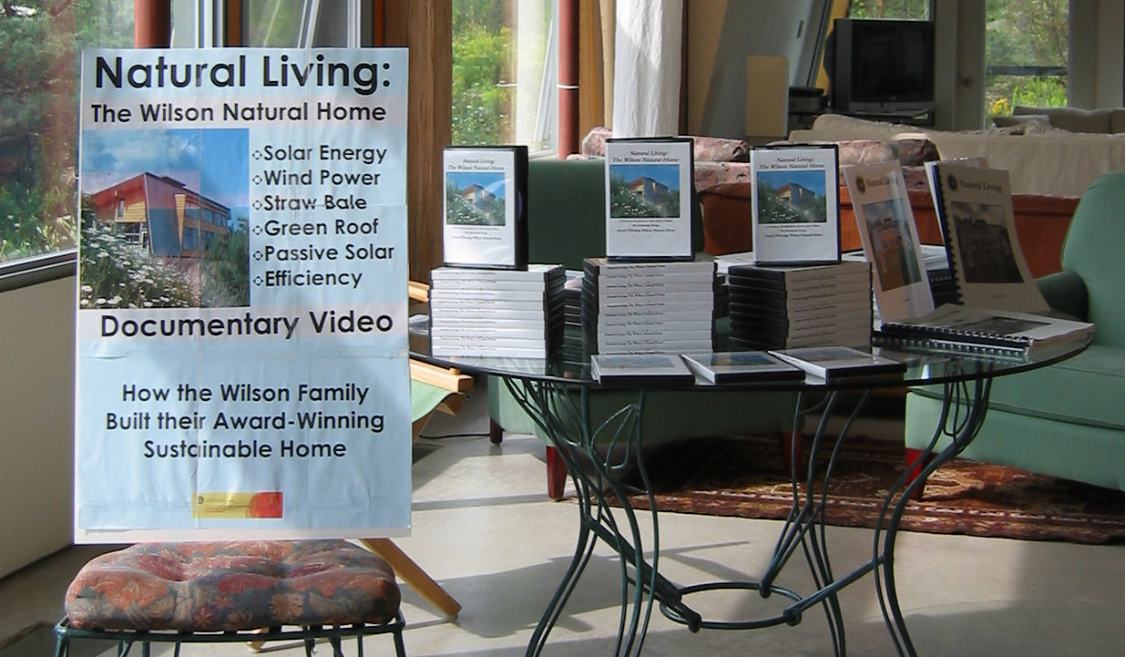
Order the video online at: www.NaturalLifeNetwork.com