March 2006 — Whole Village
Publisher's Message
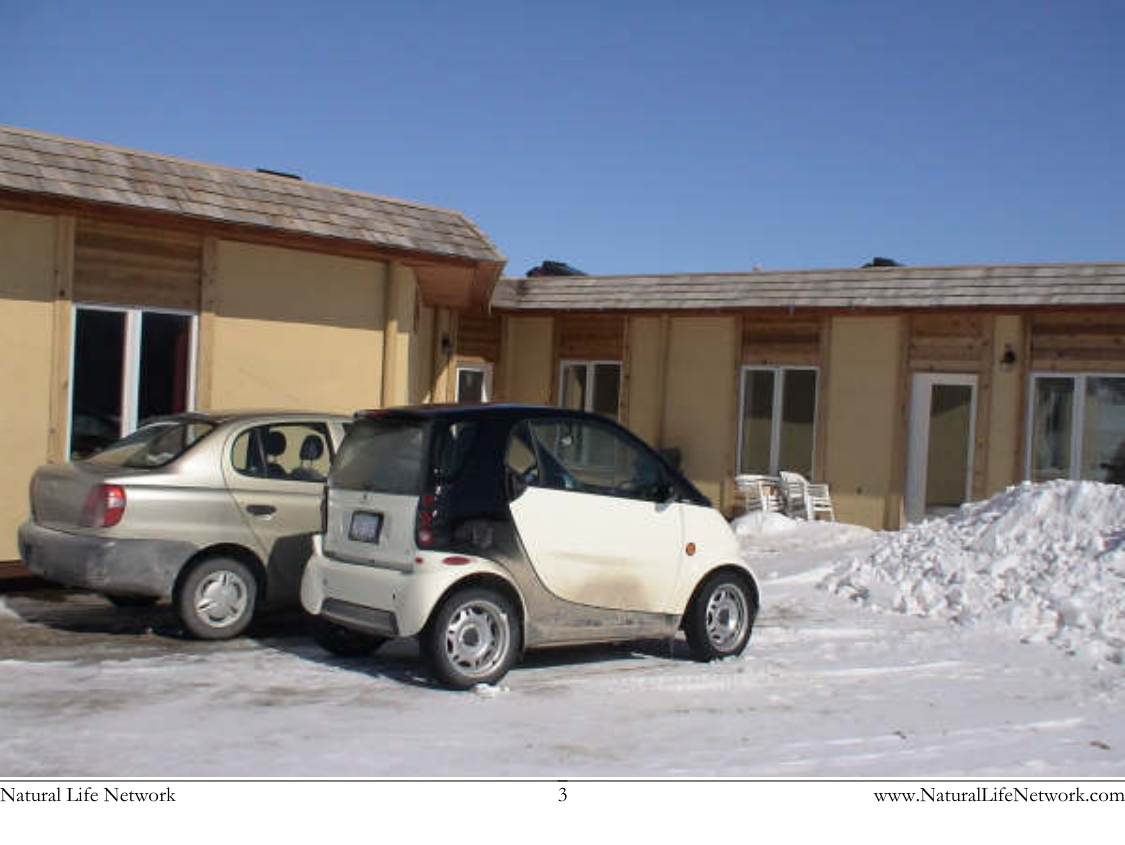
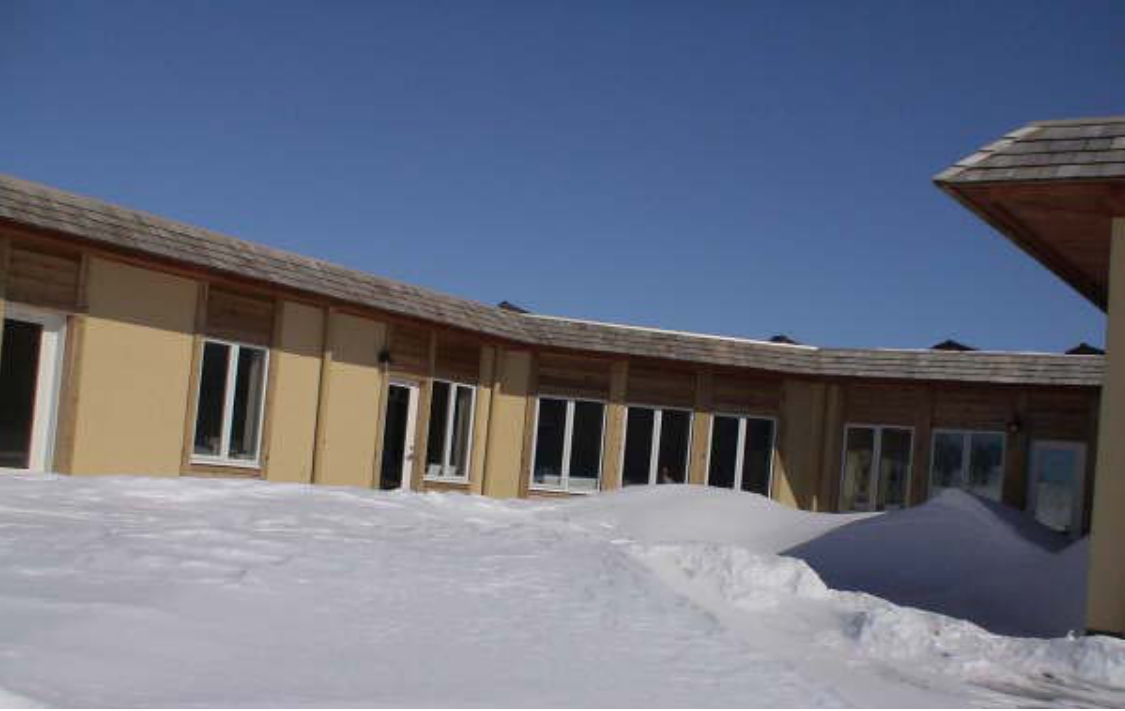
Ecological Design of Communities Early in March I attended the public opening of Greenhaven, the new ecologically designed co-housing facility built by the Whole Village co-operative community. This evolving eco-farm now has a comfortable, flexible and ecologically designed residence that houses a diverse group of individuals, couples and families. All have contributed to building this new home in ways that have challenged all of them. People rise to the occasion of even the most difficult challenges. Those with a real passion and concern for making a vision come to fruition tackle the problems, whether social or technical, and make things work. The folks at Whole Village are setting an example for the rest of us, which shows it can be done, if we persevere, with the right attitude and a positive open view. We have much that we can learn from each other. The Whole Village journey showed how it is possible to work through town council even when the odds are against you and even when much opposition exists. In this case a mayor that had opposed the idea was present for the opening to sing the praises and suggest old wounds be healed. This in itself is a great statement regarding the tenacity of the Whole Village group. To turn a leaders views regarding the project completely around speaks volumes to the abilities of all those involved at communicating the vision, compromising where necessary, and being completely committed to making the project happen. The path for others in the future will owe a great debt to this pioneering group. We should all draw inspiration from these intrepid explorers of the sustainable frontier. Now it is our turn. For more information on Whole Village see their web site at www.wholevillage.org . John Wilson, Founder of the Natural Life Network E-Mail: john.wilson@naturallifenetwork.com
Natural Living Journal John D. Wilson - Editor and Publisher Natural Living Journal Published by World Peace Communications Copyright © 2006 John D. Wilson Our Web Site: www.NaturalLivingNetwork.comE-Mail: john.wilson@naturallifenetwork.comPhone: (519) 942-3266 ADVERTISING SALES: Leigh Geraghty, Advertising Representative, (519) 942-3266, leigh.geraghty@sympatico.caCONTRIBUTE: We are always looking for new, interesting and inspiring stories, pictures, and poetry, about people who are achieving a natural lifestyle. If you would like to contribute an article or story then please send us a note with your idea. Contact John Wilson by email at john.wilson@naturallifenetwork.comAll contents of this issue of Natural Living Journal are copyrighted by John Wilson, World Peace Communications, 2006. All rights reserved.
SUBSCRIPTION SPECIAL OFFER
NAME
ADDRESS
CITY/STATE/PROVINCE ZIP/ POSTAL CODE COUNTRY
PHONEYES! Sign me up for Natural Living Journal. Orders must be prepaid. Here is my check/money order in U.S funds (Canadian orders in Canadian funds). Subscriptions/ membership includes shipping, handling and applicable taxes. $29 - Individual - 1-year subscription and membership, paperless Internet delivery, requires email (6 issues) $39 - Business - 1-year subscription and membership, paperless Internet delivery, requires email, and business directory listing with logo (6 issues) Membership includes answers to three questions (no more than one per month) through email for a year. To order online by credit card go to www.NaturalLifeNetwork.com. Send all subscriptions and renewals to payable to World Peace Communications. Mail to: World Peace Communications 248108 5th Side Rd., RR# 5 Orangeville, ON L9W 2Z2, Canada
Whole Village
Nearly five years ago a visit to the site of Whole Village introduced me to the visionaries behind Whole Village. Back then there were plans for the site, drawings, and enthusiasm to see construction begin. Well, it took longer than anticipated but this eco-village shines a bright light on what a sustainable future could hold.
Vision and Founding Principles
We are a community with a commitment to sustainability and land stewardship seeking to live together in harmony with each other and with the natural habitat. It is fundamental to our shared purpose that we:
Seek to be a welcoming, diverse community.
Celebrate what we share in common, while being mindful of each other's unique individuality.
Foster an atmosphere of mutual interdependence through shared facilities, resources, responsibilities and activities balanced with an appreciation of privacy and private ownership.
Evolve as a community that is planned, built and sustained through the leadership and participation of its members using a consensus discernment process.
Create a safe, health and supportive village in which to nurture children.
Strive to be sustainable in all ways: ecologically, economically, spiritually and socially.
Integrate biodynamic, organic, permaculture and other ecologically sound farming principles in an economical manner.
Commit ourselves to the development of economic, political and cultural connections with our neighbours, our community and the world as a whole.
Community Commitment
1. Living Cooperatively in an Inclusive Community Whole Village members participate fully in the governance of their community. Our consensus-based decision-making process strives to ensure that everyone's concerns are heard and considered. Leadership, including facilitation of meetings, is shared equally among members. Our intentional community aims to be socially, culturally, economically and spiritually diverse. Potential members must, of course, share our vision and support our Founding Principles, and go through a formal membership application process to ensure a good fit with the community. The primary residence of Whole Village members is our cooperative house Greenhaven. The house is built in as sustainable and environmentally friendly fashion as local by-laws and common resources allows. It will accommodate 11 households (singles, couples, families) in a combination of small private suites and shared kitchen, dining, recreation, and living spaces, and is wheel-chair accessible. Whole Village is part of the Canadian Co-housing Network - www.cohousing.ca .
2. Reducing Our Ecological Footprint As a part of our commitment to sustainability, residents try to live in a way that does not impair the ability of future generations to enjoy the bounties of nature. This means reducing our ecological footprint, the area of productive land and water required to supply the resources we need and to assimilate the waste we generate.
Some ways we do this are by living simply, sharing some personal resources, car-pooling, operating home-based businesses, and growing our own food.
3. Conserving and Enhancing the Land Whole Village members are dedicated to stewardship of the land. Our Conservation Easement governs land use in the four distinct zones of the property: wetland, woodlot, agriculture and residential. Only recognized organic and environmentally friendly practices can be used on the property and all building is restricted to the residential zone. All members, as well as some non-members, are part of the Whole Village Community Supported Agriculture program, which guarantees farmers fair prices for their produce, and provides a direct connection between food producers and consumers. Members take an active part in many farm and land stewardship activities. We are growing a variety of vegetables, with greenhouses to extend the season. Produce is stored in root cellars or otherwise preserved for the winter. As our membership grows, we will add livestock and fruit production.
4. Contributing to the Local and Global Communities Whole Village is an educational project providing practical examples of sustainable living and opportunities to share our experiences with others. Farm apprentices and volunteers can live, work, and gain hands-on learning as part of our community. Our members have a commitment to social justice on the local,
regional, national and international levels. We are active with local groups who share the same ecological, social and environmental concerns. Whole Village is located near the headwaters of the Credit River, and we share responsibility for safeguarding the purity and integrity of the watershed. As stewards of the land we can make a lasting and significant contribution to the natural community of living beings who share the earth with us. Whole Village is part of the Global Ecovillage Network (www.gaia.org), a worldwide movement fostering sustainability and environmental responsibility.
Greenhaven Co-housing Design
The design of the building evolved through a collaborative process between the architect, Denis Bowman, and Whole Village members. Greenhaven covers 15,300 square feet (1,421 square meters).
Site Grading Topsoil was stripped from the building site and stockpiled for reuse in the final landscaping. The native grade of the building site was then raised by up to 2 meters and compacted using fill from a borrow pit on the Whole Village farm.
Site Services A composting toilet was built out of recycled refrigerator and freezer doors, for use by workers on the site. A moveable 360 watt photovoltaic power station was set up to run power tools (along with a backup gas generator) until the building was connected to the main electrical service. Wood construction waste was sorted, stored and re-used. Waste drywall is being composted as part of the Whole Village farm operation.
Foundation Structural Floor Slab Plywood used to build formwork for the floor slab was re-used to create the weather edge on the perimeter of the roof. There are no conventional footings supporting the building. An eight inch (20 cm) thick structural thermal floating slab with a perimeter grade beam (approximately 306 cubic meters of concrete) supports all bearing walls.
Exterior Walls Exterior walls are 4 foot x 9 foot x 8.25 inch thick (120 cm x 270 cm x 21 cm) Structural Insulated Panels (SIPs). The SIPs are a sandwich of two ½ inch (125 mm) oriented strand board panels glued to an expanded polystyrene core. The SIPs are glued and mechanically fastened to 2” x 8” (50 mm x 200 mm) spruce plates anchored to the perimeter of the floor slab. Panels are connected on their vertical edges by pre-manufactured splines. A double 2” x 8” (50 mm x 200 mm) top plate reinforces the tops of the panels and provides attachment for the roof panels. Window and door openings are framed with solid wood which is let into the edges of the SIPs. There are 50 corners in the exterior wall, half of which are 45/135 degrees. The outside of the exterior walls are covered by a layer of Tyvek house wrap, followed by a layer of 1” (2.5 mm) expanded polystyrene rigid insulation. The rigid insulation minimizes thermal bridging through the solid wood plates, sills, jambs and headers which have been let into the SIPs panels. Wood strapping is applied over the rigid insulation, and then building paper, expanded metal lath and finally two layers of polymer modified stucco. The stucco was primed and painted with silicate dispersion paint. Total insulation value of the exterior walls is R-40. There are two cement block firewalls in the structure, dividing it into three separate sections connected by fire doors. Interior load bearing and partition walls are framed with 2” x 6” (500 mm x 1000 mm) kiln dried spruce.
Green Roof The flat roof consists of SIPs 10.25” (26 cm) thick, which can span up to 16 feet (4.88 m). 1% drainage slope to the perimeter of the roof is created using polyurethane foam insulation. The foam is covered with a polyurea spray-on membrane which also functions as a root barrier for the green, living roof which will be installed this summer. The total insulation value of the roof is R-50.
Insulation A minimum of 3” (7.5 mm) polyurethane foam insulation (R-20) was sprayed directly on the ground prior to installing electrical conduit runs, wire mesh reinforcing and the PEX piping for the in-floor radiant heating system. Under the grade beam, the polyurethane was increased to 6” (15 cm). 3” (7.5 cm) rigid extruded polystyrene insulation was applied to the exterior surfaces of the foundation. Recycled refrigerator and freezer doors from the Woods' plant in Guelph were used for perimeter insulation extending five feet (1.5 meters) horizontally from the bottom edge of the grade beam. 1” (2.5 cm) expanded plolystyrene rigid insulation was installed on the exterior surface of the outside walls. The roof deck is covered by a layer of sprayed-on plyurethane foam insulation from 1.5” (3.8 cm) to 6” (15.25 cm) thick.
Wood The roof weather edge is covered with western red cedar shingles. Exterior trim around the windows and doors is also cedar, treated with a natural sealer. Interior trim is oak from Denis Bowman's property in King City, cut with a portable band saw and planed and jointed by Whole Village workers. It is sealed with a natural sealer.
Cabinetwork All cabinets are custom made on site from strawboard panels.
Doors There are 22 exterior doors in the building. All are fiberglass triple glazed (R-7.7) on the east, west and north sides and double glazed (R-4) on the south side; argon filled with a Low-E coating. Interior doors leading from the common areas to the individual suites are solid, fire rated with birch veneer. Interior doors are solid, with hardboard veneer. Medium duty commercial grade lever handles are used throughout.
Windows All windows are fiberglass casement or fixed. Windows on the east, west and north are triple glazed. Windows on the south are double glazed. All are argon filled with a Low-E coating. There are
58 roof windows, half of which are venting types. Each roof window is mounted on a custom plywood curb covered by 6” (15.25 cm) polyurethane foam insulation.
Finishes Drywall on interior walls is Ecologo certified with recycled content. Silicate dispersion primer and paint is used on all interior ceilings and walls. Low or ultra-low VOC paint is used on all cabinets and valences. Floor finishes are bamboo, ceramic tile, cork laminate, linoleum, Jewelstone or stained concrete.
Appliances Refrigerators in the suites are Maytag high efficiency models.
Ventilation The main ventilation is supplied by a Lifebreath heat recovery ventilator operating at 1200 cubic feet per minute. The supply and return ducts are oversized at 18 inches (45.75 cm) diameter to reduce noise levels. The return ducts are encased in concrete and buried beneath the floor slab. Fresh air is tempered by a heat exchanger coil in the fresh air duct which is supplied by a dedicated ground loop circulating water/ethanol mixture. In frigid weather the exchanger pre-warms incoming air. In hot weather the exchanger pre-cools and dehumidifies incoming air.
Heating Heating for the building is supplied by three 5KW electrically powered ground source heat pumps feeding an infloor hydronic radiant system. The in-floor system consists of 17,000 feet (5,180 meters) of ½ inch (1.25 cm) PEX piping. There are 10 distribution manifolds and 20 separate heating zones controlled by individual in-floor digital thermostats. The heat pumps extract heat from 7000 feet (2134 meters) of PEX piping buried 6 feet (1.83 meters) deep in the ground to the east and southeast of the building. The heat pumps also supply domestic hot water via two 70 gallon (265 litre) stainless steel storage tanks.
Water Fresh water is supplied by a variable speed Grundfos submersible pump installed in a drilled well. This pump increases its speed to maintain constant pressure inside the building. Rain water from the roof is stored in rain barrels for watering suite gardens.
Septic System All toilets are 6 litre low flush. Shower heads are low flow. The septic system consists of standard plumbing drains which empty into 10,000 litre settling tanks that gravity feed the dosing tank. When the dosing tank is full the contents are pumped into the first series of three biological treatment beds. Each bed is 200 square feet (18 square meters) in area and 4 feet (1.23 meters) deep. There are alternating layers of sand and gravel in each bed. The effluent is fed into the beds by two separate layers of piping. The top of the beds is planted with cattails. The effluent from the final bed is pumped into a small leaching field.
Electrical, Voice and Data The electrical system consists of a 400 amp feed to the mechanical room where it is distributed by conduit to separate 100 amp panels in the individual suites and one panel for the common areas. Each suite has a separate digital meter prominently located to encourage occupants to monitor energy use and to permit Whole Village to fairly apportion electrical usage. Electrical fixtures are high efficiency compact fluorescents or T-8 efficient fluorescent. There are two parallel distribution systems. The first is from the main grid feed and the second allows for future off-the-grid photovoltaic and wind generated power. Electrical circuits can be gradually switched from the main to the off-grid system as the alternative power capacity grows. Telephone, data and video cables are distributed from the mechanical room throughout the building via under-floor conduits. The building is supplied by a 50-pair telephone cable from Bell. A high speed satellite dish provides internet access through the building.
Solar Hot Water Solar hot water will be supplied by roof mounted solar hot water panels above the mechanical room.
Consultants Housing: Jon Harstone, Toronto Mechanical, electrical, heating, heat load calculations: Sustainable Edge, Toronto Renewable Energy: Peter Turrell, Grand Valley Sanitary: Ecowerks and Andrew Hellebust Structural: A-D Engineering, Toronto Legal: Iler Campbell, Toronto Financing: DUCA Credit Union, Orangeville Insurance: The Co-operators, Orangeville
References General Contractor: Whole Village Ltd. www.wholevillage.orgArchitectural Services: Denis Bowman Architect www.denisbowmanarchitect.caContract Administration: Jan Wintjes conso@rogers.comConstruction Management: Jeff Gold www.ecologicalconsulting.caEngineering Consultants: Sustainable Edge www.s-edge.comStructural Insulated Panels: Thermapan www.thermapan.comSilicate Dispersion Paint: Eco-House www.eco-house.comUrethane Foam Insulation: Hesterman Technical www.hts-urethanes.comPolyurea membrane: Hesterman Technical www.hst-urethanes.comExterior/interior wood sealer: Sansin Corp. www.sansin.comStrawboard: Fibertech Concord, Ontario Fibreglass doors and windows: Dow, has ceased production Roof Windows: Velux www.velux.caBamboo flooring: Silk Road Bamboo www.silkroadflooring.comLinoleum: Marmoleum, www.forboflooringna.comStained concrete: Behr concrete stains www.behr.comVentilation: Lifebreath www.lifebreath.comHeat Pumps: Fulford Supply, www.fulfordsupply.comSeptic Systems: Aquatreatment www.aqua-tt.com'
The Solar Village Documentary Video
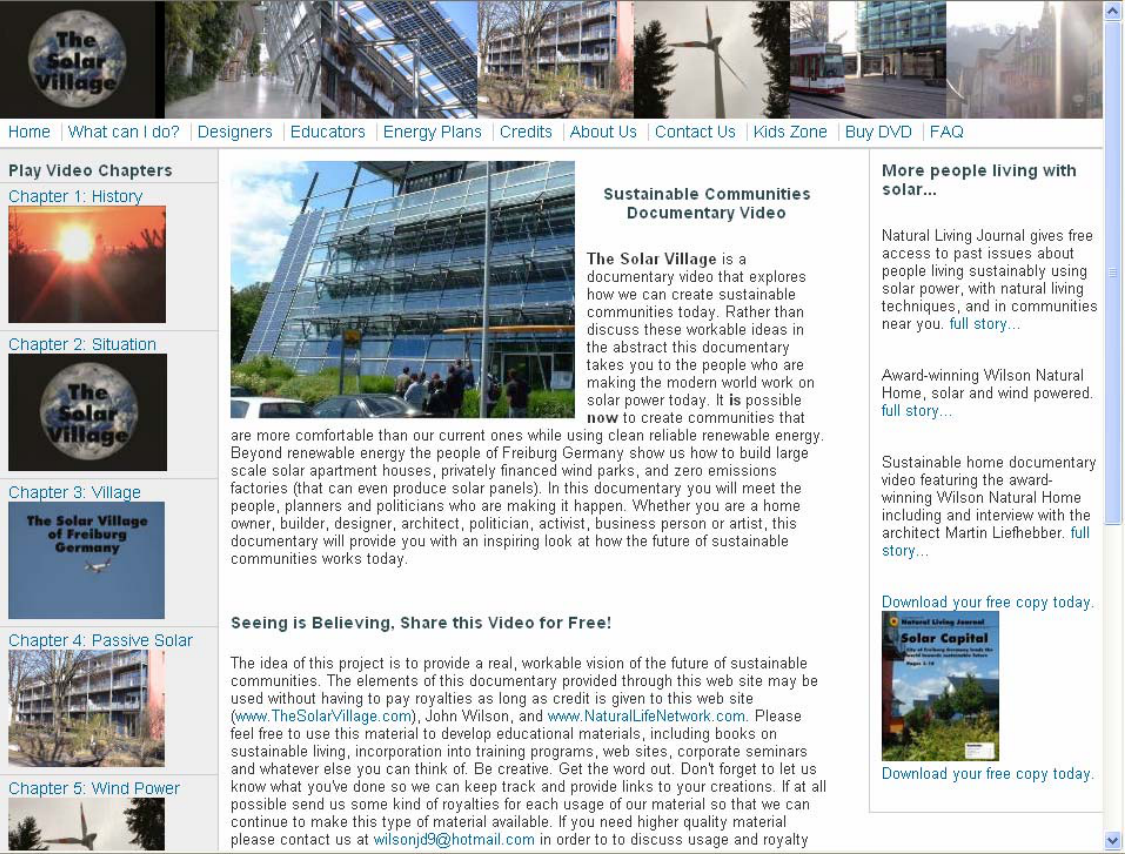
We could be creating solar villages everywhere in the world today. It is possible to power our modern civilization on solar energy. Do you find that hard to believe? If so, then visit Freiburg Germany, the Solar Capital of Europe. In this unique video, now available for free on the web, you will meet some of the people in a working solar village that explain how we all could be doing the same sorts of things. A community powered by solar energy doesn't look much different than any other on the surface. However, in the background you may notice wind turbines in the hills. You will see streetcars built before the houses so that transportation is possible in new communities. Large apartment blocks with more than twenty unit, surrounded by beautiful deciduous trees on the south side, may look normal but also include passive solar (triple glazed windows, with low-e coatings), green roofing, solar thermal water heating, and solar photo voltaic panels that double as a shading structure. Right in the community you will also see how zero emissions factories can produce the appliances, generators, products and goods we'll need to live quite comfortably in our solar villages. Creating solar powered zero emission factories turns out to be a huge employee and community motivator. Supplying the community with local wind produced electricity allows most of the community to invest in their future with superior returns. Learn how groups of people come together to build homes, apartments, communities, wind turbines and much more in this inspiring look at a working solar village. You'll meet Andreas Delleske, a resident of the twenty unit solar powered passive solar apartment building. He'll explain the benefits of ultra-low flush vacuum toilets, high levels of insulation, and even the benefits of “internal gains”. Also featured are a political leader, city planner and the CE0 of Solar Fabrik. You'll see how, through a combination of scientific research, political leadership and most importantly, grassroots activism have transformed medieval Freiburg into the most inspiring solar village in the world. Now, this wonderful experience is available to all. Tune in to this free documentary video on the internet at www.TheSolarVillage.com . Not only is this detailed look at a working solar village free but the elements of the documentary can be used for educational purposes. Find out more by logging on to the web site and viewing each chapter of this documentary. Tell as many people as you can about the secrets of solar communities so that these ideas can be used in your local community. It has all been done before and now the ideas can be shared and used easily through this new video web site. '
Books About A New World Order
The biggest force slowing the broad based support for the changes required for sustainability are the “corporation” and the governments they control. How did we get to this point in such a brief time and how do we move towards a more equitable and sustainable future? Two books that bring home these important problems and how they can be overcome are The Corporation (also an award-winning documentary), and Alternatives to Economic Globalization. In terms of clarifying the problems and providing workable solutions, these two books provide invaluable information.
The Solar Economy: Renewable Energy for a Sustainable Global Future by Hermann ScheerThe global economy and our way of life are based on the exploitation of fossil fuels, which not only threaten massive environmental and social disruption through global warming but, at present rates of consumption, will run out within decades, causing huge industrial dislocation and economic collapse. Even before then, the conflicts it causes in the Middle East and elsewhere will be frighteningly exacerbated. The alternative exists: renewable energy from renewable sources - above all, solar. Substituting renewable for fossil resources will take a new industrial revolution to avert the worst of the damage and establish a new international order. It can be done, and it can be done in time. The Solar Economy, by one of the world's most effective analysts and advocates, lays out the blueprints, showing how the political, economic and technological challenges can be met using indigenous, renewable and universally available resources, and the enormous opportunities and benefits that will flow from doing so. Quotable “The Solar Economy offers and an alternative program to the Kyoto Protocol. It details the links between energy resources and economic structures that have given rise to the fossil energy economy, and maps the dynamic road towards renewable energy that will lead to a new and sustainable global economy. Fossil resources brought the industrialized countries their prosperity. Yet now that their cost outweighs their benefits, fossil resources may bring those self-same countries to their knees. It is the principal thesis of this book that renewable energy, by contrast, brings greater social benefits the more widely it is used, to the point where it fully replaces all fossil energy. There can be no sound reason for making this revolution of our resource base contingent on obligations agreed under international treaties.” - Hermann Scheer
Alternatives to Economic Globalization: A Better World is Possible Editors John Cavanagh and Jerry ManderAfter years of protest in opposition to corporate globalization, the International Forum on Globalization presents alternatives to corporate domination of the world economy more fully and thoughtfully than has ever been done before. This books includes some of the best of current thinking on alternatives for a sustainable future including:
Ten governing principles for a new social paradigm-one that will lead to truly democratic and sustainable societies that benefit the many rather than the few
Spell out alternatives to the World Bank, the IMF, and the WTO that advance democracy, basic rights, and ecological sustainability
Show how vital goods and services (such as water or genetic material) can be administered for the common good rather than privatized for profit
Offer alternative operating systems for energy, agriculture and food systems, transportation, and manufacturing
Provide examples of successful alternative policies and systems already in use by communities around the world today Written by a premier group of 21 thinkers from around the world, the second edition of Alternatives to Economic Globalization lays out democratic, ecologically sound, socially just alternatives to corporate globalization more fully, specifically, and thoughtfully than has ever been done before. Focusing on constructive, achievable goals, the authors present ten governing principles for establishing truly sustainable societies and describe alternatives to the World Bank, the IMF, and the WTO that would better serve the needs of the planet. They offer detailed proposals for protecting vital goods and services from corporate exploitation, limiting corporate privileges and power, rebuilding economies to make them more responsive to human needs, and more. The definitive document of the anti-corporate globalization movement - the consensus report of an alliance of leading activists, scholars, economists, researchers, and writers. This book offers a constructive, coherent, positive alternative to globalization-the very thing that the anti-corporate globalization movement is always accused of not putting forward. The International Forum on Globalization consists of the leaders of over 60 organizations in 25 countries - including such prominent organizations as Friends of the Earth, the Third World Network, the Sierra Club, the Institute for Policy Studies, Public Citizen, Rainforest Action Network, and Food First. Quotable “Globalization is not inevitable. Fortunately, there are alternatives and presenting them is the achievement of this book. Read it and be motivated: A better world IS possible.” - Dennis J. Kucinich, United States Congressman '
Books About Power
Two books that I've read recently have brought home to me how important dealing with our sustainable energy problems will continue to be. In fact, the more I think about it the more that I see how much ideas like population controls, conservation, efficiency, organic farming, permaculture, urban transit systems, and solar power, are so critical to evolving our society. As the oil runs out, and as these books so ably demonstrate, it may be sooner that we expect. It will be to these ideas of sustainability, of Natural Living, that we will be forced to survive. As our ecological footprint shows oil has allowed us to exceed the sustainable capabilities of natural systems. With growing population levels we have already exceed what may be sustainable without oil. If we have any chance of surviving the next fifty to one hundred years it will be because we address these issues. Coming to terms with their reality is critical. So read these books and start taking action today.
War. Big Oil, and the Fight for the Planet: It's the Crude, Dude by Linda McQuaigWho stands to gain or lose the most from climate change? The oil companies, the largest industry on the planet. When you add up all the subsidies provided ANNUALLY to oil and nuclear energy, you can clearly see how big a lie it is to say that renewable energy systems aren't economical. Subsidies to oil and nuclear including the car and airline industry, amounts to significantly more than $200 billion per year…and growing especially if you include the wars fought to protect these resources. Let us say then that the subsidies to these industries reaches about $1 trillion over the last ten years, contributing massively, if not exclusively to climate change. Now, take away this $1 trillion in subsidies from the oil, nuclear, and transportation industries. Give the $1 trillion in subsidies to the conservation, efficiency, and sustainable renewable energy sector over the next ten years. Suddenly oil and nuclear look uneconomic, and the alternatives make perfect sense. Quotable “we've used up the earth's oil so rapidly and recklessly that we have not only jeopardized the viability of the planet (part one of the energy dilemma), but we have at the same time squandered much of this incredibly valuable on-time inheritance. This may sound like a contradiction. If oil is so bad for the earth's ecosystem, maybe we shouldn't care that it's running out. The problem is that we've built the modern world around it, relying on oil for transportation, industry, agriculture and just about every other thing we do, eat, wear, type, watch and move around in.” - pg. 29, War, Big Oil and the Fight for the Planet: It's the Crude, Dude. “…annual subsidies to the industry amounted to $14 billion in the U.S., $5.9 billion in Canada and a total of $59 billion in all the industrialized nations that make up the OECD.” “nuclear industry, received $12 billion in annual subsidies in OECD countries.” “The fossil fuel industry is also aided greatly by massive subsidies to the car and airline sectors …plus $135 billion a year in the U.S.-on the construction and maintenance of roads.” - pg 299, War, Big Oil and the Fight for the Planet: It's the Crude, Dude.
Power Down: Options and Actions for a Post-Carbon World by Richard HeinbergRather than retaining any level of false optimism this book and the author take deadly aim at the priority issues we face and their terrible consequences. Powerdown provides a visionary response to the coming energy famine, a clarion call to cooperative solutions based on the conviction that realism must trump self-delusion in matters of cultural survival. Ultimately there is hope if we are willing to look truth in the eye. If we have the strength to admit our problems we will find the solutions. Quotable “Most of the wars of the twentieth century were fought over resources - in many cases, oil.” Pg 21. “The elites - corporate owners and managers, government officials, and military commanders - are people who have been selected for certain qualities: loyalty to the system, competitiveness, and hunger for power. Often they are literally bred for their roles. Like George W. Bush, they are people born to wealth and power, and raised to assume that privilege is their birthright. These are people who identify with the system and the status quo; they are constitutionally incapable of questioning assumptions. Moreover, the elites are guided day-to-day by a set of incentives that are built into the system itself. Managers who pursue immediate gain get ahead, while those who make short-term sacrifices in order to preserve long-term stability are often at a disadvantage. Likewise, managers are rewarded who keep up appearances, who generate good news, and who exude confidence. Confessing errors accrues no benefit; instead, managers are encouraged to deny short-comings and to blame competitors and subordinates.” Pg. 168.'
Reading
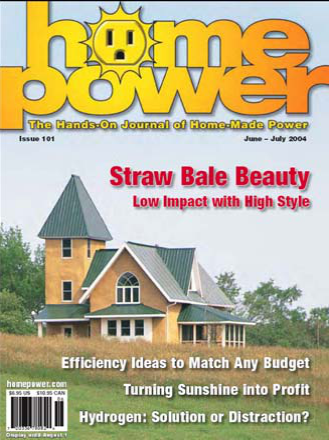
Home Power For anyone who wants to get into the details of living with renewable energy this is the magazine for you. Each month this hands-on journal has off-the-grid and on-the-grid home owners tell their story in an easy to understand format. If you are interested in the technical details and comparing systems then this is the ultimate source of information. You can download a free copy off their web site each month in PDF format. Web Site: www.homepower.com
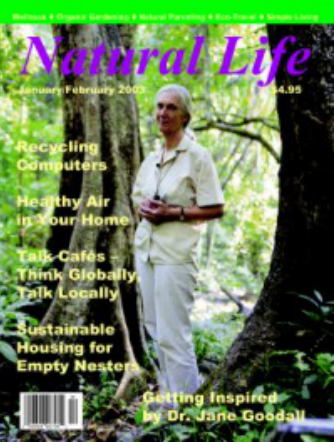
Natural Life This simple magazine covers a wide range of sustainable living topics. For ideas that we can all start using today this is the place to start. Each issue reaches far and wide for interesting stories with lots of ideas for living a more natural life style. Web Site: www.naturallifemagazine.com
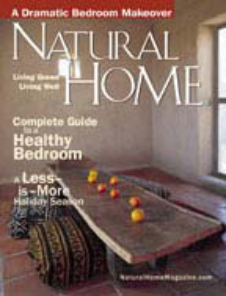
Natural Home Each month this magazine features new and renovated homes that are seriously sustainable. Like other popular home and design magazines, you also get coverage of life issues, food, travel and other related topics, all with a “green” twist of course. Other departments include Good to Know, Green Events, New & Noteworthy, Try This, Nuts and Bolts, and Earth Mover Awards. If you want to be inspired by high-end homes with tons of creativity, and features like solar panels, this is a great magazine. Web Site: www.naturalhomemagazine.com
Dwell: At Home in the Modern World Small Change is what it takes over a period of time to make the big changes. Dwell magazine may just be about affecting big change in the mainstream. This slick magazine has a real ecological design supported focus while also insisting on homes that look good. “…Dwell has become proactive in its mission. The magazine isn't just writing about and showing photographs of the design of houses, she suggested, but is actually influencing the ways in which they are designed and built.” The current issue takes aim at ideas such as smaller homes, prefab alternatives, and Dwell Home II, a sustainable house to be built in LA. Check out the amazing four-page pullout spread. The winning home includes passive solar, solar panels, and a green roof. Web Site: www.dwellmag.com'
Join Us
Become a part of a community of people around the world dedicated to living in harmony with nature. We've created this network so that we can all share our ideas, experiences and knowledge. The changes we envision are revolutionary; however our goals are to make them the norm. The organization is about the practical, inspiring and real application of living gently on the earth so that our children may enjoy a clean, healthy and productive environment. The simple point is that we all can "do" much more - and that means all of us or it won't work. For example: Choose or create a home/community that is powered by the sun; Grow and eat organic food; If you must travel select the most efficient means, walk, bicycle, tele-commute, travel by train, bus, ultra-efficient car, or fly; If and when possible, work in nature - grow your own organic food, restore nature around you, put your investments to work for natural living. What will amaze you that everything we need to live this way exists. The cost over the longer term is less. The results are a happier more healthy self and family. Start learning how today. Member benefits:
Monthly Natural Living Journal full electronic edition.
E-Mail Question & Answer (3 per year, no more than 1 per month.)
Directory listing (optional) and Natural Directory.
Discounts on some products and services offered by Natural Life Network. Sign-up for membership at: www.NaturalLifeNetwork.com'
Next Issue…
Solar Village design detail For weekly updates, special offers, and additional products and services visit our web site: www.NaturalLifeNetwork.comHave a question? Ask us and we'll try and include a response in our next issue of the Natural Living Journal. Have an interesting story to tell that relates to natural living? Contact us any time with your questions, concerns or ideas at: john.wilson@naturallifenetwork.com'
Order the Journal now! www.NaturalLifeNetwork.com