June 2004 — Straw Bale in the Burbs
Publisher's Message
Time Change requires time. The power of a good idea can be seen when it stands the test of time. Unlike quick fixes, real positive change for the better requires something that works over the long term. Many ideas, even within the sustainable living movement, have not stood the test of time. However, those that have are the most powerful.
In my own case, achieving a lifestyle that is more sustainable has been a ten plus year journey. Along that path we have come across many good ideas. A few have proven to be real working answers to sustainable living. Many have turned out to be ideas that seemed like good ones but didn't work out.
Several years ago we tried to use the outdoor solar garden lights to light up our entranceway and driveway. We decided to test them out before investing heavily. We bought two light emitting diode (LED) lights that were powered by a small solar panel on top of the light and stored in a rechargeable battery. It sure looked like a good complement to our solar powered home.
Unfortunately the light produced by these devices was minimal. The spread was only a foot or two. There was not nearly enough light to help illuminate our walking path sufficiently not to mention our driveway. Still it did provide some light without draining electricity all night. The second problem, however, proved disastrous . Our young puppy, Niko, a Sheppard mixed breed dog, decided to pluck the lights out of the ground and give them a good chew effectively destroying them before we could stop him. Fortunately the toxic batteries and plastic elements that he demolished did not harm him.
That was several years ago as I mentioned. I have been encouraged to see that these manufacturers have continued to improve these products with sturdier materials, brighter LED elements, and longer run times. It may be that these products now are worthy of consideration.
Things don't always work out though. For me that has meant an opportunity to rethink the need for them. Also, given some time, something that someone as impatient as I am finds hard to bear, challenged by problems or failures, people are able to improve and innovate. This understanding is critical to maintaining the attitude that we can create something that is both sustainable and workable.
This month we highlight an amazing house that I had the opportunity to work on several years ago. This is a 6000 square foot straw bale home in Mississauga, a large suburb of Toronto. There are areas of the straw bale walls that my entire family helped stack, stitch, staple, and stucco. It was a wonderful experience for all involved. The crew that worked on this house, Tina, Chris and Pete later worked on our own home. All I can say is get out and find a straw bale home that you can work on. It will change the way you think. For information on opportunities try http://www.strawhomes.ca/ .
John Wilson, Founder of the Natural Life Network
Natural Living Journal John D. Wilson - Editor Natural Living Journal Published by World Peace Communications Copyright ã 2004 John D. Wilson Our Web Site: www.NaturalLivingNetwork.comE-Mail: john.wilson@naturallifenetwork.comPhone: (519) 942-3266 ADVERTISING SALES: Leigh Geraghty, Advertising Representative, (519) 942-3266, leigh.geraghty@sympatico.caCONTRIBUTE: We are always looking for new, interesting and inspiring stories, pictures, and poetry, about people who are achieving a natural lifestyle. If you would like to contribute an article or story then please send us a note with your idea. Contact John Wilson by email at john.wilson@naturallifenetwork.comAll contents of this issue of Natural Living Journal are copyrighted by John Wilson, World Peace Communications, 2004. All rights reserved. Printed in Canada.
Join us!
NAME
ADDRESS
CITY/STATE/PROVINCE ZIP/ POSTAL CODE COUNTRY
PHONE
YES! Sign me up for Natural Living Journal. Orders must be prepaid. Here is my check/money order in U.S funds (Canadian orders in Canadian funds). Subscriptions/ membership includes shipping, handling and applicable taxes. $29 - Individual - 1-year subscription and membership, paperless Internet delivery, requires email (12 issues) $59 - Business - 1-year subscription and membership, paperless internet delivery, requires email, and business directory listing with logo (12 issues) Membership includes answers to three questions (no more than one per month) through email for a year. To order online by credit card go to www.NaturalLifeNetwork.com. Send all subscriptions and renewals to payable to World Peace Communications. Mail to:
World Peace Communications
248108 5th Side Rd., RR# 5 Orangeville, ON L9W 2Z2, Canada
Straw Bale in the Burbs
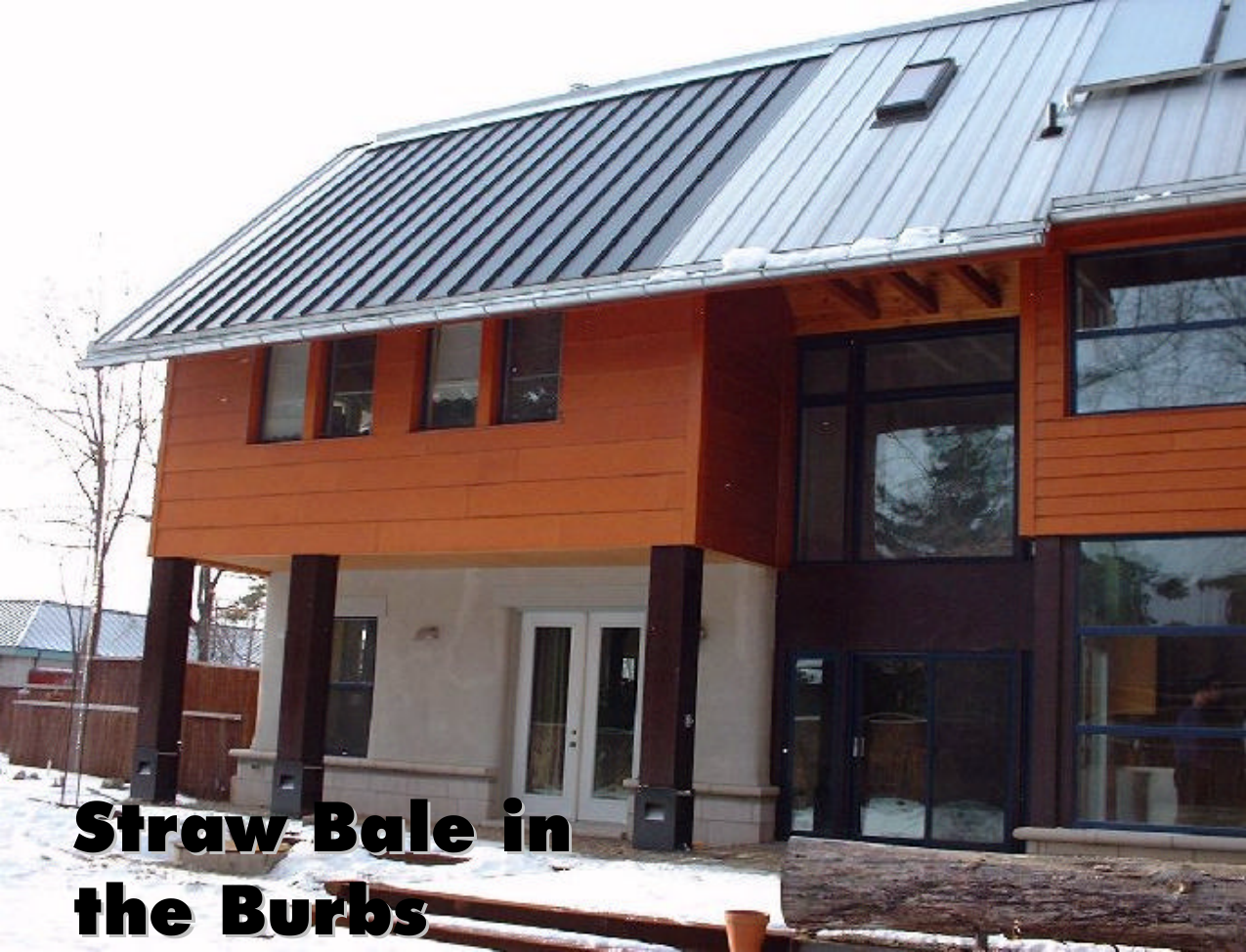
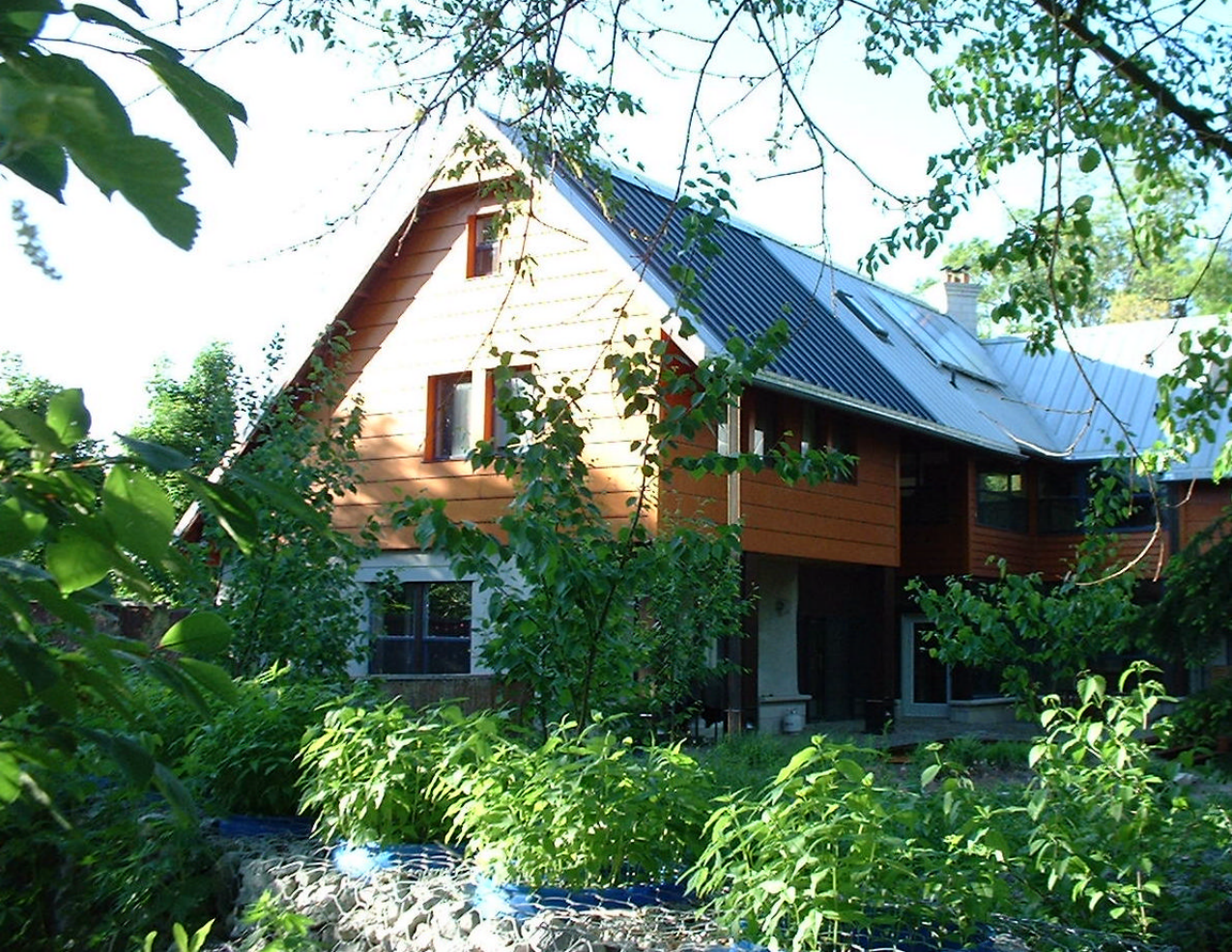
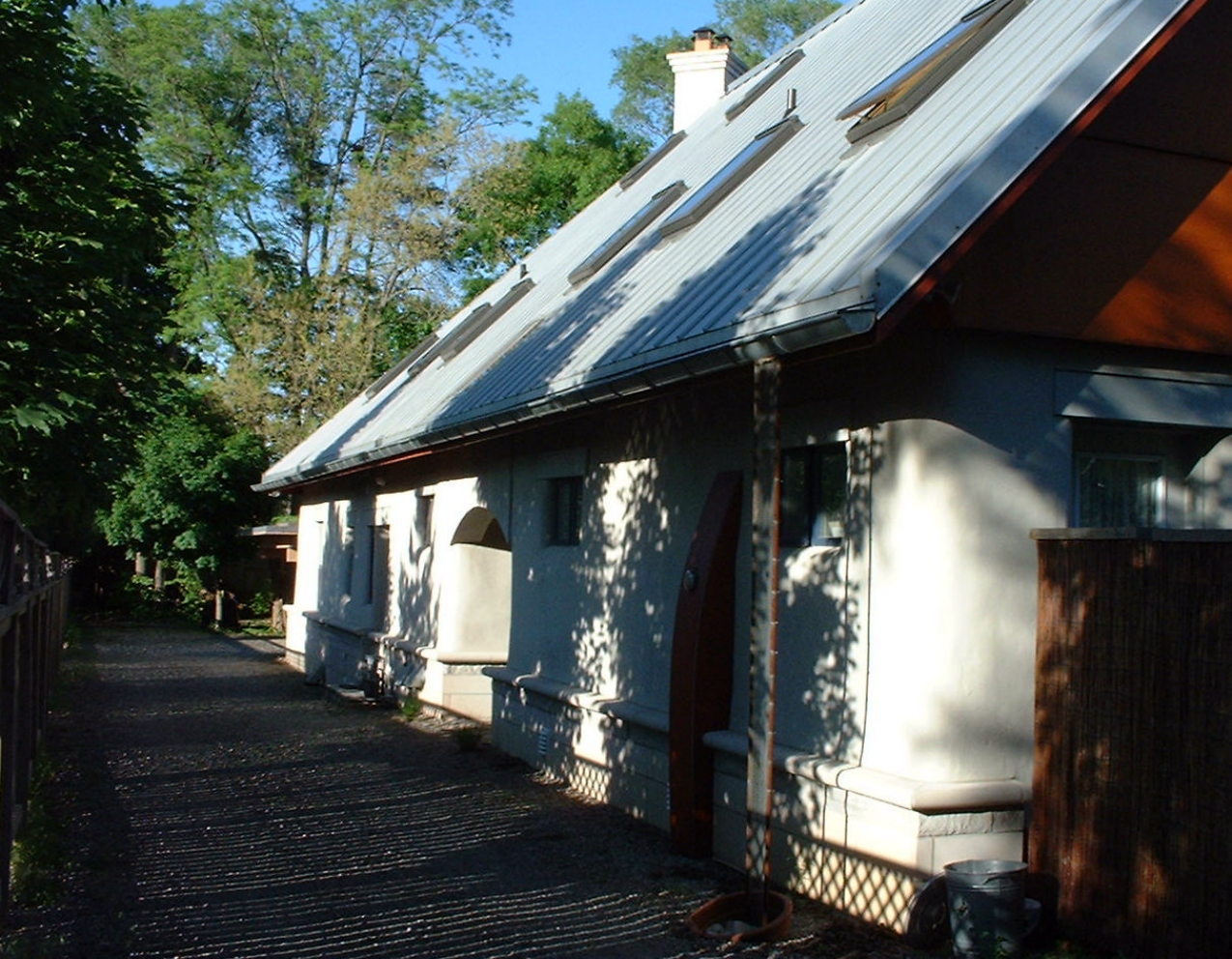
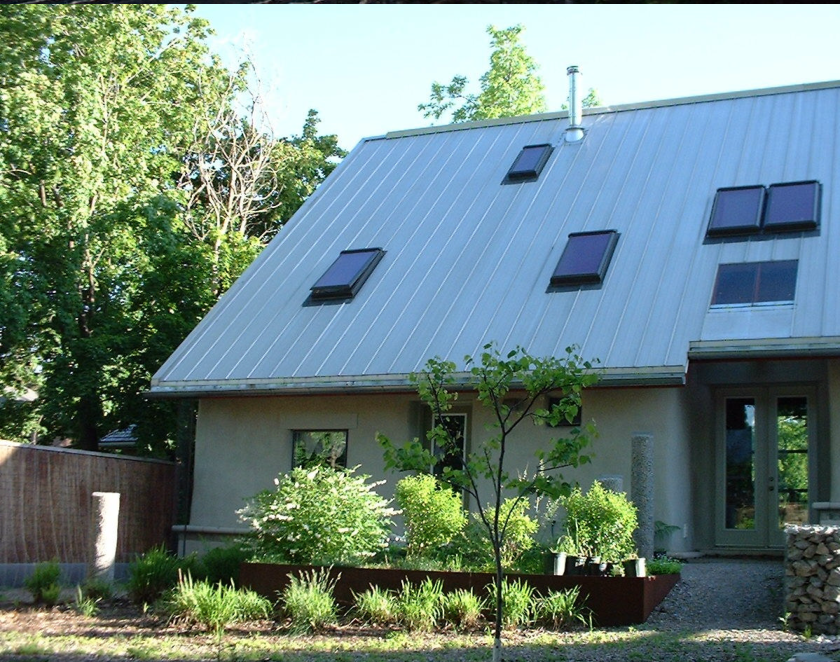
This home in the city of Mississauga features solar photo voltaic, solar hot water, in-floor hydronic heating, straw bale insulated walls, and a co-housing living arrangement.
Three women have created this sustainable dream home in the conservative city-suburb of Mississauga, just twenty minutes from Toronto. Achieving this dream took a great deal of determination patience and will power.
The genesis of this remarkable co-housing idea came from the needs of three independent, smart and creative women, Cheryl, Grace and Beth. Cheryl had learned about the concepts of co-housing in 1994. Cheryl was in her 30's and was concerned about her long term economic future as a single woman.
In 1997 She decided to talk to her friends Grace and Beth about the idea of working together to build a home that they could share . Grace had been looking for condos in Toronto. This would enable them to express their independence while supporting each other.
Renovating at the time seemed like the best means to try out co-housing. However, with Beth's sensitivity to chemicals the houses they looked at didn't work as she reacted to them badly. At that point they began looking for properties in Toronto and Mississauga. The two criteria for Cheryl were shopping within walking distance and easy access to transit. The property in the town of Clarkson, near lake Ontario, in the south end of Mississauga fit the bill.
They looked at five properties. The property cost $250,000. They purchased it in December 1998. Some concerns existed with the property as a honky tonk bar had been trying to get permission to start a
business on the corner. Several developers had looked at the property but had not done anything. Other properties simply didn't have things like easy solar access. One, for instance, was in a valley near a swamp. There was also a desire to have enough space to grow food. This was, as it turned out, the last undeveloped property in Toronto.
The day they closed on the property they met for a picnic lunch with Martin Leifhebber to start design on the site. It was critical that the design be done on the site, following the principles and ideas of Christopher Alexander, especially the book "A Pattern Language, Towns-Buildings Construction". Most architecture schools disdain him because he is "too people oriented". Decisions are then made on the basis of what people will live in the space, what God would do and based on the ideas of beauty. Beauty is, Alexander found, based on 15 things or patterns that were common to all people. Architects typically don't accept these ideas. Martin Liefhebber did however.
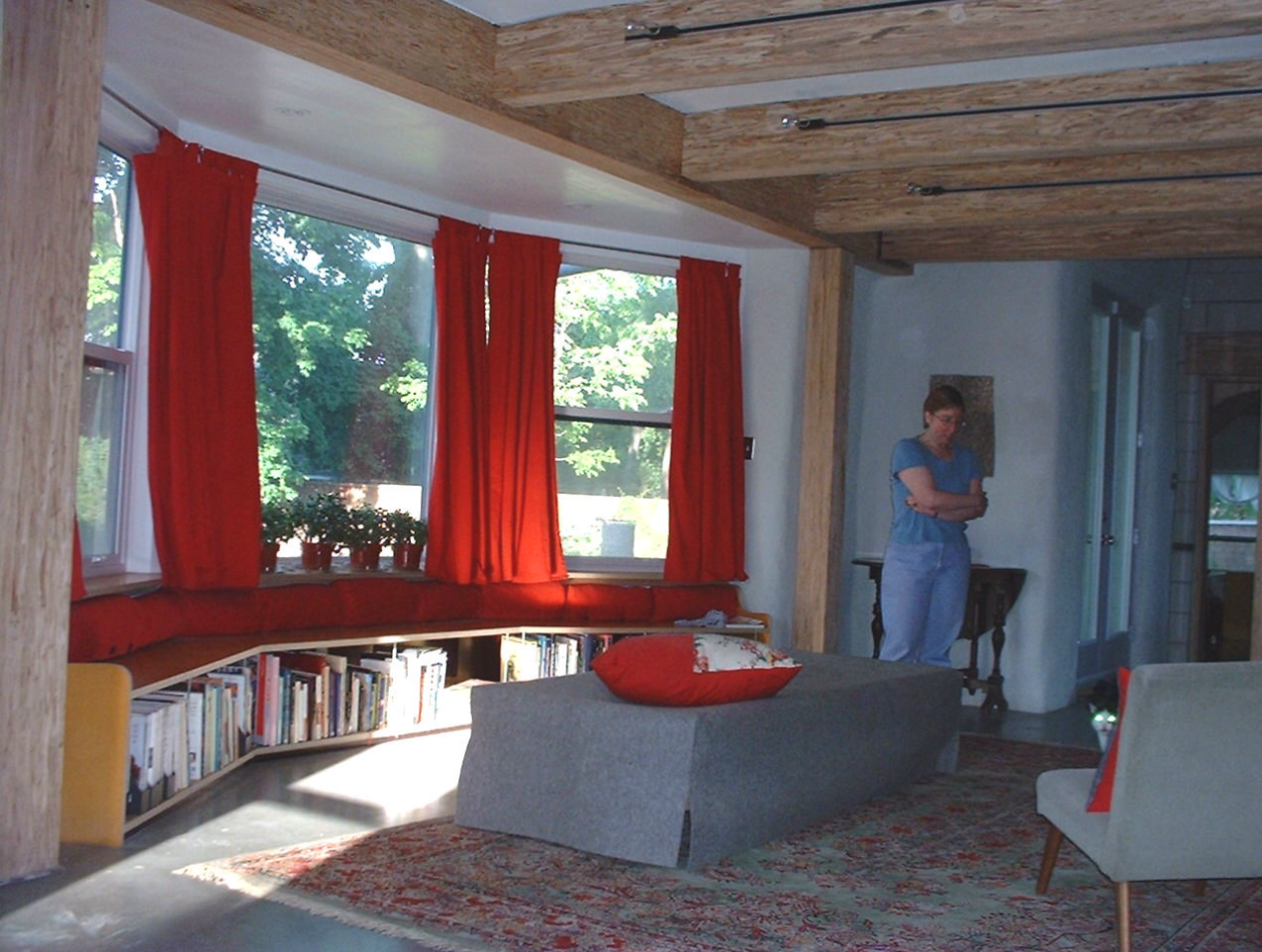
Some of the more successful ideas came through thinking through the Alexander ideas. This included the idea of thinking in terms of spaces instead of rooms. Also, the idea of always having windows on at least two sides of any space.
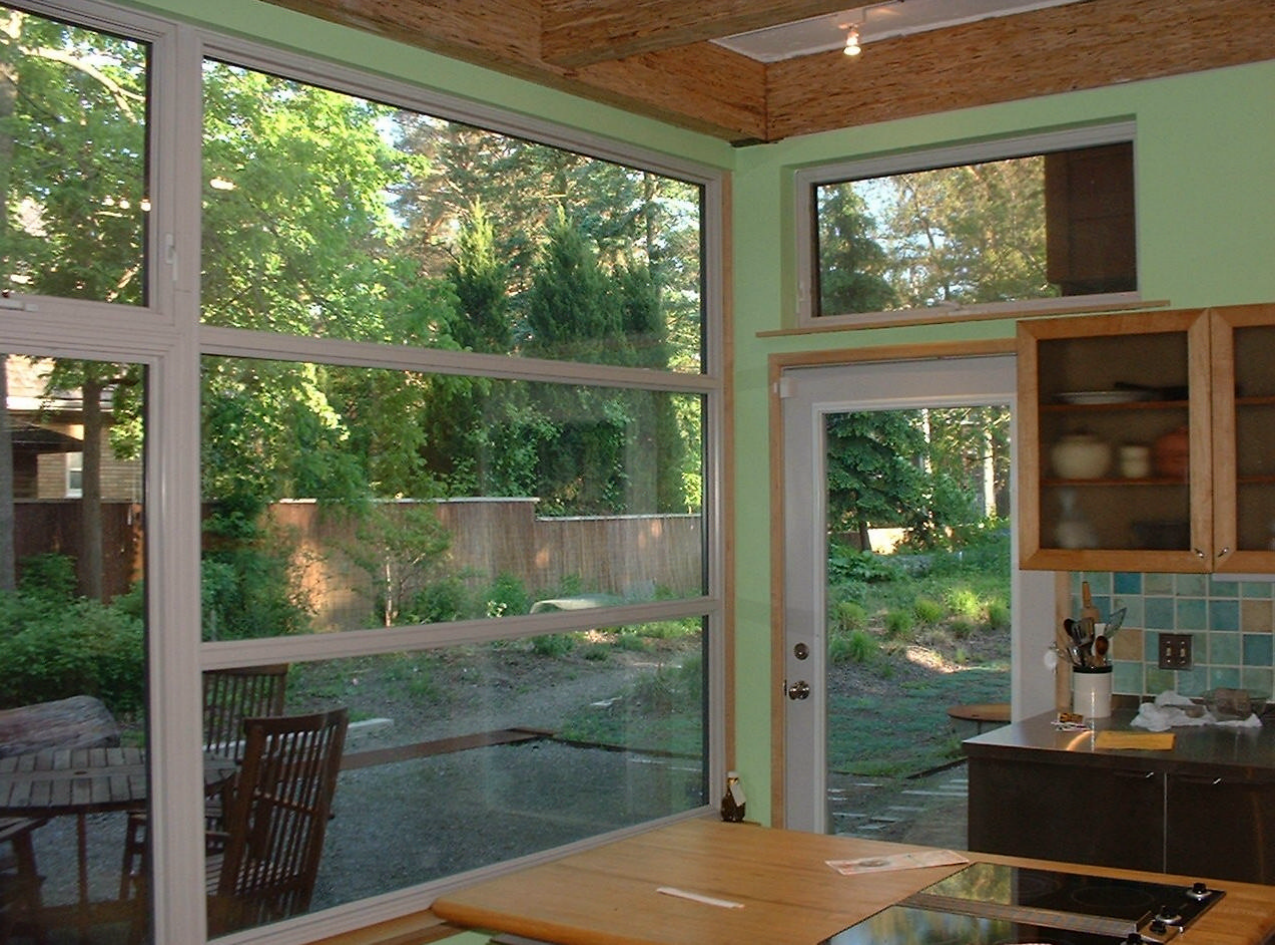
The design process also become very interactive as Grace would update Martin's drawings according to her views on Alexander and how she felt the space on the site would work. Light played a big part as is common in architecture. Lots of windows and light of course were the result. People, now , as it turns out, always mention how much light there is in the home.
The idea of using straw bale and solar had always been assumed. The primary goal was health, which very much included the health of the environment. So that both the materials and indoor air quality would be healthy. It is a natural fit to combine healthy materials with solar panels to ensure that the environment stays healthy.
After the plans had been submitted it took more than six months before they got any kind of response. A huge frustration was the city of Mississauga, which rather than getting behind this positive, innovative project, tried to stop it. Mississagua eventually issued a permit to build in the spring of 1999 without straw bale. So the second floor got enclosed without straw bale while the fight with the Ontario Building Code Commission began. The straw bale was critical to Beth so this was an important fight to win so that she could have a clean air environment. Unfortunately the Commissions building was so hard on Beth she could only attend meetings for less than an hour.
Mississauga realized that the house was a custom house in 1999. Martin had clearly documented the use of "cellulose" for insulation. At this meeting they finally asked what this meant. It meant straw bale.
It took until December 1999 for the Ontario Building Code Commission to rule in their favor. Then Mississauga delayed until March 2000 before they issued the permit to allow for straw bale. Straw bale construction took place in May 2000.
The cost of custom building this home, without the high end finish would be comparable to conventionl construction. The basic cost was approximately $150/square foot. However, this is much more of a house. Essentially the 6000 square feet are like five very different complex homes in one. This diversity and customization added substantially to the cost but also to the uniqueness and artistry. Each unit was essentially a custom house . Each space that was not shared was done specific to each woman. Cheryl estimates that the city of Mississauga added $200,000 to the cost of building the home. The home has no air conditioning. None of the women like air conditioning. The yearly operating cost is estimated at about $15,000 per year of which about $10,000 is taxes and insurance. Geo thermal was originally what Cheryl had hoped to use. Martin was not comfortable with this so an ultra efficient natural gas water heater was used. Radiant floor heating was not what Mississauga wanted but they did agree in the end.
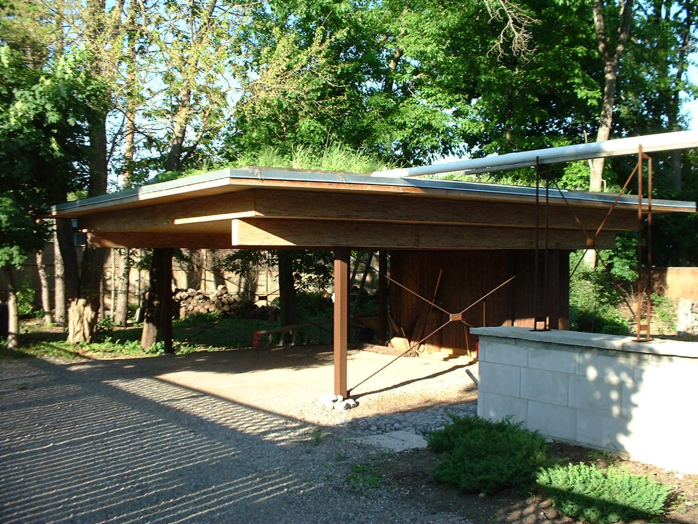
The city wanted several other standard things. They wanted the
driveway to be asphalt instead of gravel (that allows the water to naturally drain through the soil).
The fight to build this home took a great deal of energy and effort but they knew it was worth it. Actually building it was quite easy compared to the fight with the city. Much of the difficulty was the city constantly delaying and asking for more changes.
They found Martin Liefhebber as an architect through Grace who knew him. Martin looked at some of the houses they were interested in renovating to get a sense of how they could transform it into a sustainable healthy home. Martin had won the CMHC Healthy Housing contest several years before.
As Grace said many times this could have been a great partnership and showcase for the city. Instead it was an adversarial relationship that prevented many innovations. A key innovation that was not implemented was grey water recycling for the toilets and plants. This is very common in Europe and especially Germany where most homes do this.
The in-floor heating system is powered primarily by a solar hot water heating system. The Solcan system (Phone 519-473-0501 or Web www.solcan.com ) provides the majority of the water heating for the home. Solcan estimates that the system can reduce your hot water heating energy bill by 40%-60%. Considering hot water heating is one of the biggest energy hogs in any home this system may be considered in any home renovation or construction plans. The system is so reliable it can be expected to pay for itself several times over .
The Solcan solar water heater system connects to the existing hot water system and preheats domestic water. The solar collectors are mounted on a roof facing south. Two pipes are connected to the collectors; one carries hot fluid to the solar storage tank while the other carries the cool fluid back to the collectors to gain more energy. The solar storage tank feeds into the bottom of the existing tank.
Two main types of solar hot water heating system can be used. First, the closed loop system uses non-toxic antifreeze that circulates between the solar collectors and a heat exchanger which transfers the heat to the potable water in the solar tank, which feeds the existing water tank. This system turns on automatically whenever there is solar energy to be gained. The second, passive-systems is a seasonal application in our Canadian climate. It includes a solar collector with a water storage tank mounted directly above it. There is no pump or any moving parts; the natural circulation is driven by the sun.
The gas boiler provides additional hot water heating when required during dull days in the middle of winter. The system is easy to install and relatively inexpensive
compared to active solar system like photo voltaics. The system cost approximately $4,000.
From an architectural perspective building this home has taught Cheryl a great deal about how people perceive their environment. The opportunity to custom build your own home forces you to learn and think about how you live in spaces and what you will be doing in space and how the different features will affect you. In our modern world, we mold ourselves to fit our cookie cutter homes. Instead, when we use our natural abilities to build our own shelter it changes our relationship with the spaces. The connection to the space and site becomes much more intimate. The space actually expresses your values. It is an expression of who we are. So, what does that mean if we all live in a cookie cutter home built by an engineer or designer completely disconnected from us and who we are?
Building your own home puts you through a process that forces you to think deeply about how you live and what you do. Most architects and designers find it too difficult to accept this.
The home incorporates unisolar, flexible photo voltaic materials on the roof that convert sunlight into electricity. The system was designed and installed by Pers Drew who had been the renewable energy standards person for Ontario Hydro. The system is grid connected so that the electricity bills are reduced by the amount of energy generated by the solar photo voltaic system. The system also is a battery bank for emergency power. The passive solar features are a primary heating system . This includes the placement of windows primarily on the south face, the concrete mass floors for storing the heat from the sun that comes through the windows, and high quality fiberglass windows that insulatedthe heat that is captured. The feeling in the house is one of lots of light, fresh air, and simply beautiful comfort.
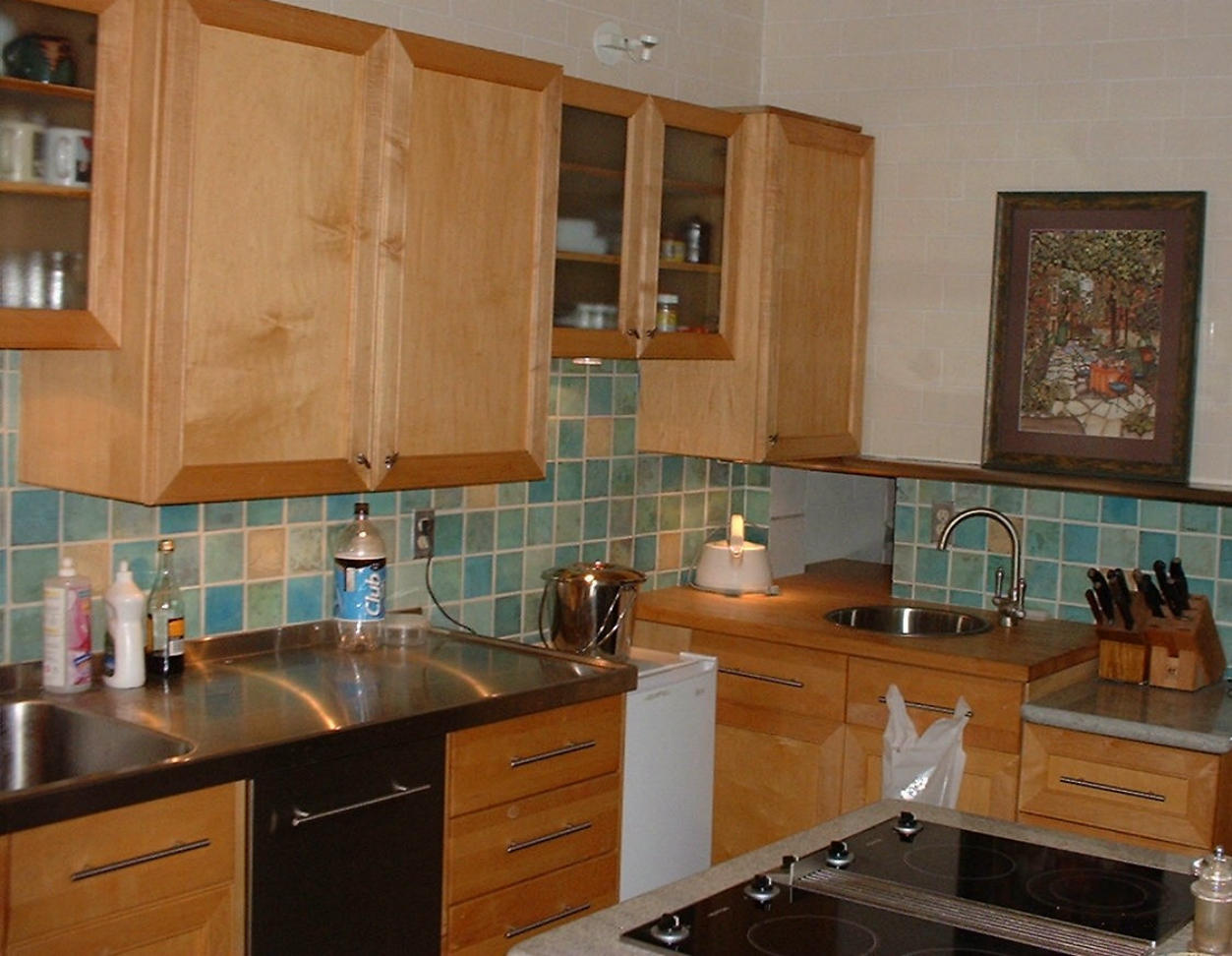
Materials used throughout were non-toxic and non-off-gassing as Beth has severe reactions to chemicals. This meant using plaster on the walls rather than the drywall (the drywall compound has chemicals that Beth is sensitive to).
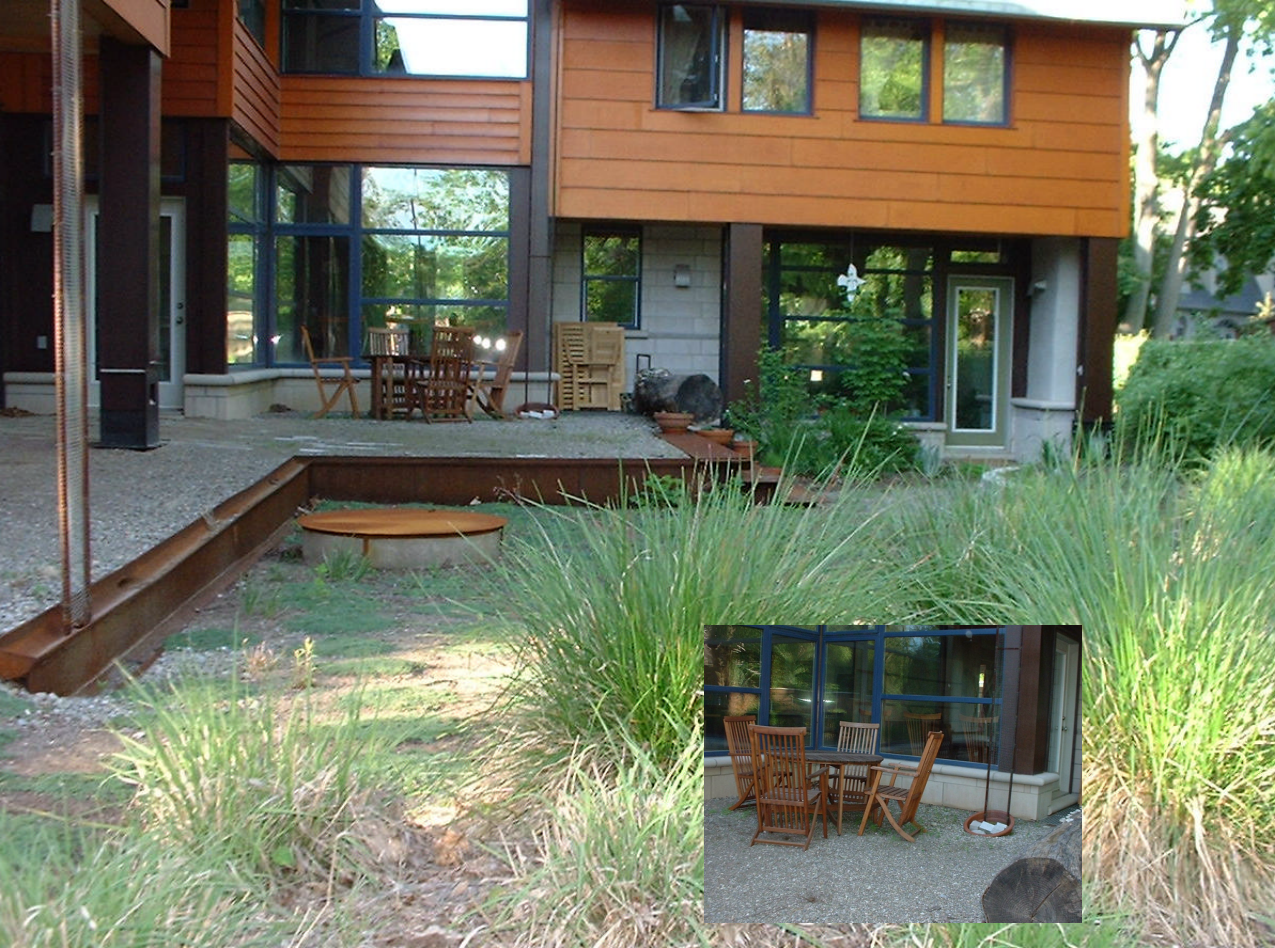
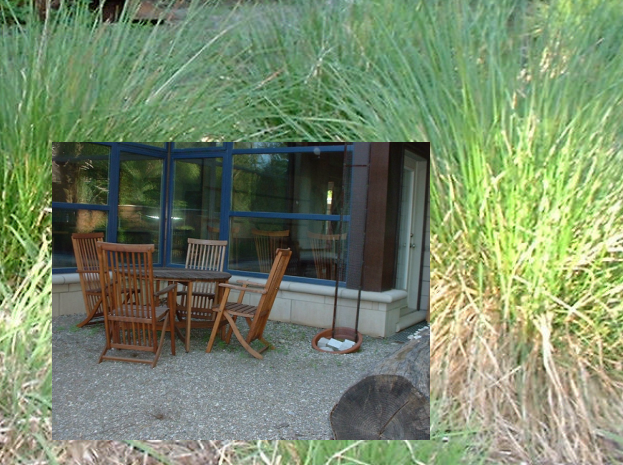
Cheryl now works out of the house in her new landscape architecture business in which she applies her recent degree in the subject along with her experience building this sustainable healthy home. The home's landscape is a deep reflection of her desire to learn from nature. The plants are largely native plants that require little or no special remediation. Most are quite draught resistant. Even the garage roof is planted with native grasses that further increase the comfortable healthy feeling throughout the landscape. The water from the roof is collected and stored in the well that already existed on the property for using in the garden and landscape. All the plants are perennials and the combination is constantly growing, evolving and changing both naturally and as Cheryl becomes more familiar with the site, as she decides.
More Things We Learned
- more than fifty straw bale homes have been built in Ontario - the Ontario Building Code supports straw bale home construction that is non-load bearing - Quebec and other provinces have permitted load bearing straw bale homes - Some books on vegetable gardening and landscape that Cheryl and Beth suggest: 1) The Ruth Stuart No-Work Garden Book by Ruth Stuart and Richard Clemence 2) Four Season Harvest by Eliot Colement
Products and Services
Solar Hot Water Heating System: Solcan Ltd., 126 Wychwood Park, London, ON N6G 1R7, Canada, Phone: 519-473-0501, Fax: (519) 474-1539, email: solarheating@rogers.com, web: www.solcan.com .
Lyle Jory, hydronic in-floor heating system.
Martin Liefhebber, Architect, www.martinliefhebber.com .
Per Drew, solar energy systems.
Fresh, holistic approach to community design, Cheryl Bradbee, www.pov-design.com .
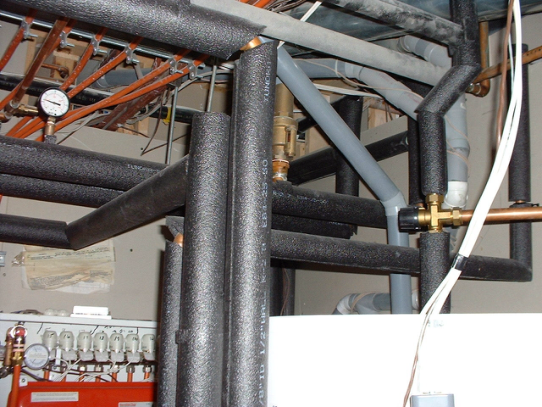
^ The copper tubing in the middle (covered with foam insulation) is the feed from the solar hot water panels on the roof. These supply heated liquid to the storage tank.
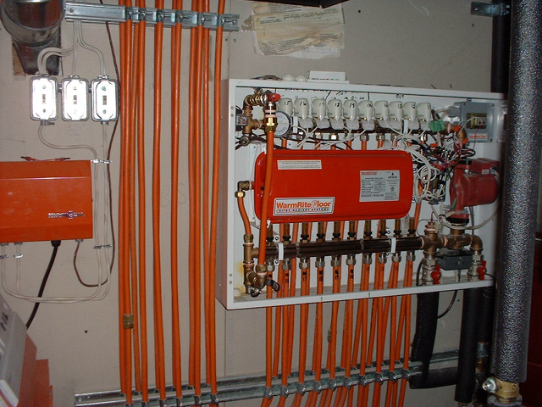
^ The hydronic in-floor heating system is heated primarily by a Solcan solar hot water heater. A ultra-efficient gas fired boiler heats the water when the solar hot water is insufficient to heat the home during the winter when there are cloudy days.
Design Description Site
In-fill lot within walking distance of local transit including buses, commuter trains, and walking/biking trails.
Within walking distance of village style commercial area.
The 'L' shaped layout provides a 6000 square foot living space with some shared and some private areas for three people.
Deciduous trees provide extensive shading in the summer for cooling while allowing passive solar heating in the winter when leaves are shed. Construction
Post and beam using paralam engineered wood product and site tree trunks
Non-load bearing straw bale walls finished with a sand, Portland cement, lime stucco mixture. Efficiency
Hydronic heating system.
Appliances are high efficiency in general including Miele clothes washer and dryer.
The gas boiler is about 95% efficiency. Passive Solar
Windows are Inline fiberglass windows with krypton gas filling to increase insulation levels. Fiberglass also reduces gaps between the glass and frame due to expansion and contraction differences that are common when metals are used.
Concrete floors are engineered to store the sun's heat. Solar Hot Water System
Dual panel Solcan system is the primary domestic and in-floor heating system Active Solar
Uni-solar strips are laminated to the roof to provide up to one third of the electrical energy in the house. This is supported by 60 batteries.Grid connected. Wood stove
Woodstock Woodstoves
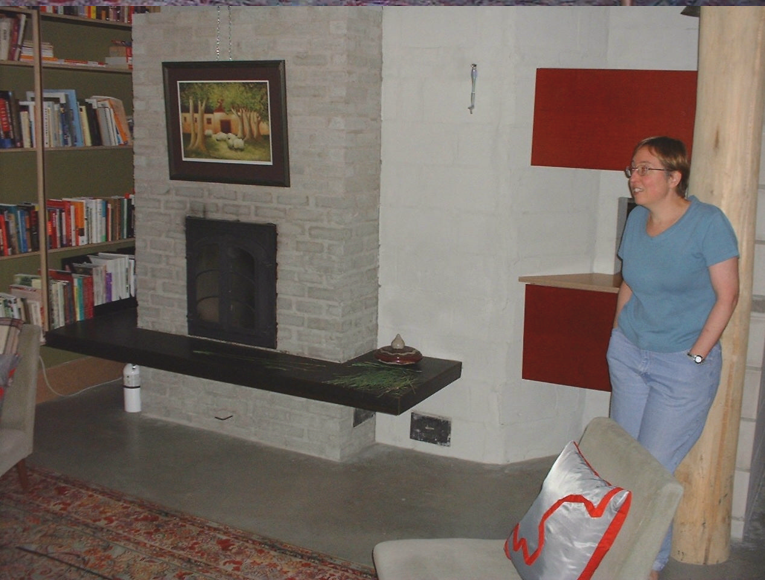
EPA rated to reduce emissions
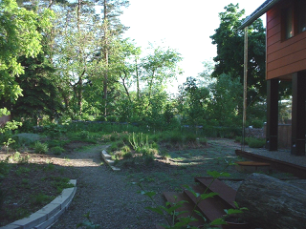
Food · Vegetable garden
-
Workshops
Everdale Hands-on Learning
HOME ALIVE! - The house that thinks, drinks and breathes. GRAND OPENING: FREE June 5: Join us in the celebration of this new addition to the Everdale demonstration models. Environmental Landscapes ... much more than 'landscaping'. FEE: $85 June 6: with Landscape Architect Brad Peterson of Environmental Design Collaborative We'll discuss history, current practice and techniques for planning, design and installation of environmental landscapes. If we have healthy homes and solar eco-villages, then we need a landscape that fits into and compliments these built forms. A permaculture design plan for Everdale's Home Alive! landscape will be included in the design session of this course. Straw Bale Construction: FEE: $300 Includes vegetarian meals and camping. June 11-13: 6 p.m. on Friday 4:30 p.m. on Sunday with Ben Polley of Harvest Homes Straw bales can be used to build homes and other types of buildings that are extremely durable, beautiful, energy efficient, low cost and well suited to our four-season climate. Lots of theory and practical experience building a straw bale cabin. (this will not include mudding and plastering. We recommend you take the plastering and finishing workshops set in July) NIA Dance Solstice Celebration FEE: $20 June 18: 7-9pm with Judith Thompson a certified NIA and Kripalu yoga instructor. NIA is a creative, barefoot, expressive fitness and awareness program, blending modern and ethnic dance, martial arts and yoga. Welcome the arrival of the summer season with an evening of dance, ritual and celebration. Please dress in loose comfortable clothing and bring a blanket. Wind Power Generation I (Intro to Wind Power Systems) FEE: $85 June 26: with John Hogg of Free Breeze Energy Systems This is the first part of a two part workshop. Mostly theory with a bit of hands-on. Explore the basics of wind technologies, the products available and their application potential Solar Power II: photo voltaic installation. FEE: $85 June 27: with David Nixon of Arise Technologies. This is the second part of a two part workshop. Hands-on with a bit of theory. We will walk you through the process of installing and maintaining your own solar p.v. system. Home Alive! In Depth FEE: $50 July 4: Lead by one of Home Alive's knowledgeable builders. Learn in detail how this house "Thinks, Drinks and Breathes" while seeing how energy and heat are produced and trying the alternative wastewater, solid waste and drinking water systems for yourself. Elements of the permaculture ecological landscape, house design, construction materials, energy production, appliance selection and more will be discussed with a descriptive tour, active demonstrations and lots of opportunity for your questions. Plastering and Finishes for Straw Bale Homes (Cement-lime) : FEE $85 July 10: with Ben Polley of Harvest Homes Plastering is an art unto itself. Learn skilled techniques to become proficient at mixing and troweling traditional cement-lime plaster to provide elegant and professional finishes. Colour tinting, stucco spraying, interior finishes, reliefs, inlays and mosaics will also be discussed with some hands-on opportunities. Plastering and Finishes for Straw Bale Homes (Earthen Plasters) FEE $85 July 11: with Chris Magwood of Camel's Back Construction Earthen plasters are a healthy, non-toxic, and inexpensive way to create plastered finishes that are ideal for natural building or renovations. Learn how to use local soils and fibres to create beautiful and durable earthen plasters for straw bale walls, or for any other plastered interior or exterior surface. Learn how to sample soils, create test patches, and mix for base, second and finish coats. Wind Power Generation II (Wind Turbine Installation) FEE: $85 July 17: with John Hogg of Free Breeze Energy Systems
This is the second part of a two part workshop. Mostly hands on with a bit of theory. See a turbine in action and learn all about the nuts and bolts involved in installing a wind turbine. Solar Hot Water Systems FEE: $85 July 18: with Michael Holm of SOLARCO Learn to select and install a system, which will heat your water with the suns rays. Hands-on and educational. Home Alive! In Depth. FEE: $50 August 8: see July 4 workshop for details. Everdale Music FESTIVAL August 14: On Saturday, August 14, from noon till midnight, we're hosting a day of music and entertainment at Everdale for you and your family. As well as music on the main stage (mainly folk and blues), weÕll have live entertainment for the kids and events that will bring out the kid in all of us. Meals will be provided at a reasonable price Ð delicious organic food from Everdale and other organic farms in our co-op network. Tickets will be available by the end of April. Stay tuned for developing details on our website: Tuning into Plant vibrations. FEE: $50 August 15: With Janice Canning a registered herbalist with the Ontario Herbalists Association. Exploring the vibrational energy of the plant world. By connecting with the sprit and essence of medicinal plants we can find our balance. Safe and Simple Canning Techniques FEE: $50 August 28: with Cathy Hansen and Ginny Pearce These prize winning canners will walk you through some safe and simple techniques to preserve the summers harvest for winter enjoyment. Tomatoes, pickles, pesto and moreÉ Home Alive! In Depth. FEE: $50 September 5: see July 4 workshop for details. Autumn Harvest Picnic
September 11: 1pm-6pm. Take a tour of the organic farm, try your luck at the harvest games, and check out the solar and wind power systems. Fun for the whole family. Bring a picnic dinner weÕll supply the corn roast. No need to register in advance. Just come out and enjoy the day. Intro to Sustainable Living. FEE: $85 John Wilson presents the essentials of sustainable living. Organic Gardening: Seed Saving FEE: $50 September 25: with Bob Wildfong president of Seeds of Diversity Canada. Learn how to collect and save youÕre your own veggie seeds to plant next year. Grey Water Systems FEE: $85 October 2: with Doug Joy is a professor of water resource engineering at the University of Guelph and the general manager of the Ontario Rural Wastewater Centre. Details on the various types in use; what works, what doesnÕt and the laws governing these systems. Medicinal Herbs, Identification and Preparation FEE: $50 October 17: see May 30th workshop for details Building Design-getting your ideas on paper FEE $85 October 23: with Larry Benville, 25 year design professional with a background in sustainable construction. Working through design sketches, we will get real about budgets, design realities, and most aspects of the construction process. For more information on attending: Web Site: www.everdale.orgPhone: 519-855-4859 E-Mail: info@everdale.org-
Events
August 28, 2004: SunFest 2004 Tour a working solar/wind powered home. See the awarding winning Wilson Natural Home. John Wilson will be giving tours. Learn about the amazing green roof, straw bale walls, and passive solar design features. Talk to the experts to find out how you too could be running your meter backwards.
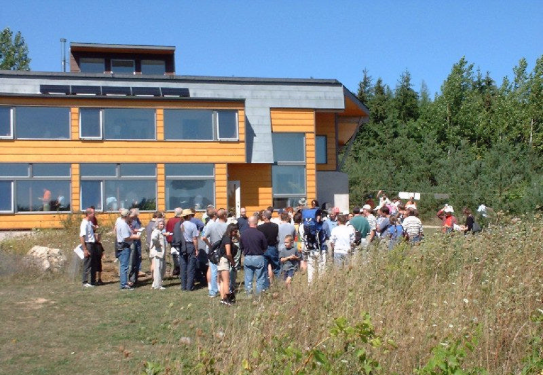
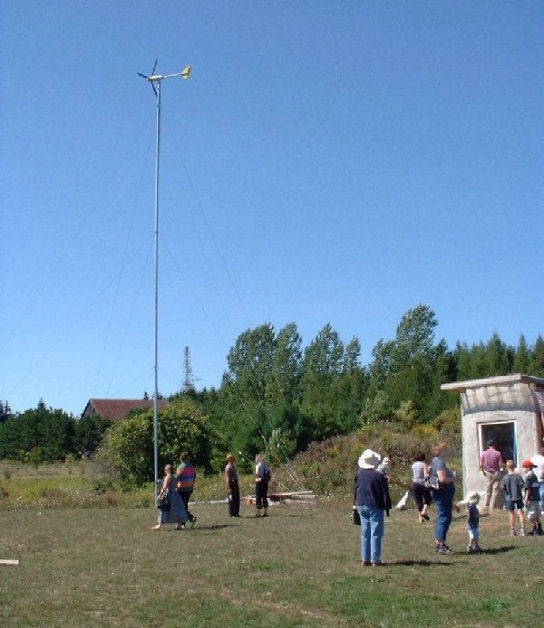
For more information on attending or exhibiting: Web Site: www.NaturalLifeNetwork.com/sunfest2004/Phone: 519-942-3266 E-Mail: john.wilson@naturallifenetwork.com-
Join Us
Become a part of a community of people around the world dedicated to living in harmony with nature. We've created this network so that we can all share our ideas, experiences and knowledge. The changes we envision are revolutionary; however our goals are to make them the norm. The organization is about the practical, inspiring and real application of living gently on the earth so that our children may enjoy a clean, healthy and productive environment.
The simple point is that we all can "do" much more - and that means all of us or it won't work. For example:
§ Choose or create a home/community that is powered by the sun; § Grow and eat organic food; § If you must travel select the most efficient means, walk, bicycle, tele-commute, travel by train, bus, ultra-efficient car, or fly; § If and when possible, work in nature - grow your own
organic food, restore nature around you, put your investments to work for natural living. What will amaze you that everything we need to live this way exists. The cost over the longer term is less. The results are a happier more healthy self and family. Start learning how today. Member benefits:
Monthly Natural Living Journal full electronic edition.
E-Mail Question & Answer (3 per year, no more than 1 per month.)
Directory listing (optional) and Natural Directory.
Discounts on some products and services offered by Natural Life Network. Sign-up for membership at: www.NaturalLifeNetwork.com-
Next Issue
Freedom Off-the-grid For weekly updates, special offers, and additional products and services visit our web site: www.NaturalLifeNetwork.comHave a question? Ask us and we'll try and include a response in our next issue of the Natural Living Journal. Have an interesting story to tell that relates to natural living? Contact us any time with your questions, concerns or ideas at: john.wilson@naturallifenetwork.com-