Personal Power in a Solar Village
Personal Power in a Solar Village
Keynote for the Commerce and Engineering Sustainability Conference (SEEK) at Queen's University in Kingston, Ontario, Canada.
By John Wilson — March 8, 2014.
Thank you, Kelsey, and thank you to all the organizers — Hayley and Cam especially. You've been great at welcoming me and everybody else to the conference. I've attended most of the speaker series, and it's been a really wonderful experience — inspiring to see so many different ideas being presented, and projects that are making a huge difference by bringing renewable energy to our province.
Before I get started, I just want to say that we are on First Nations territory, and I want to thank the First Nations for taking care of this land for thousands of years. That's actually how David Suzuki opened the World Wind Energy Conference in 2008, which was held right here in Kingston. That conference was a pivotal moment in the transformation of Ontario toward a sustainable society. It's the moment when Hermann Scheer came from Germany and made an incredible, forceful case for the move to 100% renewable energy. David Suzuki was there, and so was the newly minted Minister of Energy, George Smitherman. They connected Smitherman with Scheer, and Scheer took him to Germany and showed him what they were doing there. Smitherman brought that home, and the feed-in tariff was the result. A lot of the talks we heard at this conference were about programs that grew out of that. It's incredible to see the transformation that started right here in Kingston about five years ago.
So I'm going to walk you through the involvement I've had in all of this over the years. It's really a personal thing — this is about you and me, and what we can actually do to create what I see as, and what I call, a Solar Village. Those are the real, tangible things that you and I can all do, starting right away.
A Solar Village
There's a video that's part of my documentary Hope for a Change: Renewable Energy. It shows the Earth rotating during the night and then the sun rising over the horizon. I find it an incredibly inspiring vision, because it shows how wonderfully beautiful our Earth is. It's a little island in space, a beautiful thing that we are the caretakers of. We are the ones responsible, and this is a pivotal time. We are the generation that has to make the change to 100% renewable energy — and we also have to close the loop on all of our resource cycles, in a very short period of time. At the conference in 2008, Hermann Scheer said we had twenty, maybe thirty years to make these changes. It is extremely urgent.
The thing you'll notice about the Earth is that it is a closed system. There's the soil, there's the air, and it's finite. All the resources on Earth are finite, and we have to find ways to close the loops on them. The one magical thing that is not finite is solar energy — the sun, which comes up every day and gives us limitless renewable energy that we simply have to learn to harvest.
There was a famous Canadian philosopher, Marshall McLuhan, who called this the "global village" — a simultaneous happening. I believe that's largely true: with the internet and wireless communication, which I've played a part in, there's an incredible ability for all of us, through our actions and our communication, to share what we do so that everybody around the world can understand what's possible with renewable energy and closed-loop resource cycles. We have incredible potential. But globalization, as it has come about, has also caused problems, and that's an area we need to work on. That's why I like to think of this world through a new vision, and I call it a Solar Village. We are all one community. The Earth is one place; people all over the world are the same. So we have to work together as one community to solve these problems — the move to 100% renewable energy and closed-loop resources.

Where this began
So where did I get this idea? It's pretty obvious nowadays, but when I was going to university at Carleton, in Ottawa, I had the great opportunity to hear David Suzuki give an incredible speech about environmentalism — about the need to take care of the resources and the nature all around us. He also said something that really stuck with me: he described how the jobs you take on after university make a huge difference in society. The things you do are extremely impactful. He gave the example of an engineer — and there are many of you here — who becomes, say, a nuclear engineer in a high-paying job designing nuclear missiles. You could get paid very well, but what are the implications of that design? What is your responsibility if that missile is used in a war, for the casualties a massive nuclear explosion might cause? That really stuck in my mind — that what we do with our careers matters a great deal, and we have to take responsibility for everything we do. It's not easy to do, but it stayed with me.
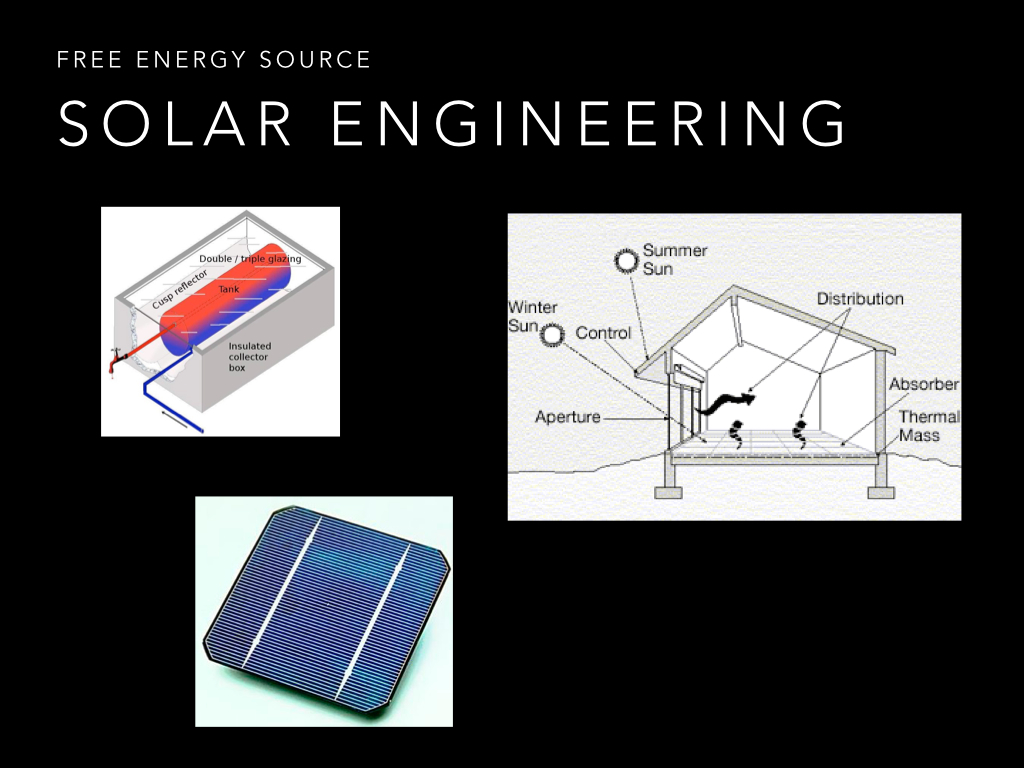
I then got accepted into engineering at the University of Toronto, following in my father's footsteps — more wanting the lifestyle he had than knowing what I actually wanted to do with my life. That's something we all have to ask ourselves, and I was asking it in university: What am I doing? Why am I here? What am I going to do with my life that's important? I was in civil engineering, and I became fascinated by the idea of solar engineering. I started reading books about passive solar houses that needed no fossil fuels for heating, and about hot-water heating systems driven by the sun. These were things I'd actually grown up around in Cyprus, Haiti, and the Dominican Republic when I was young — I'd seen them on millions of houses — but they weren't here in North America, and I didn't understand why. I thought they were amazing, because it's free energy. The most amazing thing of all was the solar calculator — those little photovoltaic cells that convert sunlight directly into electricity. I thought, that's magic, that's genius. That's biomimicry — looking at nature and learning from it how to do things in a sustainable, safe way.
But there were no courses in any of this. There was no solar engineering course, and I was frustrated. In the end I was doing it for the wrong reasons, and I failed out of engineering at U of T. Fortunately, my brother was an entrepreneur starting a publishing business, so we ran a publishing business together — and we were incredibly successful. I was about nineteen or twenty, and we were making a lot of money; cheques were flying in the door as we sold magazines during the desktop-publishing revolution. I was interviewed by a small-business magazine, with big pictures, and I thought, I'm a big shot, I'm going to be somebody important. I put up a big picture in my office of a red Porsche 911 Turbo and thought, man, this is going to be amazing. The next year we said, let's go for it — we advertised everywhere and put all our money into all kinds of things. Cash flow became a problem, and we ran out of money. We hadn't studied business in school, so we learned everything the hard way. We didn't quite go bankrupt; we sold the company to a group in California who bailed us out. But I owed about $30,000, I was about twenty years old, and I'd just flunked out of university after two years. I thought: what the hell am I doing with my life? What's the meaning of all this?
Experiments with truth
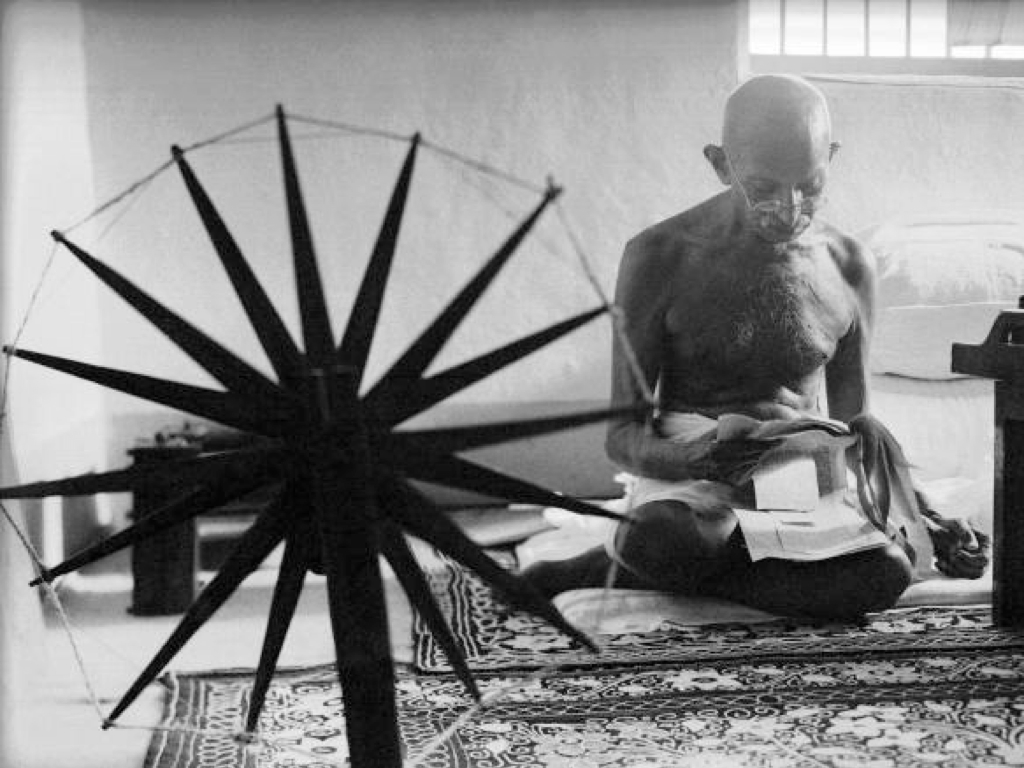
So I started to read, and to ask those questions about the purpose of my life. One of the books I came across was Mahatma Gandhi's autobiography, with an interesting title: The Story of My Experiments with Truth. I'd highly recommend it — and I'd recommend always looking for the truth in everything. It's an incredibly powerful thing. I was inspired by everything Gandhi did to bring down the British Empire: a man in a loincloth, making his own clothing, using communication and direct action against injustice, and living by his beliefs — living in an ashram, growing his own food, feeding the goats, looking after the children, mixing all religions together and proving it could work. That was extraordinary to me.
There's a great story Al Gore tells in his book Earth in the Balance. A mother came to Gandhi with her son and asked him to tell the boy to stop eating sugar, because it wasn't good for him; she thought the boy would listen to such an important person. Gandhi said, go away and come back in two weeks. They came back, Gandhi talked to the son and convinced him to stop. The mother asked, why did you make us wait two weeks — why didn't you just tell him then? And Gandhi answered: I had to give up eating sugar myself first; then I was able to talk to him about it. That is an incredibly powerful idea — as someone said in an earlier session today, be the change you want to see in others. I've lived by that, and I know from personal experience over twenty-five years that it makes a big difference. When you've done the work yourself — put up a wind turbine, put up solar panels, been through the whole process — it changes everything. So I strongly urge you to do that.

Children and the future
The next big thing is that one day you're going to have children. I had a huge epiphany when my children were born: that's when you realize how connected you are to the future. You live through your children, and the generation after them — we are connected through all generations. I felt this incredible urge to protect them and to do everything in my power to make sure they had a world worth living in. Before long, you'll all have that extraordinary experience of a child coming into the world, and it will blow your mind. It sure did mine.
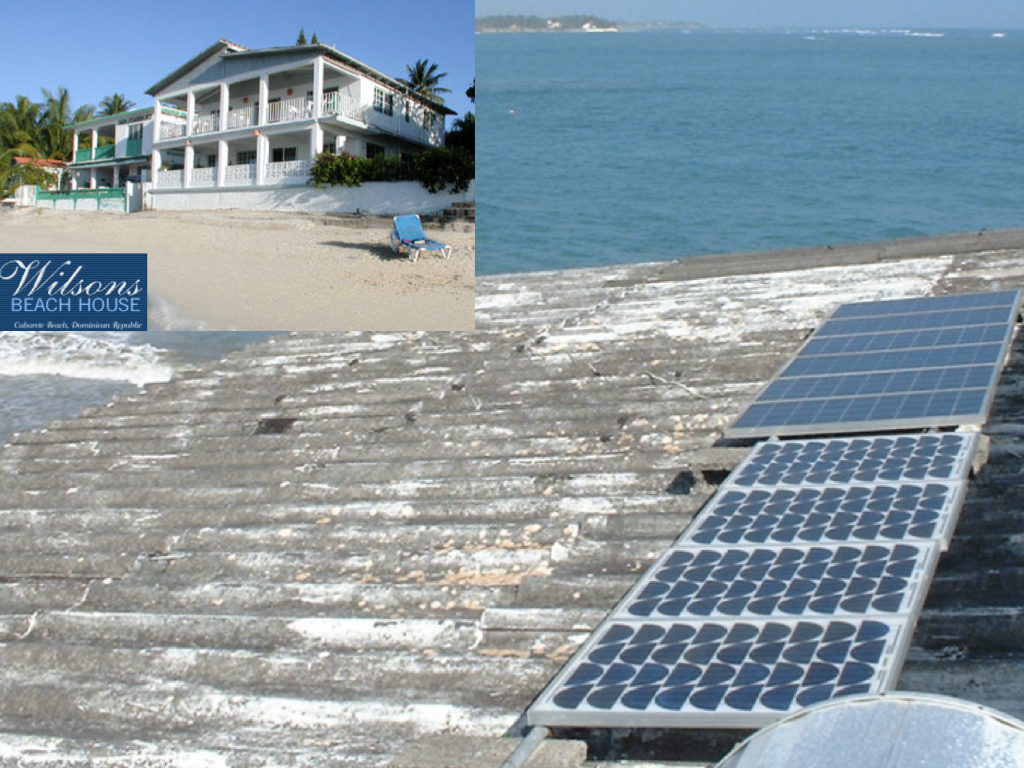
Around the same time, my parents — wonderful people — had a dream of a beach house in the Dominican Republic. They'd talked about it the whole time we were growing up, and eventually they bought one right on the beach. My dad's an engineer, and I'd always been telling him about all the solar textbooks I'd read, so I said, you've got to put solar on the beach house. Most dads would have said, you're nuts, I'll put in a diesel generator. But we were sitting in a bar on the beach when the owner came up and said he had eight solar panels he wanted to sell. My dad bought them, and put them up about twenty years ago. His was the only beach house in Cabarete, Dominican Republic at that time that operated without a diesel generator most of the time. It was an amazing experience: despite the salty air and difficult conditions, the panels kept working — no moving parts. In the Dominican Republic the power goes out for hours a day, especially back then, so those panels provided the fans, the lighting, and the cooling needed to run a small commercial operation. We had sixteen batteries to maintain and look after, but it was remarkable how well it all worked, even in a difficult environment. That's where I started to learn how well solar really works.

A warning to humanity
Around that same time, the Union of Concerned Scientists issued its "World Scientists' Warning to Humanity." This was in 1992, around the time of the Rio conference on the environment. It was a clear call that all of Earth's life-support systems are in trouble — the air we breathe being polluted by carbon and other pollutants, the biosphere and the animals in decline. About 1,700 scientists, most of the living Nobel laureates at the time, signed it, saying we had to act quickly and act now. So there was a clear scientific consensus back in 1992 that we had to get to work — and that's what I started to do. For some reason the media missed that important story, and that's something we still need to figure out.
Understanding the problem
When you're an engineer working on a problem, you have to figure out the underlying basis of it so you can solve the priority issues. Picture an oil tanker — there are thousands of them shipping crude oil all over the oceans. They represent the fossil-fuel economy we've created over the last sixty to a hundred years, the economy that creates the carbon pollution driving climate change. We have to transform away from that as rapidly as we can. Those crude-oil tankers are incredibly big, powerful machines — just like the oil industry, which has enormous money and power, and it's going to take a long time to turn that tanker around. So we have a lot of work ahead.

Break it down, and what creates all the emissions causing climate change? Transportation, agriculture, electricity and heat in our homes and buildings, and land use. That's essentially everything in our lives. Everything in our homes and buildings, everything we use to grow food, and everything to do with transportation has to be transformed to 100% renewable energy and renewable resources. The question is how — and how we get confident that it can be done. We get out there and start doing it.

It helps to know what you're up against. ExxonMobil pulls in around $400 billion in revenue a year and makes about $44 billion in pure profit. The Canadian federal government is in roughly the same ballpark on revenue — but it's also some $1.3 trillion in debt. So you start to see where vested interests and economics play a huge part in where we're heading. You have to be very clear about where different players are driving things, and address that in what we do.
Becoming the change at home
I started by doing things myself. When Lee — my wife — and I were having our children, the first thing we did was organic food. We'd go up to the Carrot Common in Riverdale, buy organic vegetables, mash them up, and feed them to our kids. That's really where it started: with recycling, being careful with all our resources, and turning the heat down. But I had bigger dreams. I wanted to build a 100% renewable-energy-powered house. I'd been reading all the books about it and telling Lee, and she'd look at me and say, "I don't know about that, John. I don't see too many other houses with solar panels on them. If it were such a great idea, wouldn't everyone be doing it?" I had to admit there was some logic to that.
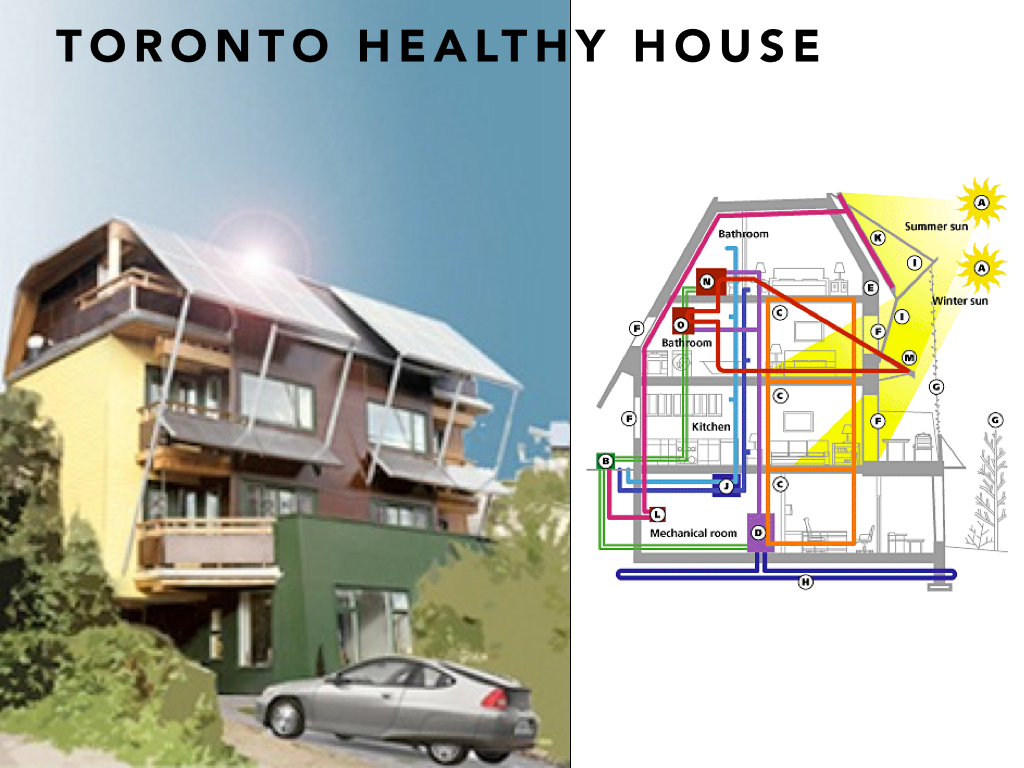
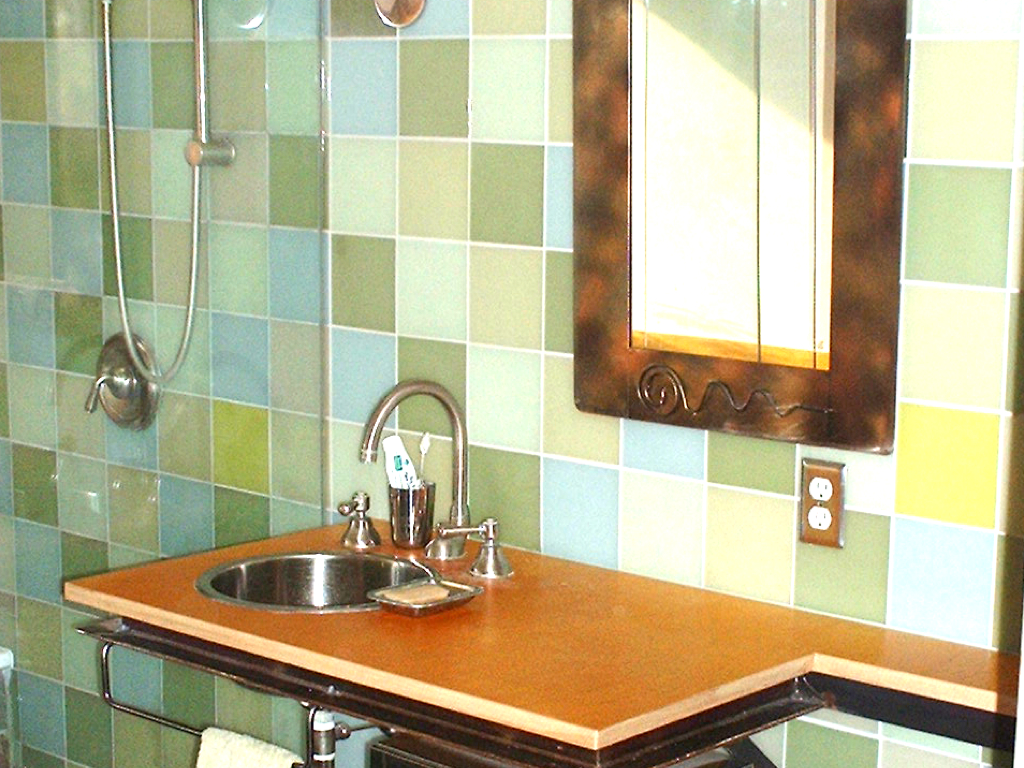
Fortunately, a few years later — after our kids were born — the Toronto Healthy House was built in Riverdale, and we had the chance to tour it. It has solar photovoltaic panels and solar thermal hot-water panels. It's actually a duplex: one side completely off the grid, the other side on the grid and running the meter backwards with its photovoltaic cells. It was passive solar design — windows on the south side letting the sun in to heat the concrete floors inside — and it was built largely of renewable resources: bamboo flooring, countertops made of recycled glass. Lee started to say, "This is beautiful. It's comfortable, it's warm, it's modern — I love it. Let's get going and build our dream eco-house."
Building the straw-bale eco-house
Before we could do that, we had to learn a few things, because we'd had the idea to use a waste material — straw bales — in the construction. When I first heard of that, all I could think of was the Three Little Pigs: didn't the wolf blow the straw house down? So I did what I do when I'm nervous about a technology: I read everything about it. It turns out straw bale is better at resisting fire than conventional construction; it resists pests; it's a natural "breathing" wall, so you don't need vapour barriers; it super-insulates but doesn't require a mechanical heat-recovery ventilator; and you can learn to do it yourself.
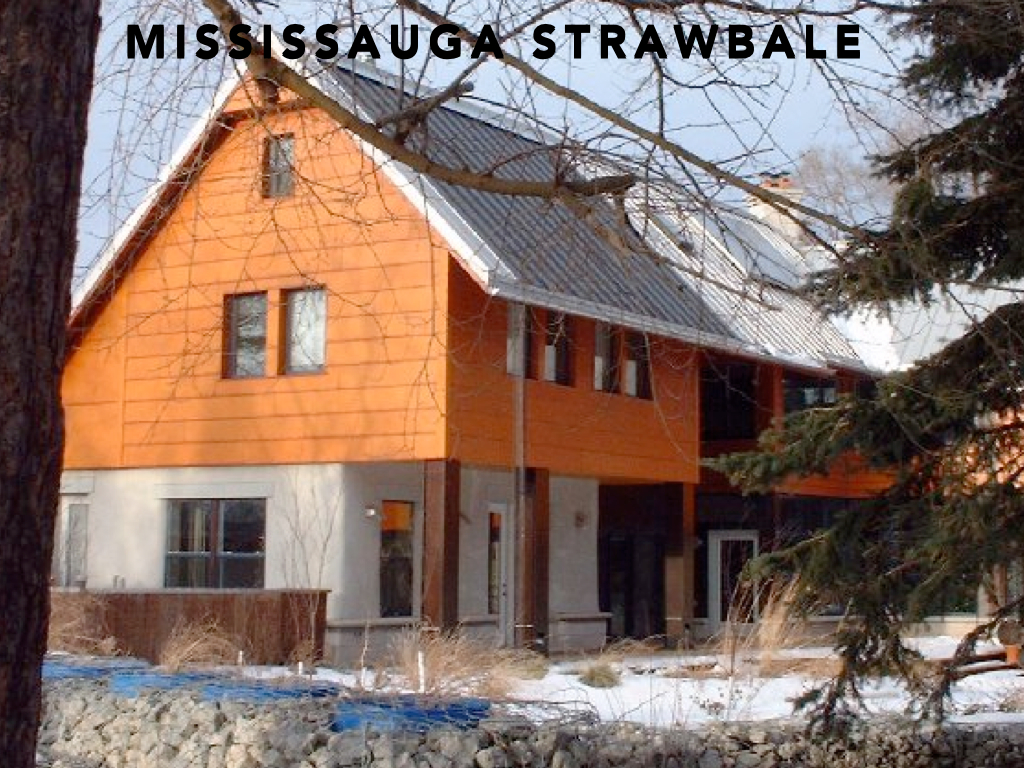
So before designing and building our own house, we worked on a 6,000-square-foot straw-bale house in Mississauga. Three women had combined their resources and skills to build it together. It's got thin-film solar on the roof, solar thermal as well, and it's entirely straw bale. Lee, our kids, and I helped construct those 6,000 square feet of walls over two weekends, with about forty volunteers learning as we went — like a barn raising. It's a gorgeous house, full of light. The architect was Martin Liefhebber, who also designed the Toronto Healthy House — so of course we chose him for ours, too.
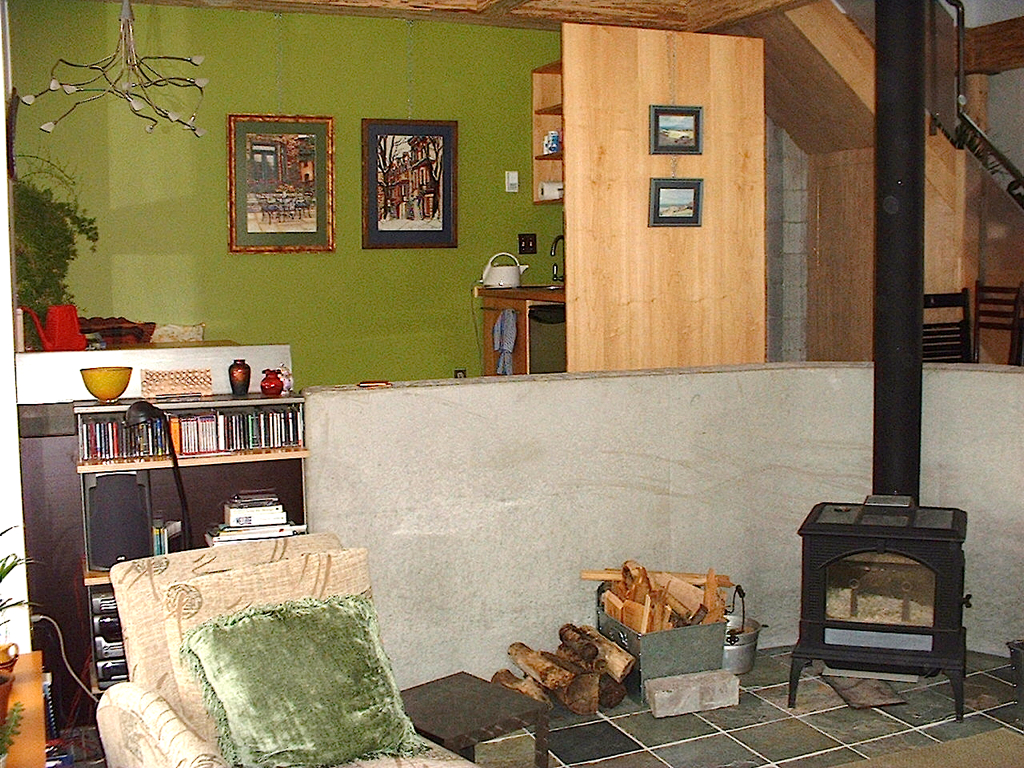
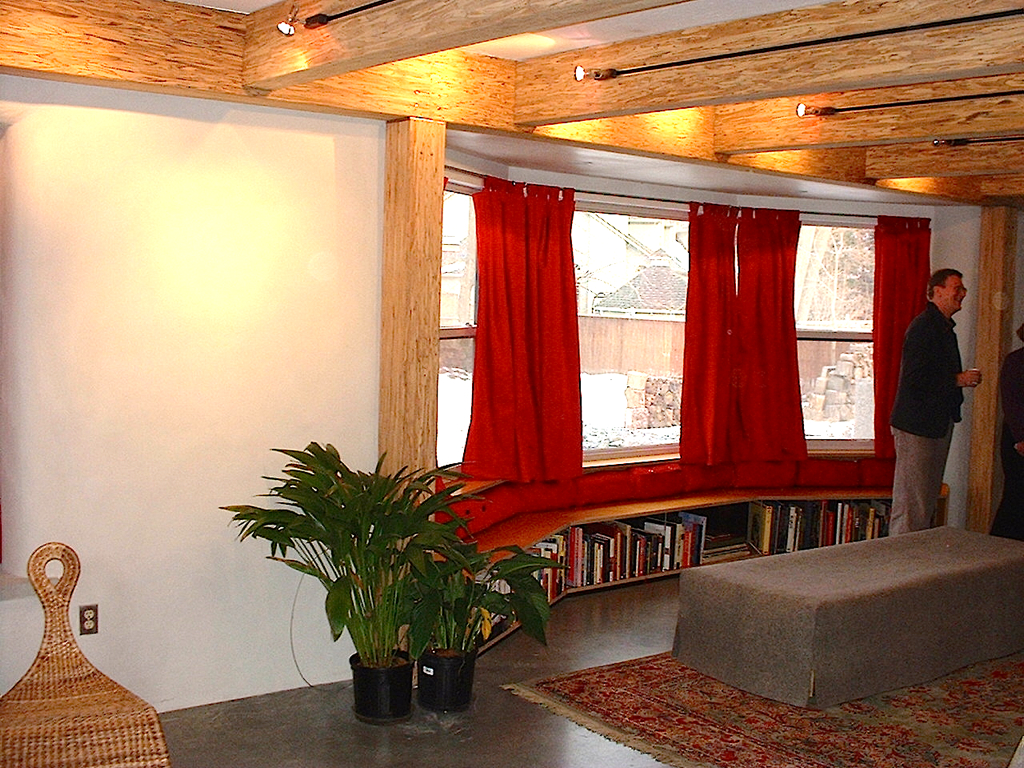

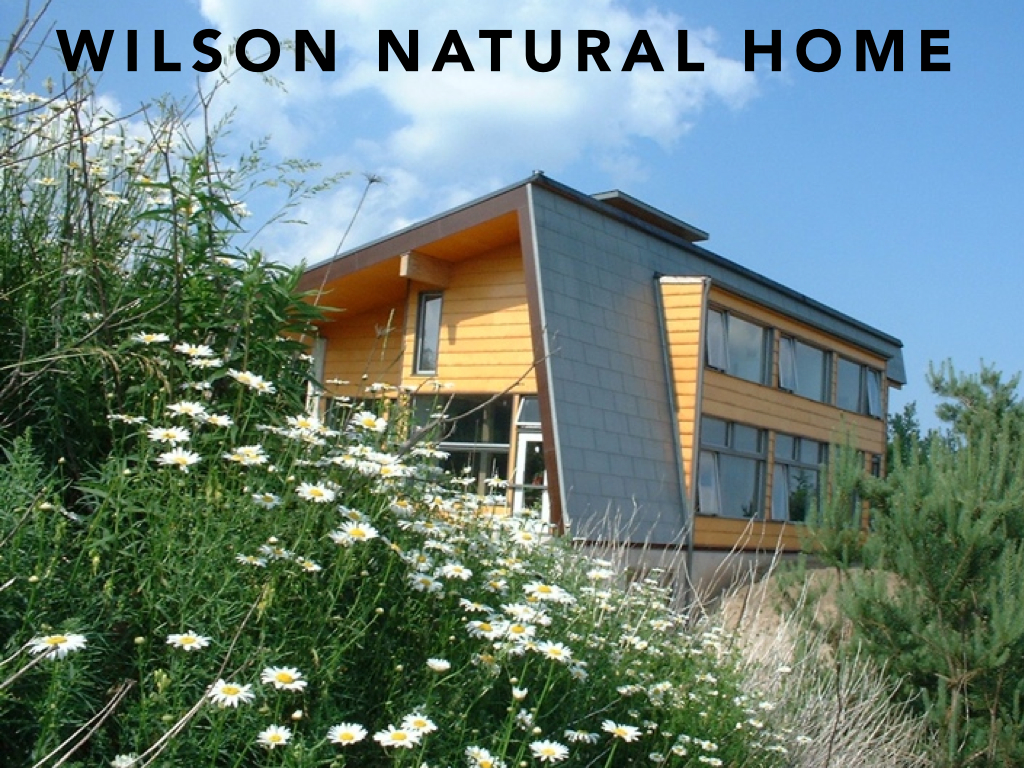
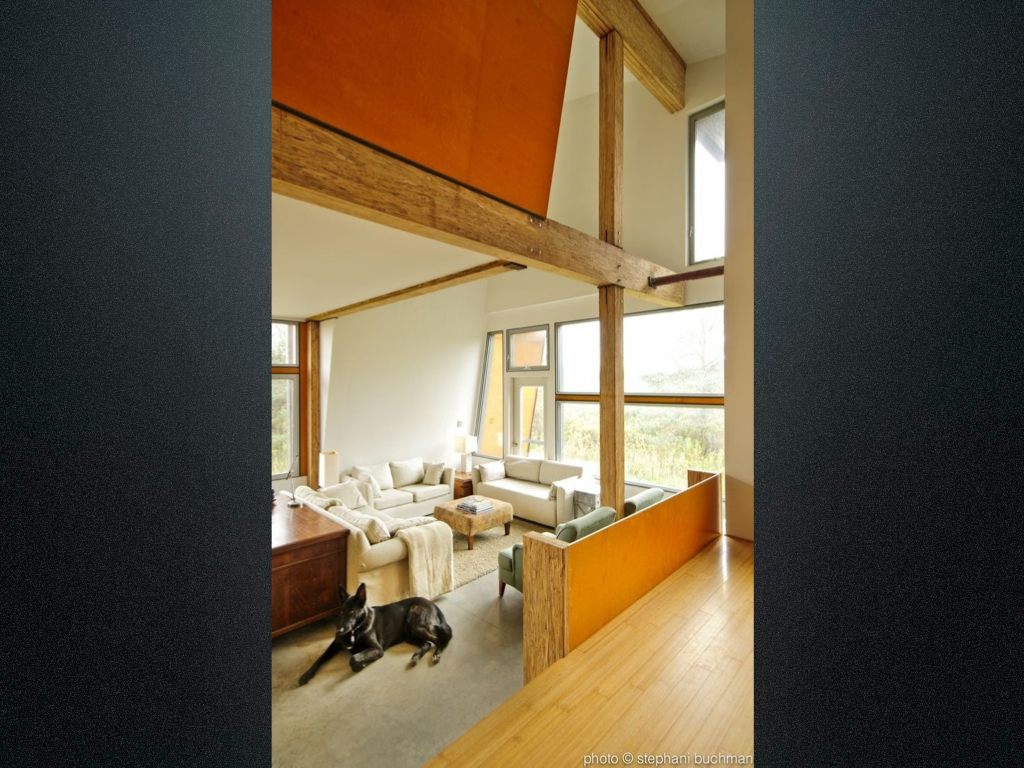
Our house took shape as a passive solar design: about 70% of the south side is windows, and the concrete floor absorbs the sun and is our main heat source. The goal was zero fossil fuel. One of the questions was: can you make a house work in Ontario with no connection to the natural-gas pipeline, no oil, and no generator? The answer is yes, so we imposed that on the design — there is no furnace in our house. Of course, when you have a solar-heated house, you also have to worry about overheating in summer. So you build awnings — and if you're building awnings, you may as well build them out of solar panels. Then you put a green roof on top: take the soil from the foundation excavation, put it back up on the roof, grow grass on it, and you've got natural air conditioning. To keep it cool, we borrowed an idea from the Sahara — tower windows that draw the warm air up and out by convection. The green roof keeps the house cool in summer and warmer in winter, because the snow builds up extra-high and adds insulation. We also store all the rainwater that comes off the roof.
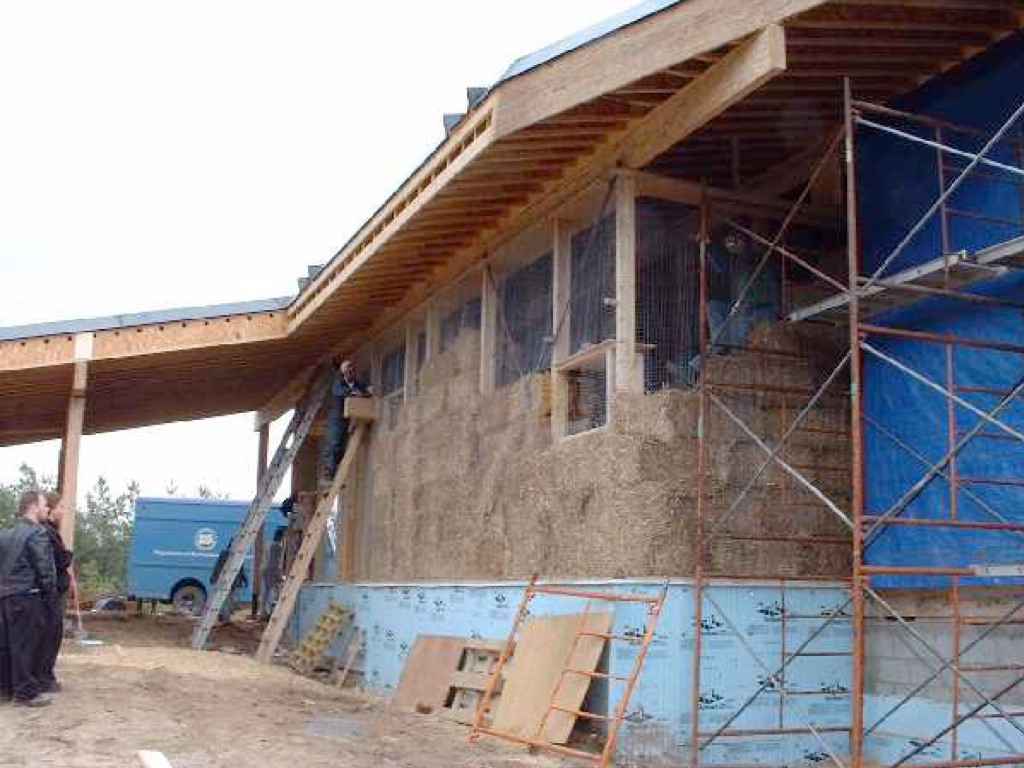
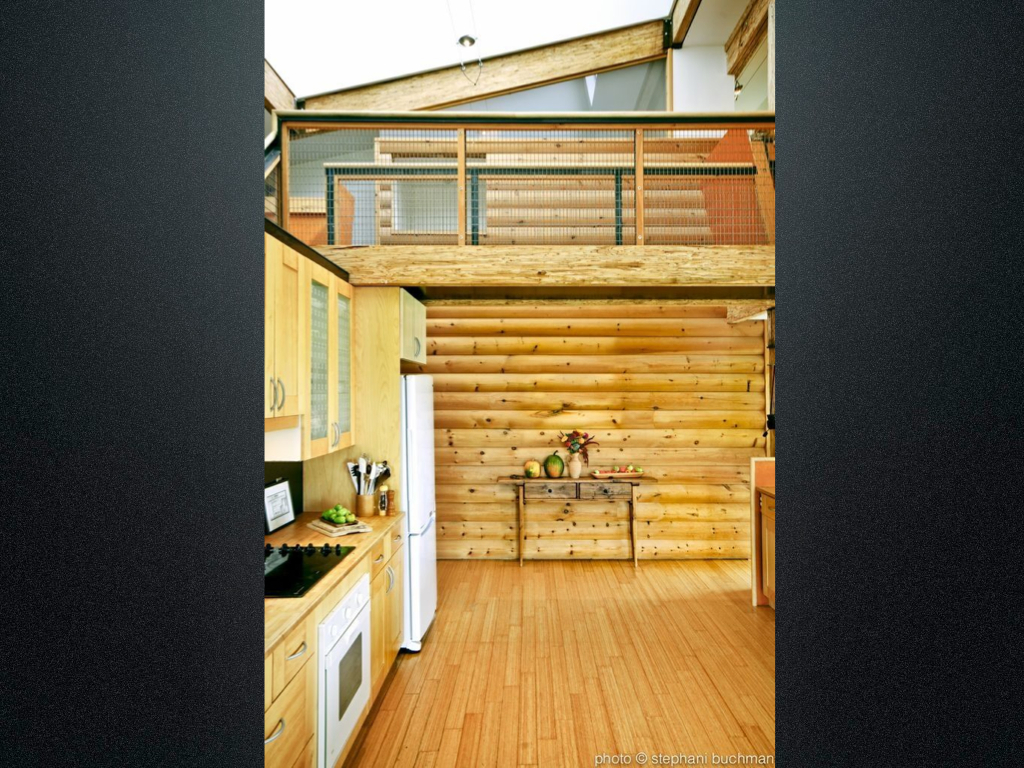
The other insulation we used is mineral wool, which is itself a waste material, and all the sand for the concrete came from the local site — so we used reusable and natural materials wherever we possibly could. Construction is simple and do-it-yourself: stack the bales like a brick wall, chicken wire on each side, staple top and bottom, sew it together — about a weekend with twenty-five volunteers — and then the next weekend you stucco it, plaster it over, and you have the most beautiful walls in the world. They're breathing walls, so you get excellent indoor air quality, and the insulation value is R-50, which is extraordinary. A super-insulated house built with straw bales from a local farmer.
Turning off the television
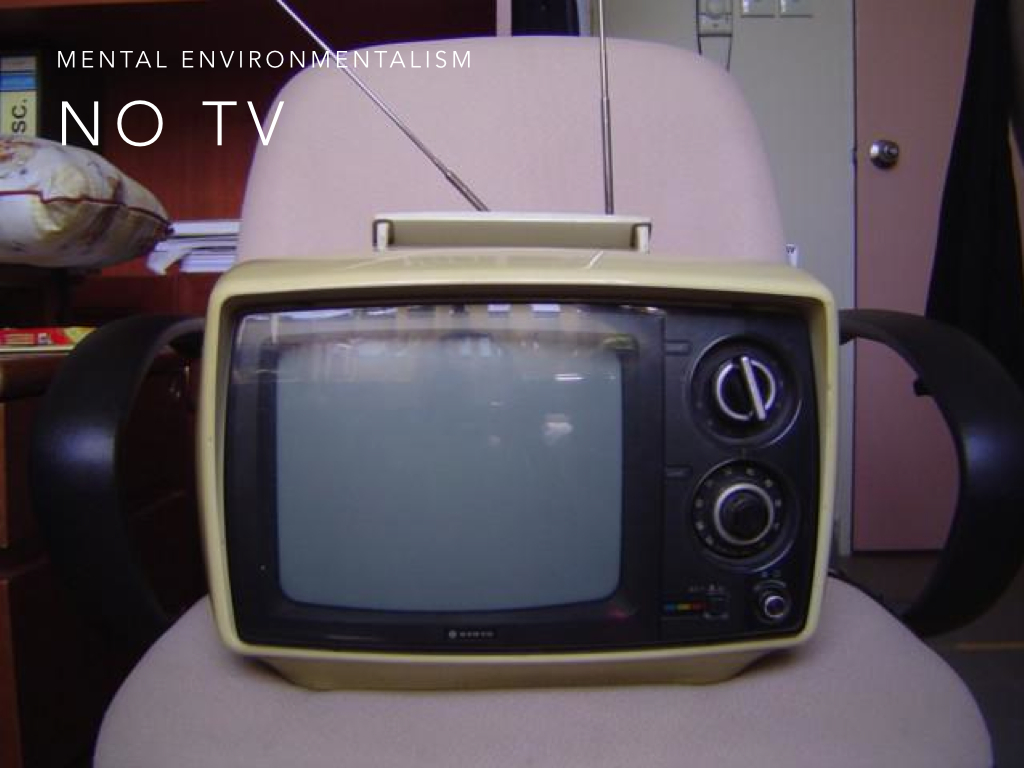
Around the same time, I was personally addicted to television. I kept staying up late watching, and I didn't know why — I felt like I was being brainwashed by the constant advertising, especially during things like the Olympics, an ad every two minutes penetrating my brain and making me think, this is good, I need that. So, much to my family's chagrin — my kids were six or seven at the time and said, "You can't stop us from watching TV!" — we decided not to have a television in the new house. It was one of the biggest battles our family ever faced. But for twelve years, before the internet and YouTube got so big, it actually made a difference. It was primarily the advertising I was concerned with.

Surviving 2001
I'd had trouble with my own business and hadn't done well finishing university — and then in 2001, just as we were trying to finish the house, the world market collapsed, and all the money I'd been expecting to earn at the financial-services company I was working at suddenly disappeared. The good thing about a solar-powered house is that you can live in it even when not much is finished: it stayed warm enough without any energy added. There was copper pipe sticking out, but we hunkered down, saved our pennies, and did what we had to do. We got through the tough period, finished more of the design, and I started working on a documentary to tell everybody about this incredible house that runs on 100% renewable energy. The inside is full of light and comfortable all year round: a bamboo kitchen, a convection oven, super-efficient appliances, parallam beams, opaque glass in the bathrooms for natural light, and a skylight in the cooling tower. We even built a little climbing wall in the greenhouse that goes up about twenty-five or thirty feet. It's a really fun house to live in, and we love it.

The documentary and the tours
The green roof is amazing for keeping the house cool in summer, and it's a great place for picnics. It was a homemade design: synthetic rubber over an industrial roof, then Delta-MS membrane, a root barrier, and all the soil on top. I hauled that soil up over about three years, through the summers, with help from my dad and my kids. It was like moving a mountain — horrible; I was sometimes in tears, because it's hard to wheel soil up a fairly steep green roof. People thought you couldn't build a green roof that steep, but it works well, because the drainage runs underneath. I love it up there now, and not many people can say they've literally moved a mountain.
A year or so later, in 2002 or 2003, we found enough pennies to put in a wind turbine, so we've had one for the last ten or eleven years. We do tours every year, and people come to hear the noise, see how the birds react, and so on — I'm very familiar with all those issues, since it's about a hundred feet from my house. We also put up about ten 40-watt solar panels; one of them I later took down and put on a solar charging station, because you can reuse recycled panels for other things. In those early days, only five or ten other people had solar panels and a wind turbine on their roofs. The return on investment on that first system was about seventy years — not a great investment — but somebody has to go first. You have to break down the barriers with the hydro companies and the utilities, and the only way we could was by running the meter backwards: when the sun's shining and the wind's blowing and we're generating more than we use, the surplus goes into the grid and, in those days, the little disc in the meter would run backwards, bringing our bill down. A slow payback, but it let me make a documentary about it — there's a fun 25-minute video on YouTube that explains how we built the straw-bale house, with interviews with our architect.

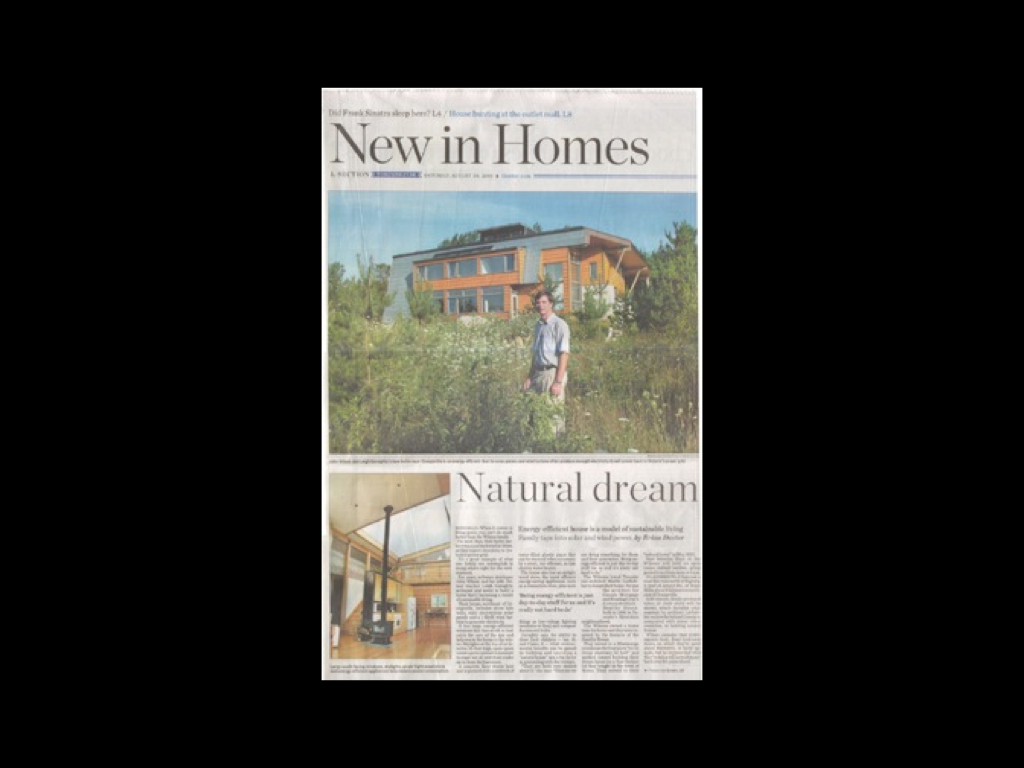
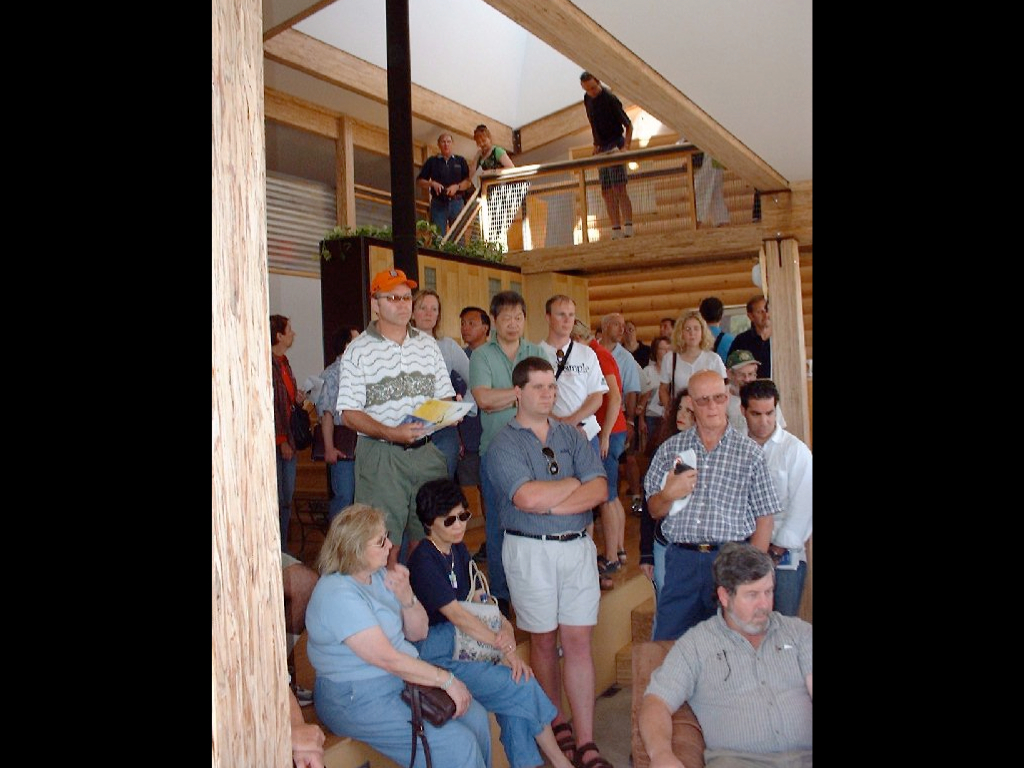
I kept doing tours, but never in the numbers I wanted — 40, maybe 100 people a year. Then in 2003 we had the big blackout, and when there's a crisis, people start to think about these things. In this case it was valuable: the Toronto Star sent a photographer up, took a whole bunch of pictures, wrote a great article, and mentioned that John was giving a tour in three weeks. I didn't know what that meant, but that year I think 1,800 people came through in a single day. They asked great questions — how much did the solar system cost, how much did the wind system cost, what were the issues — and it's wonderful to be able to show them and let them touch the pole of the wind turbine and look up as it spins at full blast. Over the years, many have thanked me profusely. So if you do these projects — if you're being the change — share that experience. Let others into your lives and explain what you've learned and how it all works. It can make a big difference.

The man who did all of our solar installations is Leonard Allen, who runs a company called Solera Energies. I've known him about twenty years; he supplied some of the panels we took down to the Dominican Republic — we literally packed them in giant suitcases with my dirty underwear on the corners so the customs guys wouldn't want to look too closely. Leonard has lived completely off the grid for twenty years, with a solar tracker and a Sunfrost refrigerator that uses almost no electricity, so he knows what it's all about. He also knows the industry: to this day, renewables get essentially zero subsidies, while oil companies in Canada alone get roughly one or two billion dollars a year — and globally, fossil fuels get something like $300 billion in subsidies. That's what renewables are up against. Leonard told me about Freiburg, Germany — he'd just gotten back, and said there are solar panels and wind turbines everywhere, and the people love them and are making money. Germany has less sunshine and less wind resource than we do, so why can't we do this? Is there some problem with us?
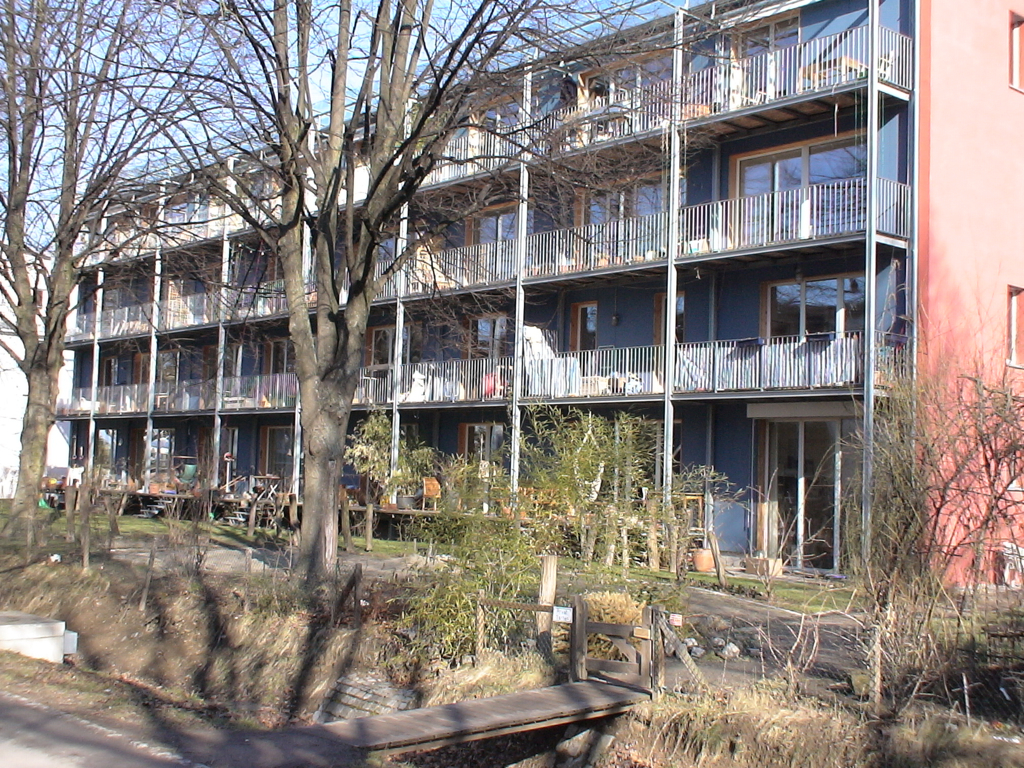
Freiburg, Germany
So Lee and I packed our bags. We were on a trip around Europe, through France and Spain, and I said, can we make a little side trip to Freiburg? I'll do another documentary and tell the whole world. It was a blast. We met Andreas Delleske, who took us on a tour of a twenty-unit condominium. It's passive solar — 70% glazing on the south side, triple-glazed windows, super-insulated with mineral wool — and it consumes about 90% less energy than a conventional building. Ninety percent less. Efficiency like that, spread around, would dramatically reduce how much energy we even need. But they didn't stop there: solar thermal provides about 60% of the energy for all the units; there's solar photovoltaic on the roof; a co-generation plant in the basement; vacuum toilets to cut water use; and a biogas reactor feeding the co-generation plant — their sewage powers the building, and the waste is recycled back to the farmers.
Why did Freiburg become the solar capital of Europe? It started as a fight against nuclear power. Back in the 1970s and '80s, just after Chernobyl, they wanted to build a nuclear plant near Freiburg, and the farmers and the students said, we don't want nuclear here. They went to the site and sat down and said, we're not going to let it happen — look what happened at Chernobyl, look what happened at Fukushima. These things do happen; humans make mistakes. It was practically a civil war for them — they fought, and they won. Then they asked, what can we do instead? They started tinkering with solar thermal and copper pipes, created a solar institute, and that grew. That's actually where the green movement in Germany started, and when it teamed up with the Social Democrats, it became a force that changed everything.
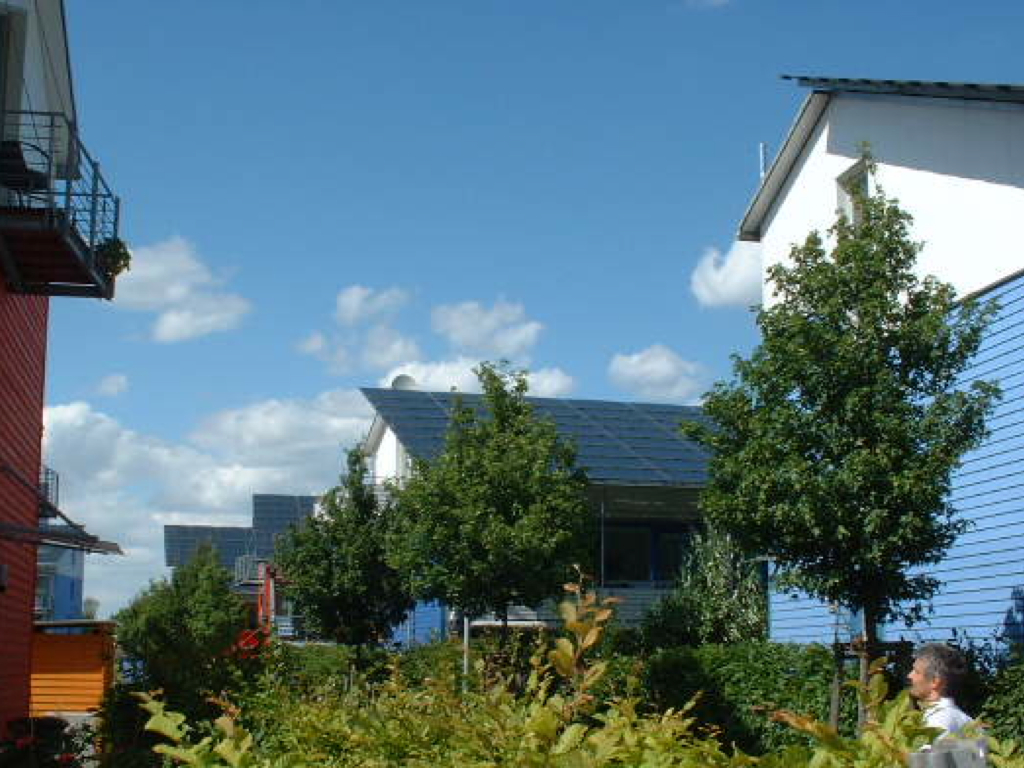
There are also houses in Freiburg built by Rolf Disch — "plus-energy" houses. They use passive solar techniques but are entirely covered with solar panels, so over a year they produce more energy than they consume. They cost about the same as an average middle-class German townhouse, and they're beautiful and comfortable. We can build these things, they can produce more energy than we need — generating income for you — so it's an incredibly inspiring example. We just need to go learn how they did it and copy it; they'll gladly tour you around, as they did me.
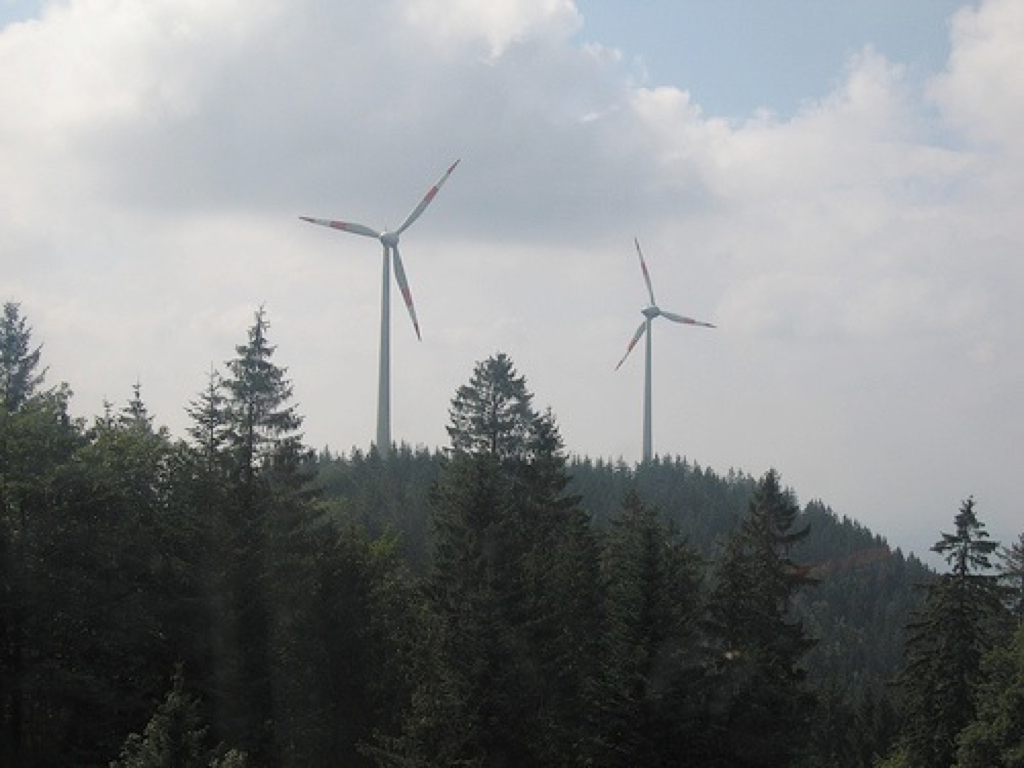
The feed-in tariff the Germans innovated also enabled community ownership. Right near Freiburg — visible from the train station in the centre of town — a community of about 500 members invested their own money, raising 4 million of the 13 million euros needed to build six wind turbines in the beautiful Black Forest. They're directly visible from town, and the people love them, because when you invest in something, when it's part of your community and you're getting a return and you were part of the whole process, you're quite happy to have it in your backyard. The difficulty comes when you don't have that kind of local, vested interest.
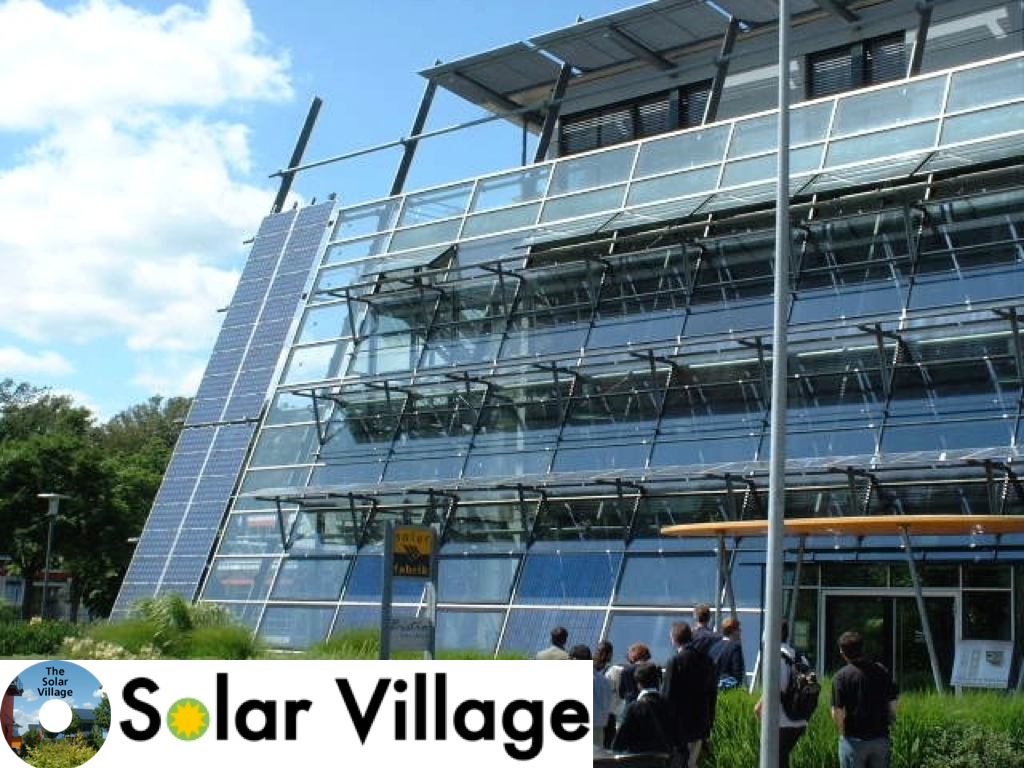
One of my favourite parts: they took me on a tour of a solar factory in Freiburg that is entirely covered in solar panels — a completely carbon-neutral factory that produces solar panels. Most of you know that solar panels and wind turbines repay their "carbon debt" from manufacturing in anywhere from six months to a couple of years. But when you build them in a carbon-neutral solar factory, you're immediately in a carbon-neutral situation — creating renewable energy with no carbon debt at all. All the details of that great trip are in my documentary Solar Village, which is on my website.
Raising a fuss — and changing policy
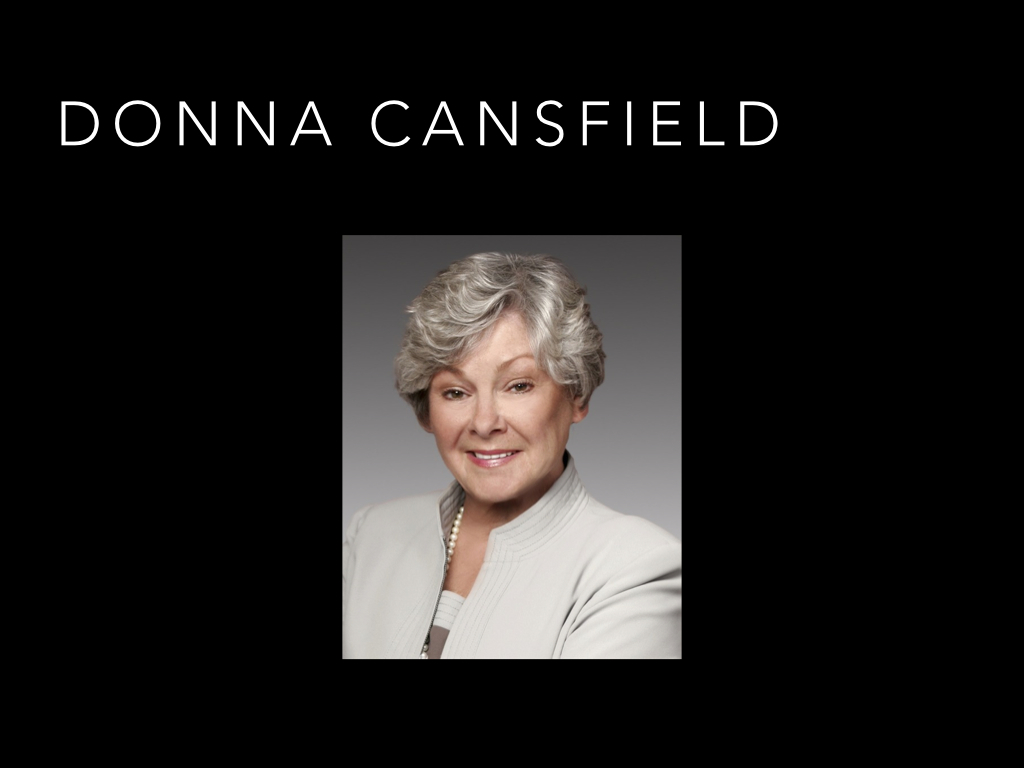
So you learn about all this, and then you have to start raising a fuss — you have to tell everybody. I called up the Minister of Energy and said I wanted to meet and tell him about Freiburg and how well it works. Dwight Duncan was the minister at the time; he didn't have time to meet, but he put me in touch with Donna Cansfield, and I sat down with her in 2005. The timing was interesting, because I was about to start a new job at Bullfrog Power. I'd met with Tom Heintzman, Bullfrog's president, who said, make sure the government leaves room for the voluntary market — we're going to build 100% renewable power and create a market for renewable energy. At the same time, I was telling Cansfield how the Germans had implemented a feed-in tariff: by simply offering a reasonable price with a guaranteed return over twenty years, you push the risk onto the developers, and they will come, and communities will build these projects. She said, stay in touch, I love your ideas. She was the deputy minister, so I wasn't sure where it would go — but six months later she became the Minister of Energy, and to her great credit she implemented the RESOP feed-in-tariff program. Many people pushed for that, not just me, but it does make a difference: you have to push your politicians to do these things. Call them and talk to them.
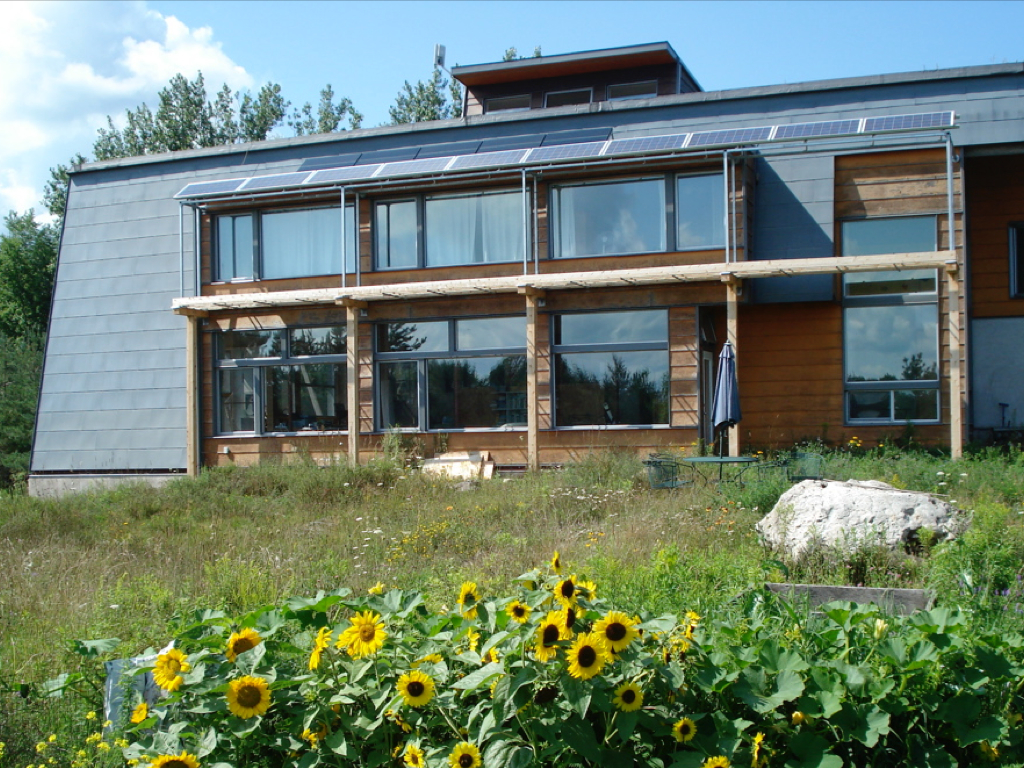
Of course, when you tell a politician to do something, you'd better back it up by doing it yourself. So we added 1.2 kilowatts of solar under the RESOP program at 42 cents per kilowatt-hour. That brought our return on investment down from seventy years to about twenty — getting better. It's still not great, but it's the right thing to do, and the house started to look pretty cool, too.
Bullfrog Power
Then I started my dream job. I'd been trying to find a company that aligned with my values, and Bullfrog Power came along — with Greg Kiessling, the chairman who brought the money and the marketing smarts, and Tom Heintzman, the president, a Harvard grad and a brilliant guy, plus three other incredible people with diverse talents. We came together and launched the company in September 2005 to offer one simple thing: a choice. There was no choice at the time — you were hooked up to Toronto Hydro and that was it. The idea was that for a little extra, about a dollar a day for the average homeowner, you could have 100% renewable electricity from EcoLogo-certified wind and small-scale hydro, additional to anything the government was doing, and be part of the revolution. People laughed, and we weren't sure we'd make it through the first year — would people pay more? They did. They signed up really fast.
One of the turbines we started buying from is on the Bruce Peninsula. Lee, the kids, and I passed it every year on our vacation, and for a long time it was just one turbine that Glenn Estill had put up. In 2006, our first full year, Bullfrog had enough customers to justify building two more, and it was an incredible experience to go up and cut the ribbons with the whole community — the farmers and the mayor — out to celebrate. Tom Heintzman said something that stuck with me: our children, who were there as young kids, will see one turbine become two and then see them everywhere; it will become normal and expected. That's a profound transformation. As we drove up here today we passed 55 turbines turning near Shelburne, and three more at Lion's Head, and I realized my son will grow up thinking of renewable energy as completely normal — in fact, his generation may even question why we'd use anything that isn't renewable. As significant as those turbines are, the more profound change is creating an environment in which a whole new generation grows up treating renewable generation as simply normal — something that lives far beyond the life of the turbines themselves.

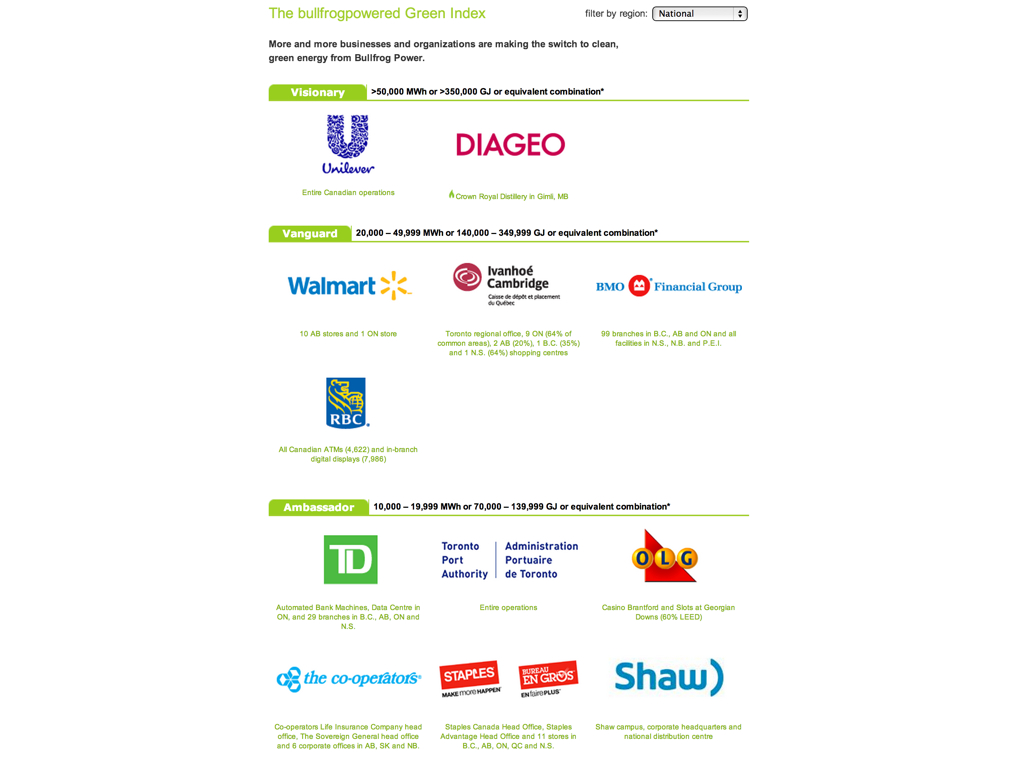
We kept innovating at Bullfrog. Beyond 100% green electricity for homes and businesses, we now offer green natural gas: we collect organic waste — from your kitchen and elsewhere — process it in a biogas reactor, clean it up to natural-gas quality, and pump it into the nationwide pipeline. Because the carbon is locked up in the food we're eating, it's a closed loop with no additional emissions — a carbon-neutral way to heat our homes. Just by offering that choice, and clearly communicating the value of renewable energy, we've brought some very large companies on board. Royal Bank was one of the first and has been a great customer ever since. Walmart came on and now has ten stores running on 100% green power — one of the biggest green-energy purchases ever in Canada. Unilever's entire Canadian operations run on 100% green electricity. Big companies using massive amounts of electricity are making the switch — and that sends a message to other companies, to politicians, and to consumers that it can be done, and that it's good for business.


We've also started something called Bullfrog Builds, funding new projects all over the country — solar projects, SolarShare, ZooShare, and many others — so we can build new capacity and supply electricity in each region. We're even developing off-grid projects, getting rid of diesel generators in First Nations communities that are completely separated from the grid. It's an incredible thing.

As I said, in 2008 I was fortunate to be at the World Wind Energy Conference when David Suzuki presented and Hermann Scheer was there. After everything I'd learned about Freiburg, Scheer got up and talked about how we have to make renewable energy the biggest priority in everything we do. Then he said something really interesting: think about it — Germany, over the last ten or fifteen years, has installed about 30,000 megawatts of wind energy using the feed-in tariff. Ontario needs about 25,000 to 30,000 megawatts of production capacity. So if you take what Germany did with a feed-in tariff — which we already have — you could easily get to 100% renewable energy in Ontario in five to ten years. It's completely doable. Germany proves it. There are a few problems in how we've implemented it, but we just have to fix those, and we can get there. (The full documentary is about sixty minutes long, with tons more information, and it's on my website too.)
Food, and doing more
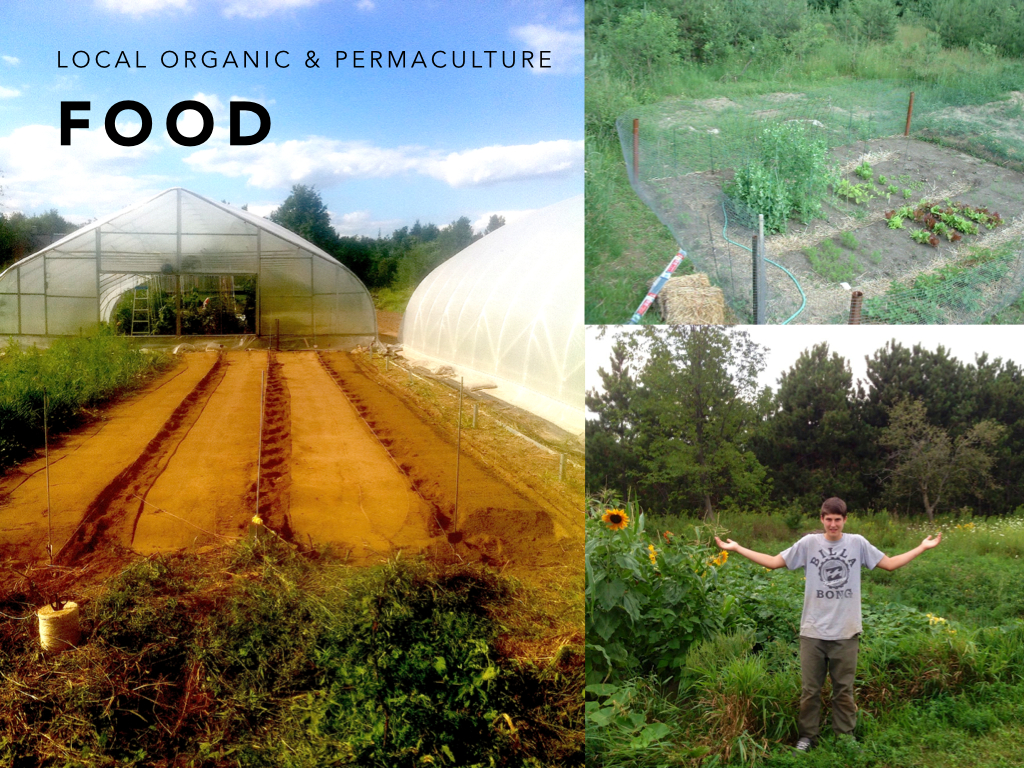
We started with organic food for our kids, and we've kept it up: we grow vegetables in our backyard and have a herb garden in our greenhouse. My son is the real expert — he's gotten into permaculture. If you haven't heard of it, check it out; read the Designers' Manual by Bill Mollison. It's the most incredible way to design not just farming but villages and houses. And just down the road from us is an organic farmer we now buy most of our vegetables from. So get involved with local communities, grow your own vegetables, buy local, buy organic — beautiful things come out of it.

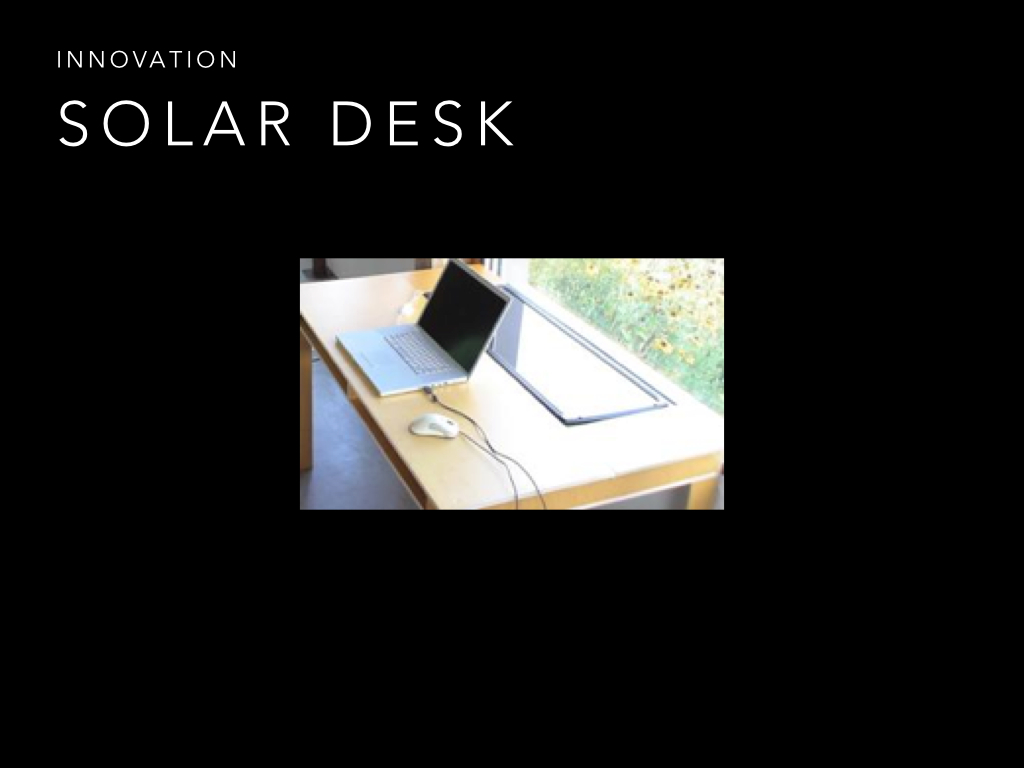
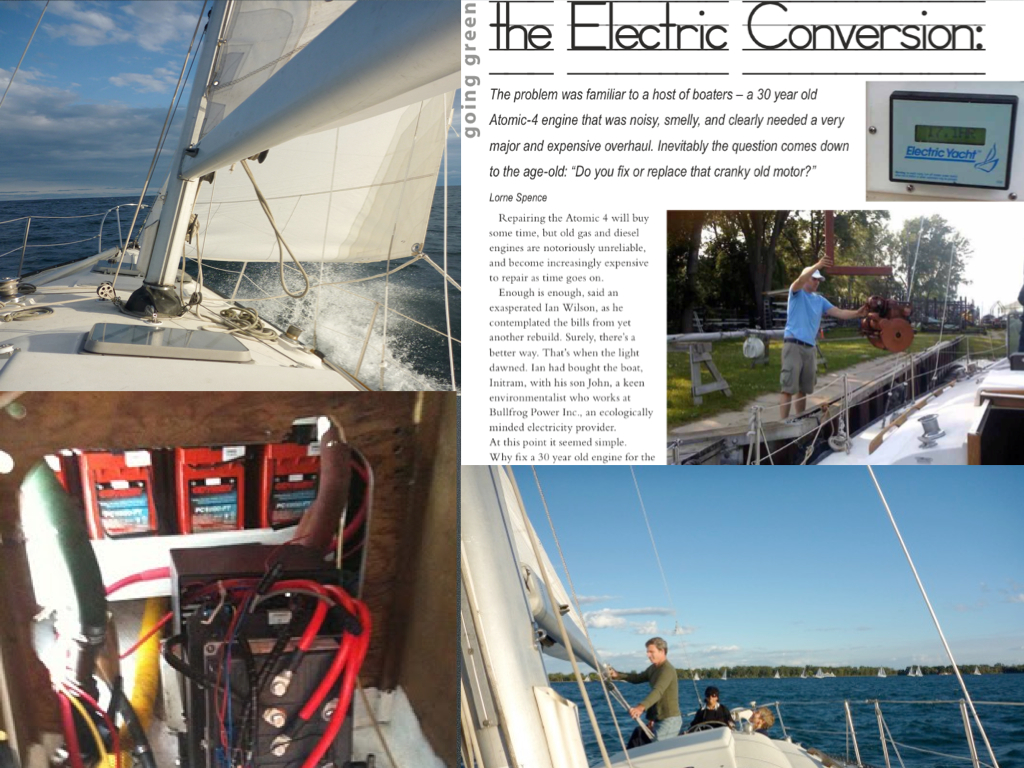
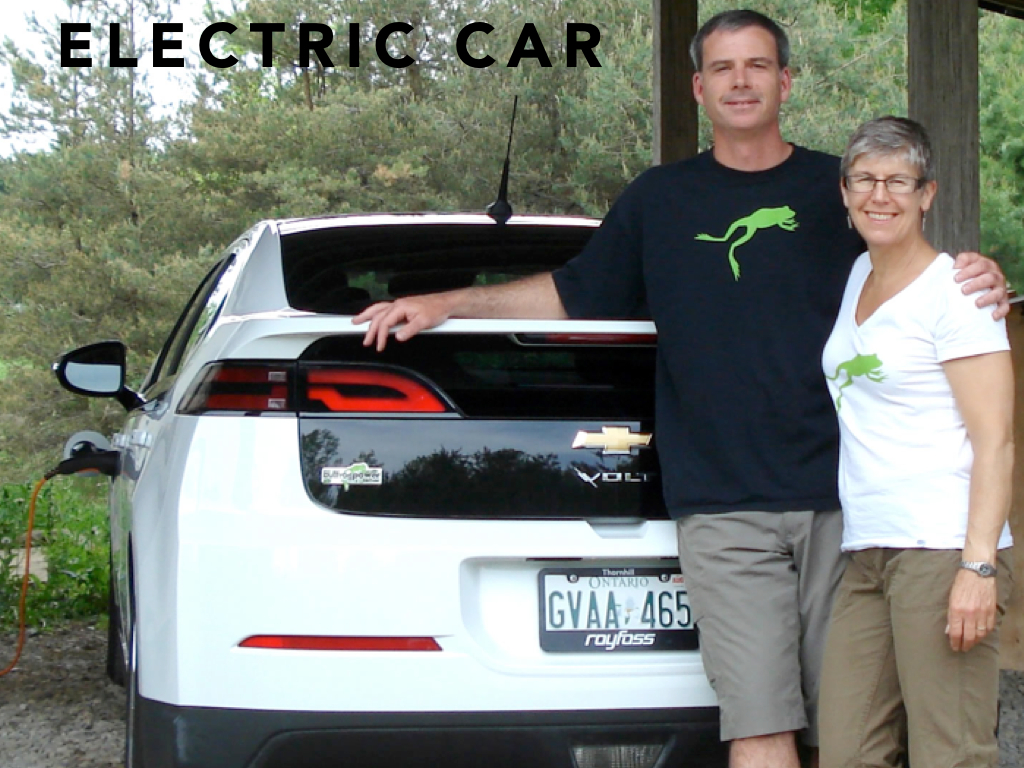
But it doesn't end there; we've got to do more. About five years ago I went to Canadian Tire and bought a solar panel, a charge controller, an inverter, and a deep-cycle battery — all available off the shelf. I took the idea of the solar calculator and asked, why can't we have solar computers? So I built a desk that runs my computer completely off solar power, and I brought it to work, and some people got interested. Then I bought a very old boat — a 1974 fibreglass boat, 35 feet, with a gasoline engine. We can't keep running our engines on gasoline, so we took the gas engine out, put in an electric motor and some big batteries, and for four years we've been sailing — and when we do need to motor, we've got enough power to cross the lake. Electric motors are powerful, quiet, and don't pollute; we charge it with Bullfrog Power electricity, and it's far easier to maintain than gasoline. We've also switched to the Bullfrog Power edition of the Chevy Volt — Bullfrog partnered with Chevy on a version of the Volt whose first two years of electricity come from Bullfrog. It runs 40 to 80 kilometres on pure electric power, but has a built-in generator for long distances. It's a very flexible car, and we love it.
Personal power
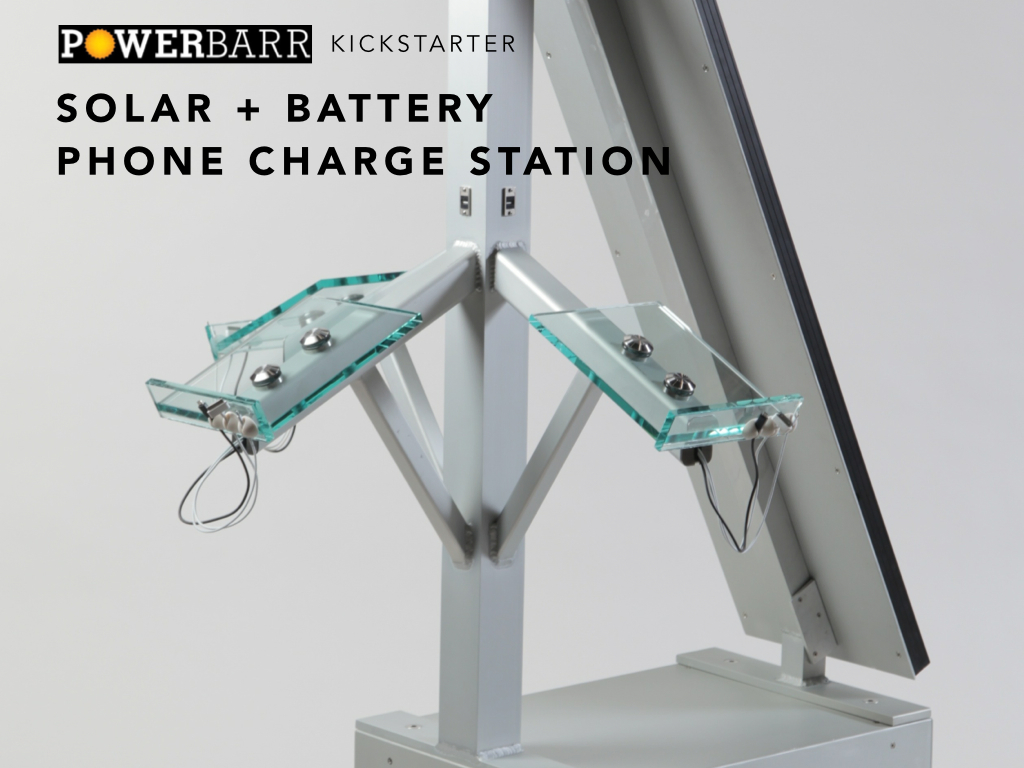
A big part of what consumes electricity is our cell phones and other devices. That's why I started a project with three other friends — young people, about the age of most of you here — to build a way of charging your phones and devices with our own power: a solar power-bar product. We developed it with crowdsource funding and open-source technology, using renewable and recyclable materials — mainly aluminum, because the best aluminum you can get is recycled (it takes far less energy), plus glass, and so on. All the panels can be recycled, and all the batteries must be recycled, too. We ran a Kickstarter campaign and raised about $7,000 to build two more — the prototypes are in the lobby — and we're building a couple more and hoping to build many more.

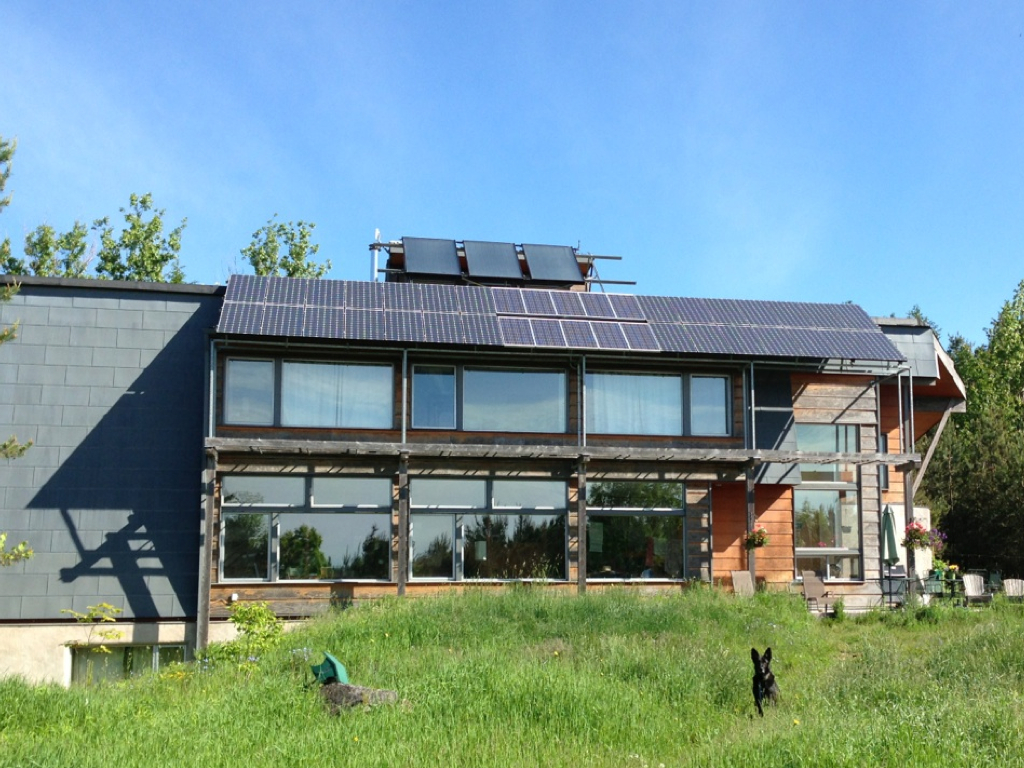
This is our house after twelve years. We now have six kilowatts of solar on the awning, it earns about $500 a month in income, and the return on investment is around six to ten years, depending on production — and we've got solar thermal too. So things don't happen overnight. You do what you can, as you can do it. It's starting to get incredibly profitable, and in twenty years we'll go off the grid: the lithium batteries will be there, and we'll have zero utility bills, running on 100% renewable energy.
So, my website is johnduncanwilson.com — all the videos and everything I've talked about are there. With that, I'd just like to say thank you very much for your patience and for listening to me. And if there are any questions, I'd be glad to answer them.